Where My Parts Live in My Body
An IFS body map worksheet locating parts through body sensations and recording what each part wants the client to know.
1-page fillable PDF · US Letter (prints on A4) · Internal Family Systems
- Approach / concern
- IFS / Parts Work
- Technique
- Internal Family Systems
- Format
- Fillable PDF, 1 page (US Letter / A4)
- Access
- Pro and Advanced plans (3-day free trial)
- For
- Licensed clinicians to use with clients
- Updated
- October 2026
Key facts
What is the Where My Parts Live in My Body?
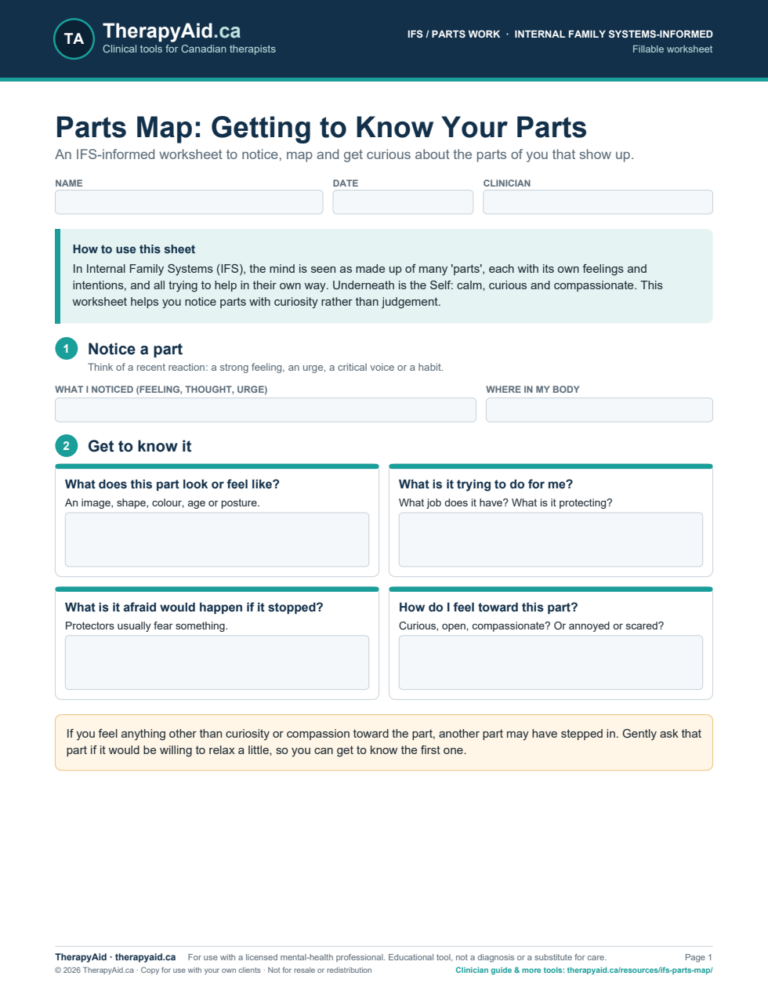
IFS uses somatic awareness to find parts: clients notice sensations, then turn toward them with curiosity. This connects IFS with body-based approaches.
Why it works
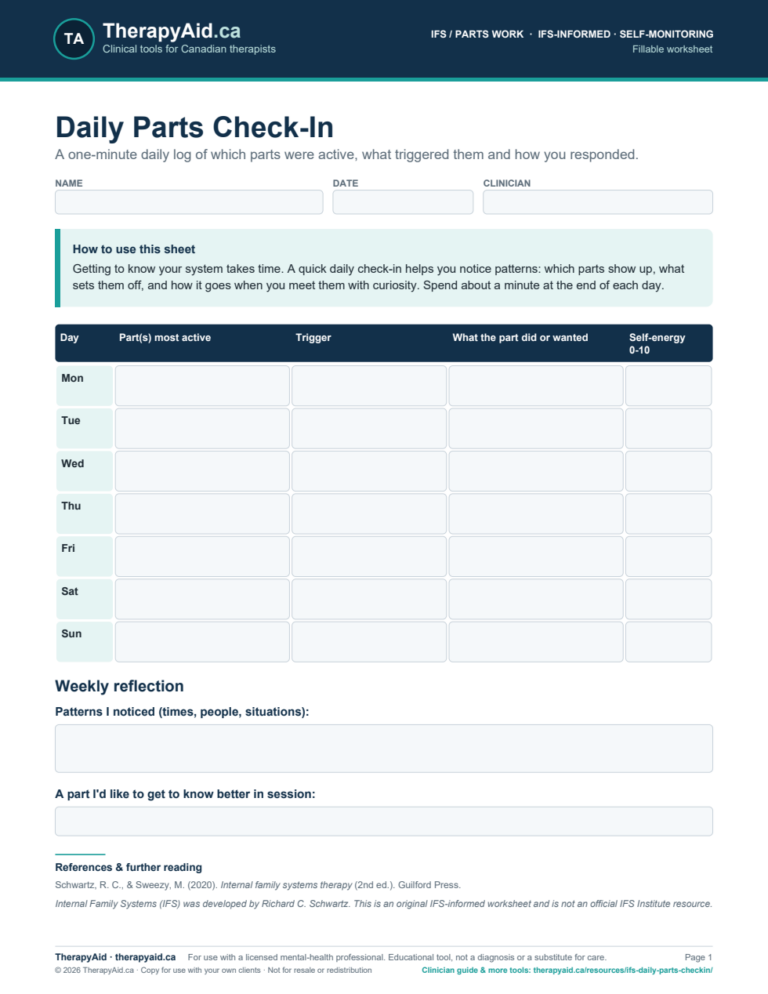
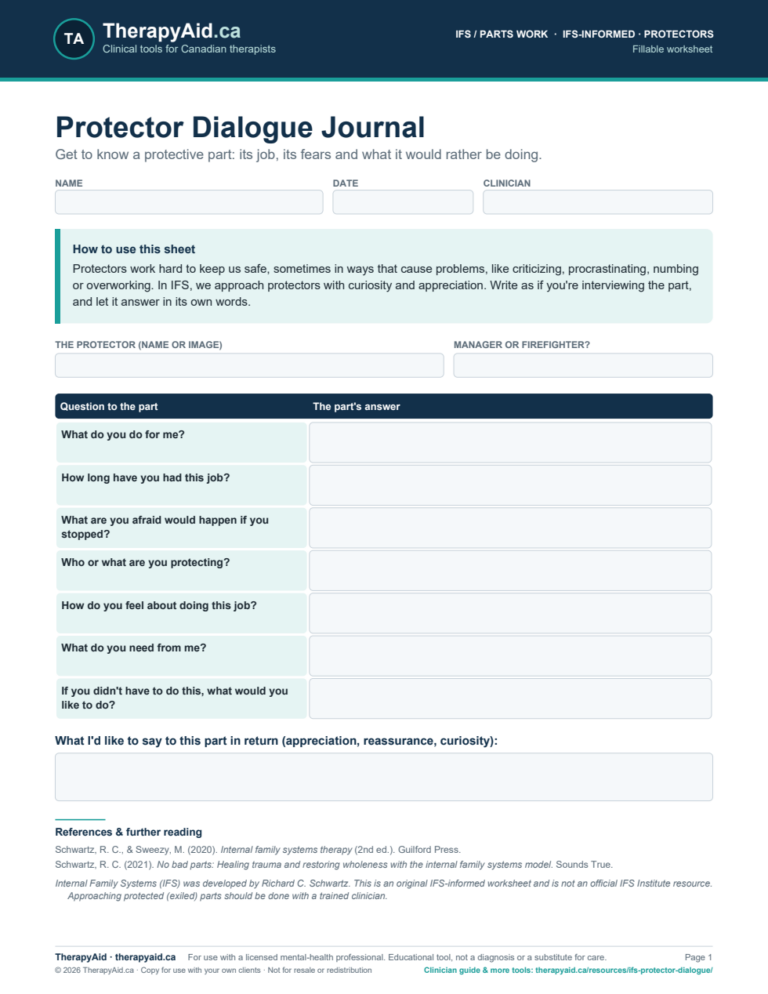
IFS holds that all parts have positive intentions and that Self can lead the internal system with curiosity and compassion (Schwartz & Sweezy, 2020; Schwartz, 2021).
When to use it
- IFS and parts-informed therapy
- Self-criticism and inner conflict
- Trauma (with pacing)
- Between-session practice
How to use it in session
- Scan the body.
- Mark sensations on the outline.
- Ask what part is there.
- Listen for its message.
- Appreciate it.
Clinician tips
- Go slowly with trauma survivors.
- Sensations are trailheads, not diagnoses.
- Combine with grounding.
Worked example
Sharing with clients
Members can download the PDF to print or email, or copy a private client link from the download box. Your client opens the link and downloads the worksheet on any device. No client account is needed, and nothing your client writes is stored on TherapyAid.
Frequently asked questions
Do all parts have body sensations?
Many do, but some show up as thoughts, images or impulses instead.
What if I feel nothing?
That’s okay. Numbness can itself be a protective part.
References
Schwartz, R. C., & Sweezy, M. (2020). Internal family systems therapy (2nd ed.). Guilford Press.
Schwartz, R. C. (2021). No bad parts: Healing trauma and restoring wholeness with the internal family systems model. Sounds True.
This worksheet is an educational tool for use by, or under the guidance of, a licensed or registered mental-health professional. It is not a diagnostic instrument or a substitute for clinical judgement. If a client is in crisis in Canada, call or text 9-8-8 or call 9-1-1.