Daily Parts Check-In
A weekly IFS-informed log for recording which parts were active each day, their triggers and intentions, and how much Self-energy was available, with a weekly reflection.
1-page fillable PDF · US Letter (prints on A4) · IFS-informed · Self-monitoring
- Approach / concern
- IFS / Parts Work
- Technique
- IFS-informed · Self-monitoring
- Format
- Fillable PDF, 1 page (US Letter / A4)
- Access
- Pro and Advanced plans (3-day free trial)
- For
- Licensed clinicians to use with clients
- Updated
- October 2026
Key facts
What is the Daily Parts Check-In?
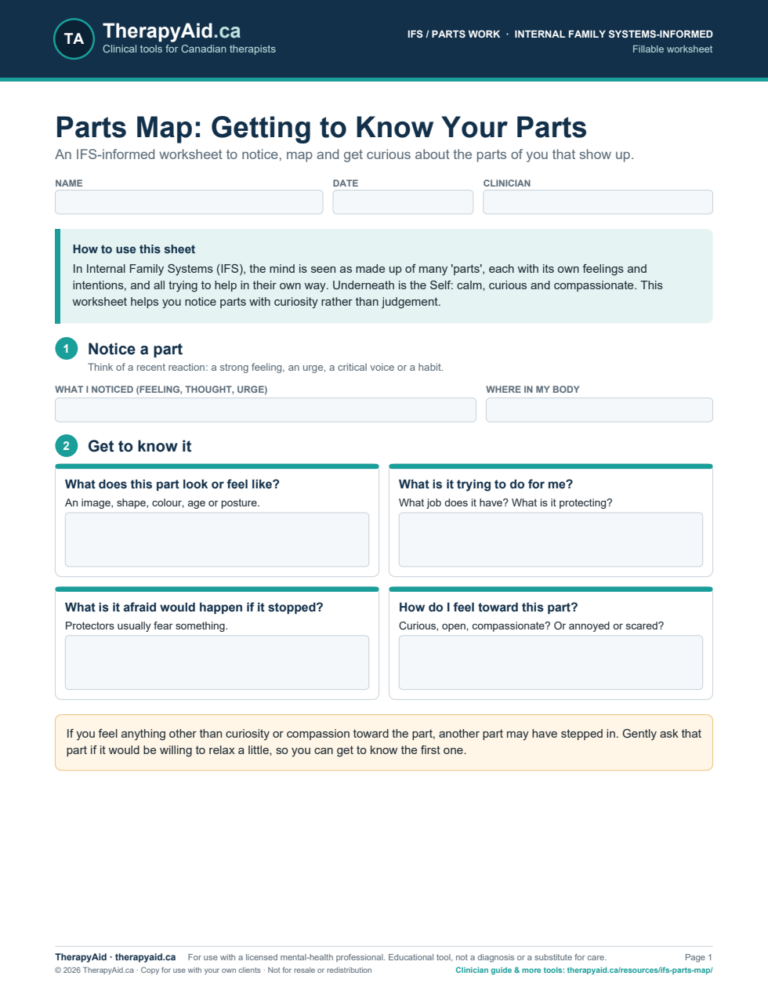
Daily parts tracking extends IFS work beyond the session. Clients note which parts were most active, what triggered them, what the part did or wanted, and how much Self-energy they felt, building awareness of their internal system over time.
Why it works
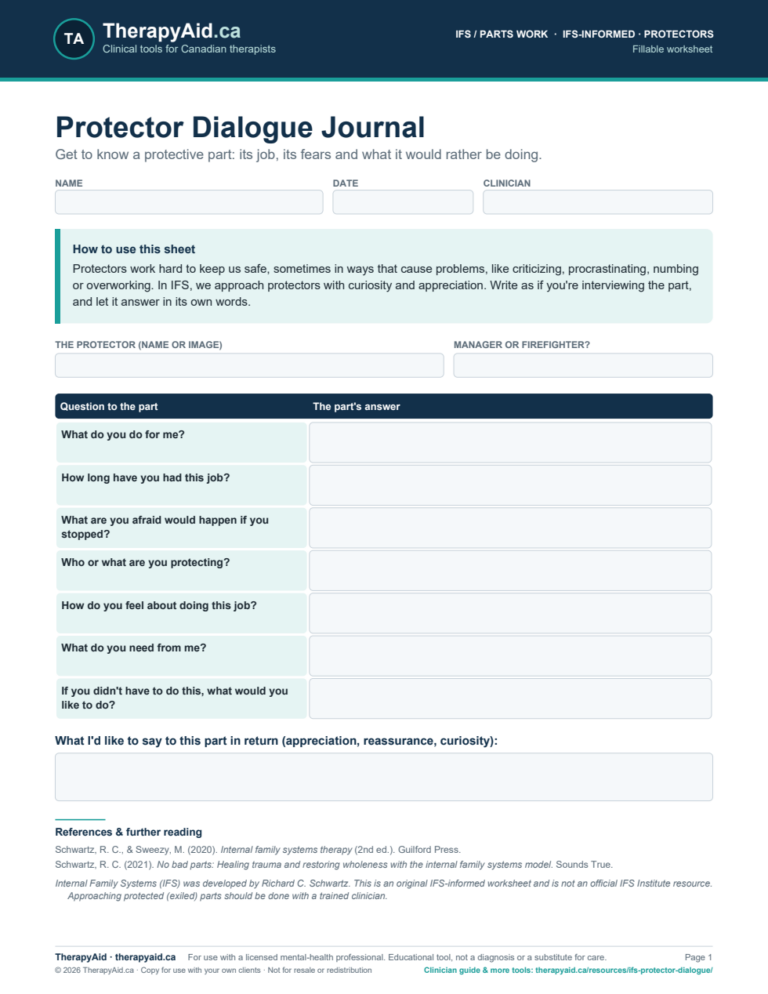
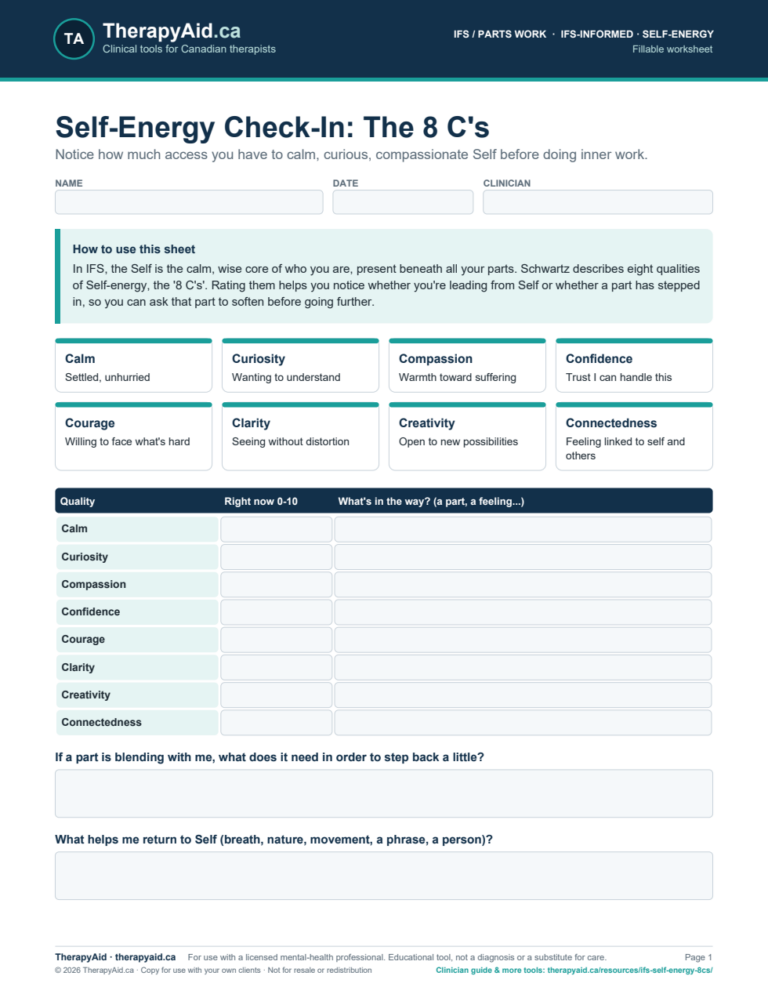
Regular self-monitoring builds the noticing skills that underpin unblending and Self-leadership (Schwartz & Sweezy, 2020). Patterns that emerge across a week give rich material for sessions.
When to use it
- Ongoing IFS-informed therapy
- Clients who forget between-session experiences
- Tracking triggers of protective behaviours
- Building self-awareness
How to use it in session
- Explain that tracking is about noticing, not judging.
- Model one entry together in session.
- Ask the client to complete it each evening.
- Review patterns at the next session.
- Choose a part to work with together.
Clinician tips
- Keep it brief so it’s sustainable.
- Celebrate moments of Self-leadership.
- Use the client’s own names for parts.
Worked example
Sharing with clients
Members can download the PDF to print or email, or copy a private client link from the download box. Your client opens the link and downloads the worksheet on any device. No client account is needed, and nothing your client writes is stored on TherapyAid.
Frequently asked questions
How long should clients keep the check-in?
Two to four weeks usually reveals clear patterns, though some clients continue longer.
What if no parts seem active?
That’s information too. Note a calm day and what helped.
References
Schwartz, R. C., & Sweezy, M. (2020). Internal family systems therapy (2nd ed.). Guilford Press.
This worksheet is an educational tool for use by, or under the guidance of, a licensed or registered mental-health professional. It is not a diagnostic instrument or a substitute for clinical judgement. If a client is in crisis in Canada, call or text 9-8-8 or call 9-1-1.