Protector Dialogue Journal
An IFS-informed journaling worksheet where clients interview a protective part (manager or firefighter) about its job, history, fears and hopes, then respond with appreciation.
1-page fillable PDF · US Letter (prints on A4) · IFS-informed · Protectors
- Approach / concern
- IFS / Parts Work
- Technique
- IFS-informed · Protectors
- Format
- Fillable PDF, 1 page (US Letter / A4)
- Access
- Pro and Advanced plans (3-day free trial)
- For
- Licensed clinicians to use with clients
- Updated
- October 2026
Key facts
What is the Protector Dialogue Journal?
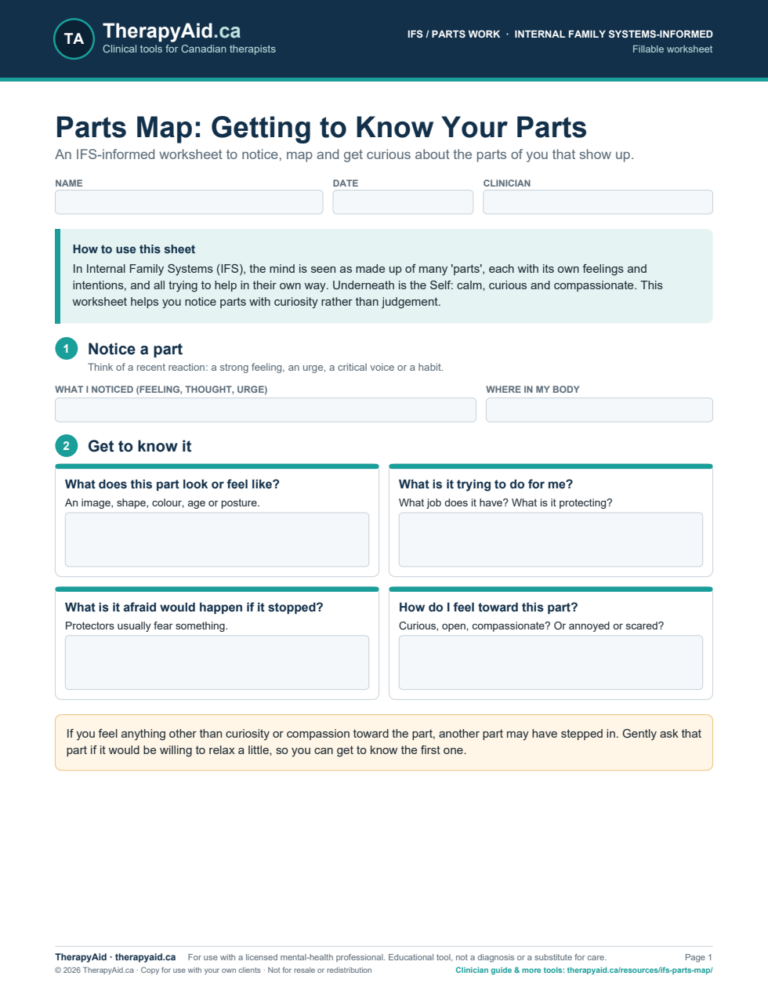
In IFS, protectors fall into two broad groups: managers, which try to prevent pain proactively (planning, criticizing, controlling), and firefighters, which react to pain once it is triggered (numbing, bingeing, distracting). Befriending protectors, learning their intentions and fears, is usually the first phase of IFS work.
Why it works
Protectors relax when they feel understood and trust that Self can handle what they are guarding (Schwartz, 2021). Journaling a dialogue extends session work and helps clients develop a compassionate relationship with behaviours they previously judged.
When to use it
- Inner critics, perfectionism and people-pleasing
- Compulsive or numbing behaviours
- Ambivalence about change
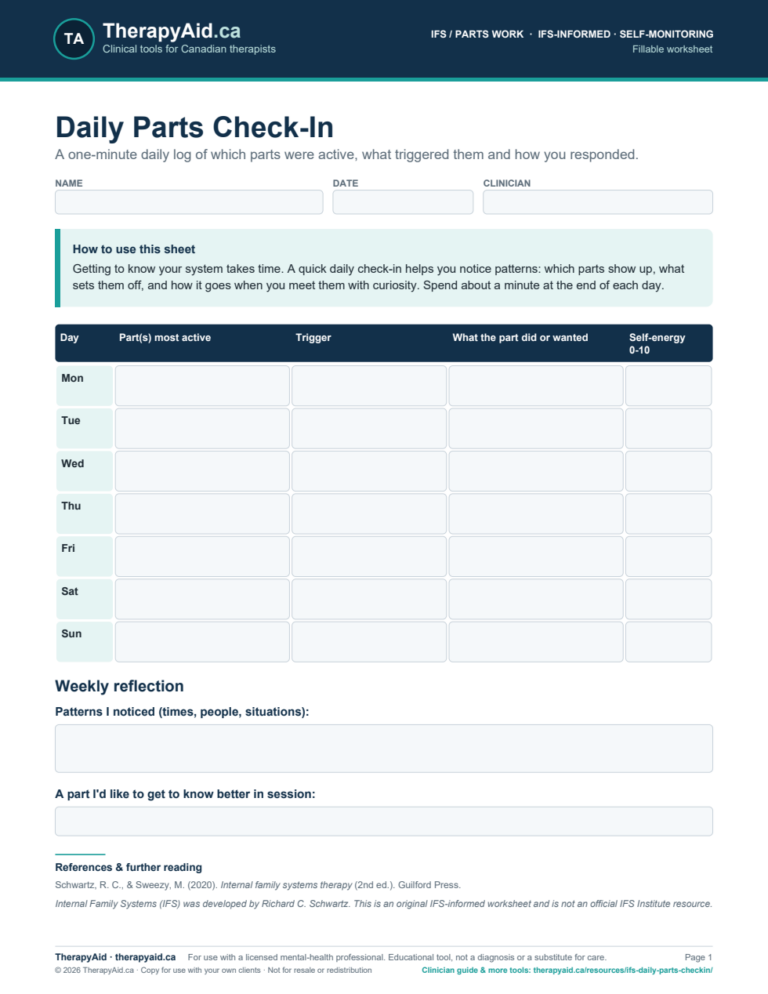
- Between-session IFS practice
How to use it in session
- Choose one protector the client is curious about.
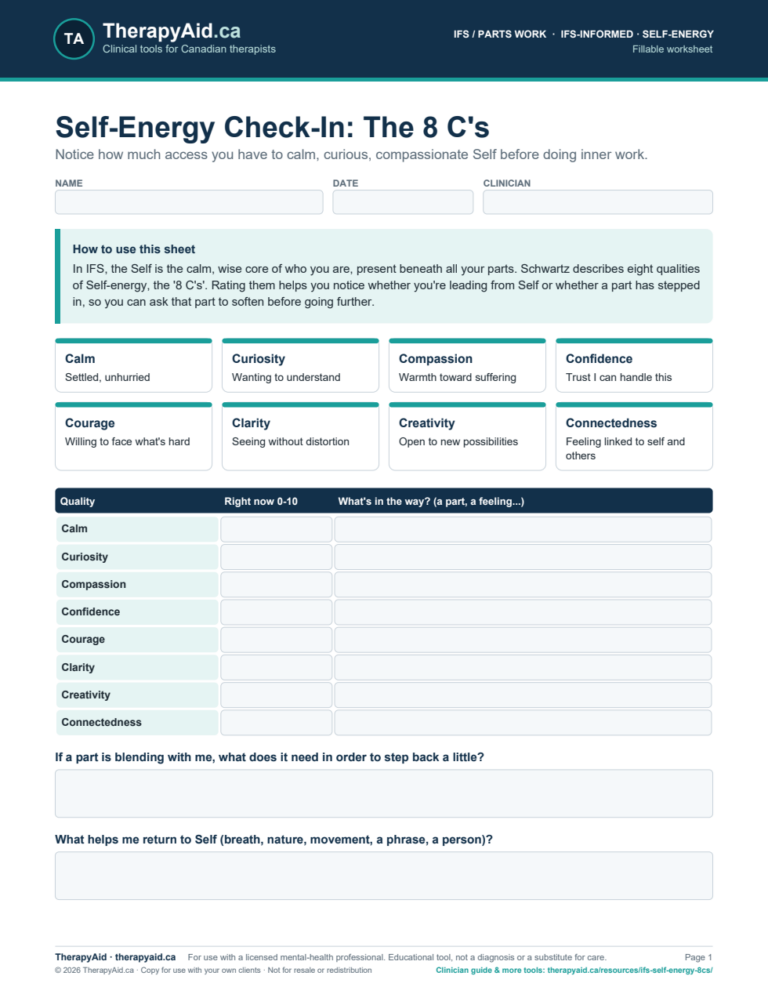
- Check for Self-energy before starting.
- Let the part answer in its own words.
- Respond with appreciation and curiosity.
- Review the dialogue in session.
Clinician tips
- If the client feels hostile toward the part, another protector is likely present; get to know that one first.
- Avoid pushing toward the exile being protected.
- Honour the part’s history and positive intent.
Worked example
Sharing with clients
Members can download the PDF to print or email, or copy a private client link from the download box. Your client opens the link and downloads the worksheet on any device. No client account is needed, and nothing your client writes is stored on TherapyAid.
Frequently asked questions
What’s the difference between a manager and a firefighter?
Managers act in advance to prevent pain; firefighters act after pain is triggered to put it out quickly.
Can protector work be done without a therapist?
Getting to know protectors is often safe as self-reflection, but deeper work with vulnerable parts should be guided by a trained clinician.
References
Schwartz, R. C., & Sweezy, M. (2020). Internal family systems therapy (2nd ed.). Guilford Press.
Schwartz, R. C. (2021). No bad parts: Healing trauma and restoring wholeness with the internal family systems model. Sounds True.
This worksheet is an educational tool for use by, or under the guidance of, a licensed or registered mental-health professional. It is not a diagnostic instrument or a substitute for clinical judgement. If a client is in crisis in Canada, call or text 9-8-8 or call 9-1-1.