EMDR Negative & Positive Cognitions List
An EMDR reference worksheet organizing negative and positive cognitions by responsibility, safety and control themes, with fields for the client's own beliefs.
1-page fillable PDF · US Letter (prints on A4) · EMDR · Reference
- Approach / concern
- EMDR
- Technique
- EMDR · Reference
- Format
- Fillable PDF, 1 page (US Letter / A4)
- Access
- Advanced plan
- For
- Licensed clinicians to use with clients
- Updated
- October 2026
Key facts
What is the EMDR Negative & Positive Cognitions List?
In EMDR, negative cognitions capture maladaptive self-beliefs linked to a memory, and positive cognitions express the preferred adaptive belief. They are commonly grouped into themes of responsibility, safety and control or choice.
Why it works
Identifying NCs and PCs is part of the EMDR assessment phase (Shapiro, 2018). Thematic grouping helps clients find words that fit their experience (Leeds, 2016).
When to use it
- EMDR assessment phase
- Clients struggling to articulate beliefs
- Case conceptualization
- Training
How to use it in session
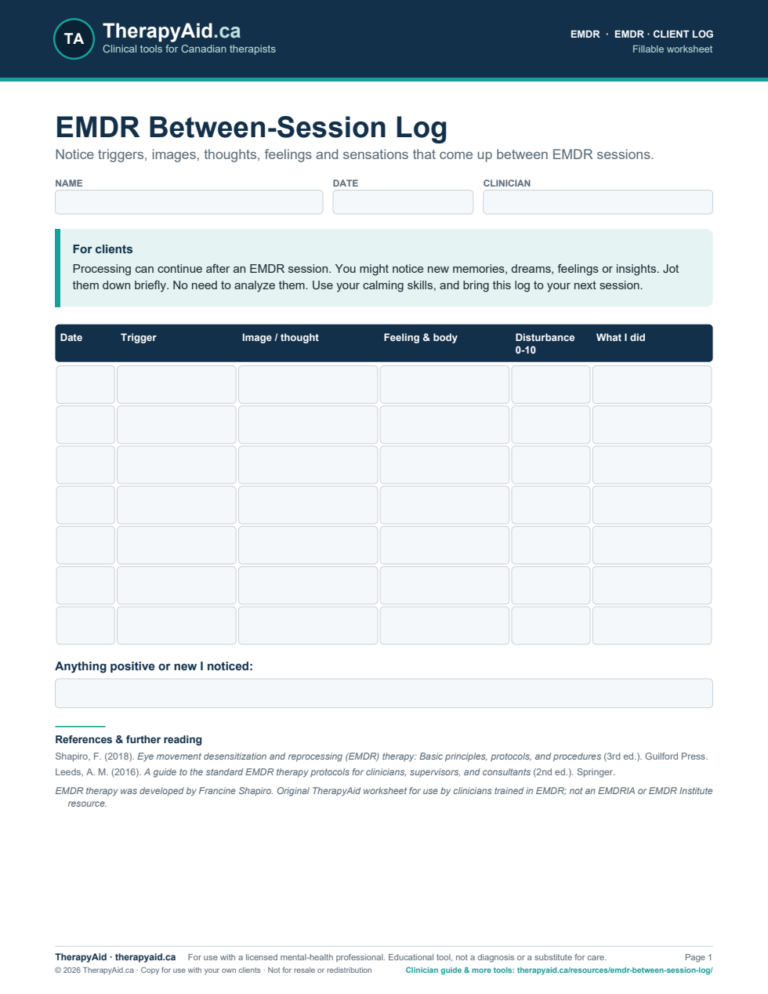
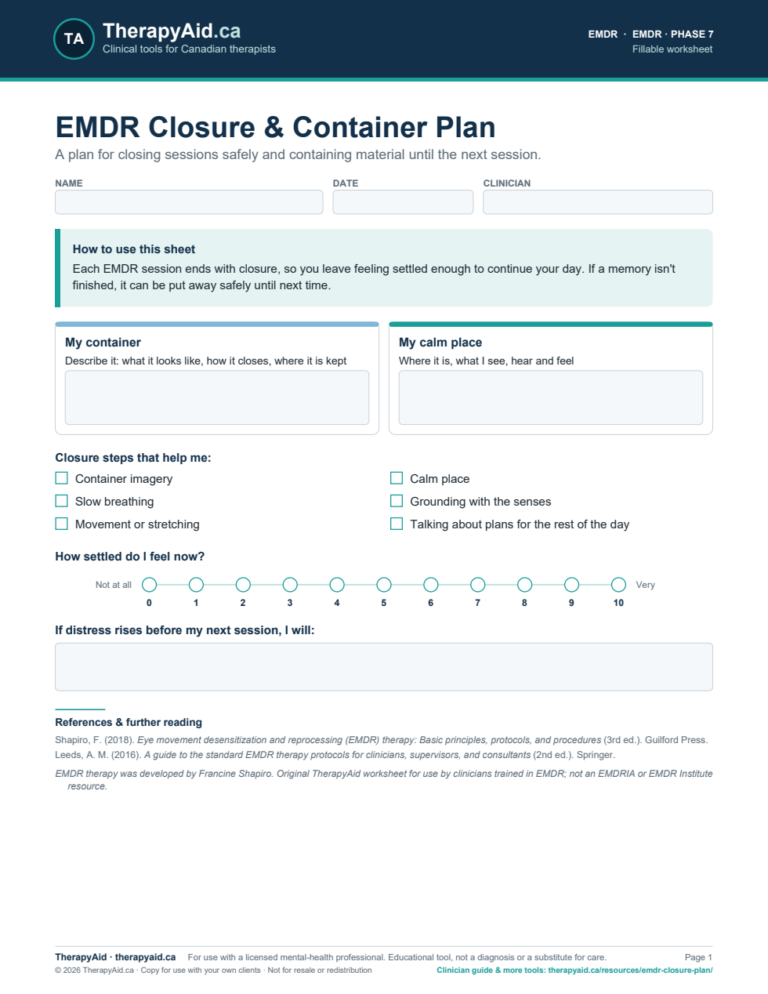
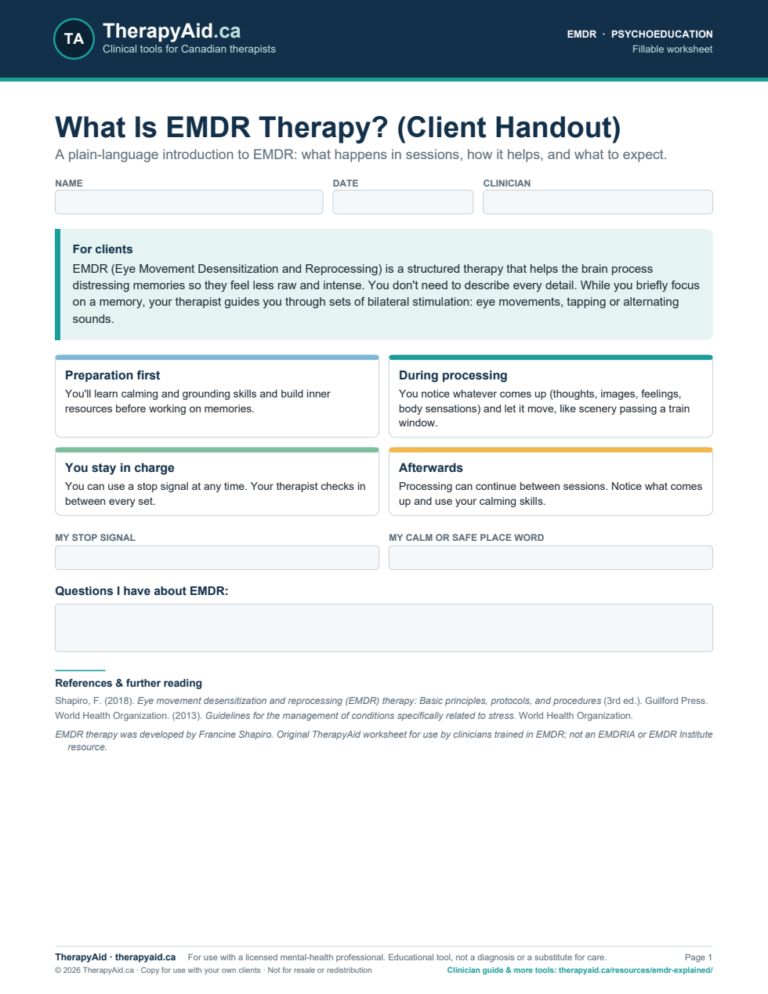
- Explain NCs and PCs.
- Review themes together.
- Write examples or select existing ones.
- Identify the client’s NC and PC.
- Check the PC feels realistic.
Clinician tips
- Adapt wording to fit your client’s language and culture.
- The client’s own words usually work best.
- Check the PC’s believability with VOC before installation.
Worked example
Sharing with clients
Members can download the PDF to print or email, or copy a private client link from the download box. Your client opens the link and downloads the worksheet on any device. No client account is needed, and nothing your client writes is stored on TherapyAid.
Frequently asked questions
Why are EMDR cognitions present-tense?
They capture what still feels true now when the memory is activated.
What makes a good positive cognition?
It’s self-referencing, positive and realistically achievable.
References
Shapiro, F. (2018). Eye movement desensitization and reprocessing (EMDR) therapy: Basic principles, protocols, and procedures (3rd ed.). Guilford Press.
Leeds, A. M. (2016). A guide to the standard EMDR therapy protocols for clinicians, supervisors, and consultants (2nd ed.). Springer.
This worksheet is an educational tool for use by, or under the guidance of, a licensed or registered mental-health professional. It is not a diagnostic instrument or a substitute for clinical judgement. If a client is in crisis in Canada, call or text 9-8-8 or call 9-1-1.