Self-Energy Check-In: The 8 C’s
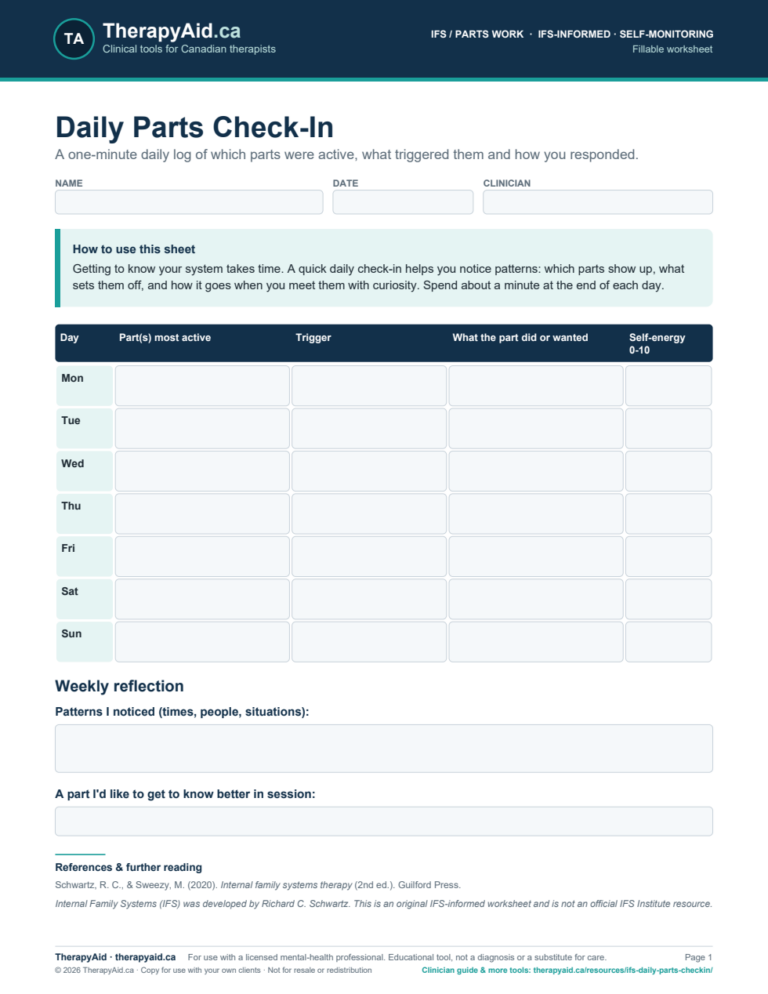
An IFS-informed check-in that rates the eight qualities of Self-energy (the 8 C's), identifies blending parts and lists personal ways to return to Self.
2-page fillable PDF · US Letter (prints on A4) · IFS-informed · Self-energy
- Approach / concern
- IFS / Parts Work
- Technique
- IFS-informed · Self-energy
- Format
- Fillable PDF, 2 pages (US Letter / A4)
- Access
- Pro and Advanced plans (3-day free trial)
- For
- Licensed clinicians to use with clients
- Updated
- October 2026
Key facts
What is the Self-Energy Check-In: The 8 C’s?
In Internal Family Systems, the Self is a core state characterized by qualities Richard Schwartz summarizes as the 8 C’s: calm, curiosity, compassion, confidence, courage, clarity, creativity and connectedness. When a part blends with us, these qualities are temporarily obscured. Noticing how much Self-energy is available helps clients and therapists decide whether to proceed with inner work or first help protectors relax.
Why it works
Accessing Self-energy is the foundation of IFS work: parts tend to respond and heal when approached from Self (Schwartz & Sweezy, 2020). A structured check-in builds clients’ awareness of blending and gives them a non-judgemental way to notice parts in daily life.
When to use it
- Start of an IFS-informed session
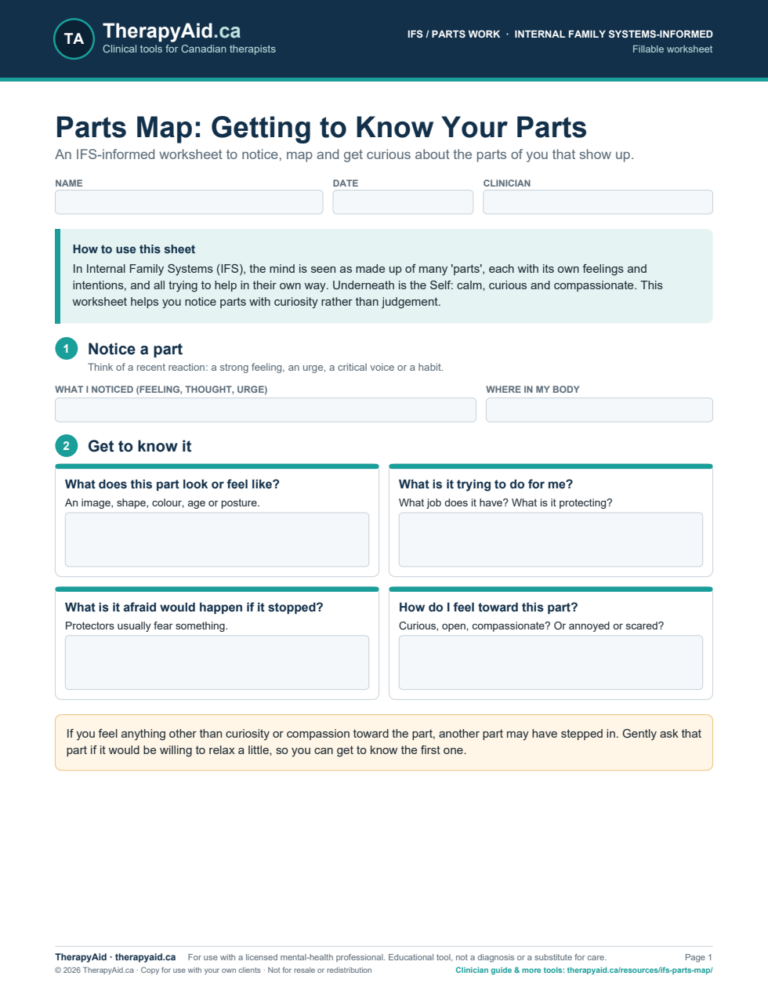
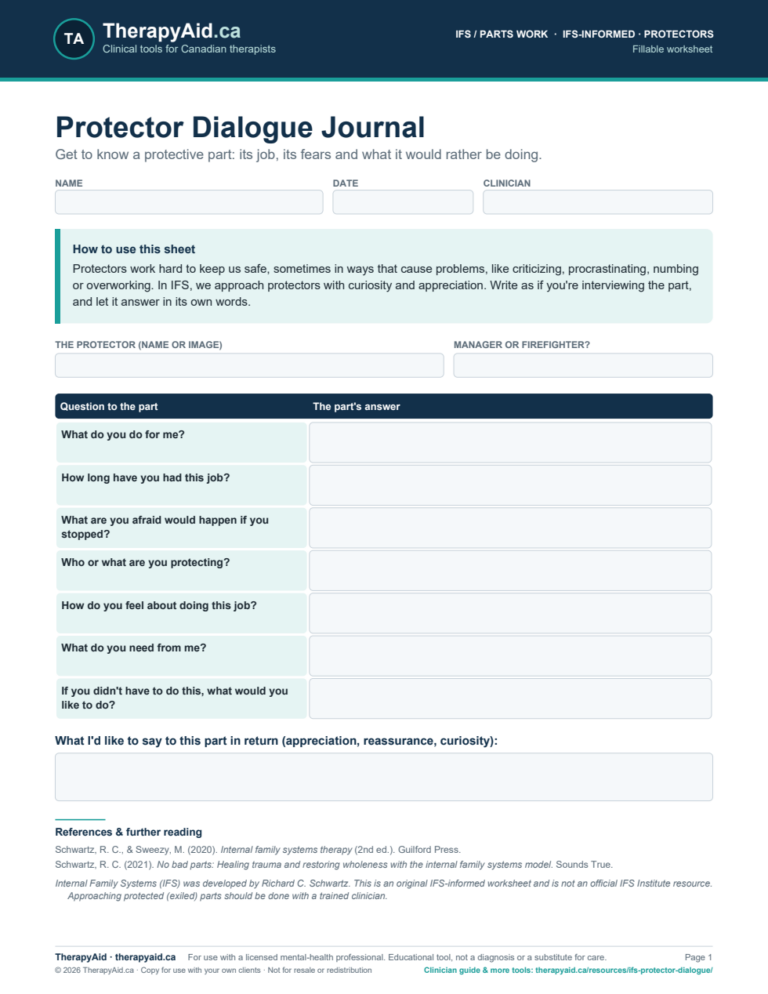
- Before approaching a protector or vulnerable part
- Daily self-awareness practice
- Clients learning to notice blending
How to use it in session
- Introduce the idea of Self and the 8 C’s.
- Ask the client to rate each quality right now.
- For low ratings, get curious about which part may be present.
- Invite blending parts to step back a little, without pushing.
- Note personal pathways back to Self.
Clinician tips
- Low scores are information, not failure.
- Some clients connect better to one or two C’s; start there.
- Use your own Self-energy to co-regulate in session.
Worked example
Sharing with clients
Members can download the PDF to print or email, or copy a private client link from the download box. Your client opens the link and downloads the worksheet on any device. No client account is needed, and nothing your client writes is stored on TherapyAid.
Frequently asked questions
What are the 8 C’s of Self in IFS?
Calm, curiosity, compassion, confidence, courage, clarity, creativity and connectedness, the qualities Richard Schwartz associates with Self-energy.
Can someone have no Self?
IFS holds that everyone has a Self, even if it is obscured by protective parts at times.
References
Schwartz, R. C., & Sweezy, M. (2020). Internal family systems therapy (2nd ed.). Guilford Press.
Schwartz, R. C. (2021). No bad parts: Healing trauma and restoring wholeness with the internal family systems model. Sounds True.
This worksheet is an educational tool for use by, or under the guidance of, a licensed or registered mental-health professional. It is not a diagnostic instrument or a substitute for clinical judgement. If a client is in crisis in Canada, call or text 9-8-8 or call 9-1-1.