Understanding Perinatal Mood & Anxiety
A psychoeducation handout distinguishing baby blues, perinatal depression and perinatal anxiety/OCD, with urgent warning signs, what helps and a support plan.
1-page fillable PDF · US Letter (prints on A4) · Psychoeducation
- Approach / concern
- Perinatal & Postpartum
- Technique
- Psychoeducation
- Format
- Fillable PDF, 1 page (US Letter / A4)
- Access
- Pro and Advanced plans (3-day free trial)
- For
- Licensed clinicians to use with clients
- Updated
- October 2026
Key facts
What is the Understanding Perinatal Mood & Anxiety?
Perinatal mood and anxiety disorders include depression, anxiety, OCD and, rarely, postpartum psychosis occurring during pregnancy or within the first year after birth. They differ from the common, short-lived baby blues.
Why it works
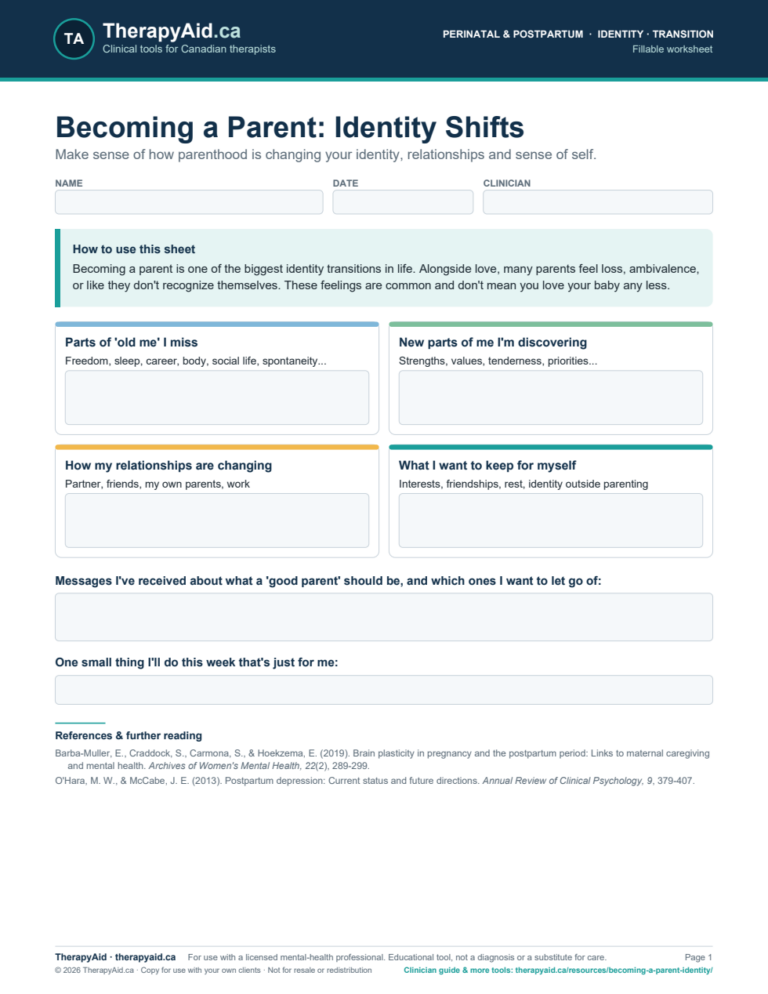
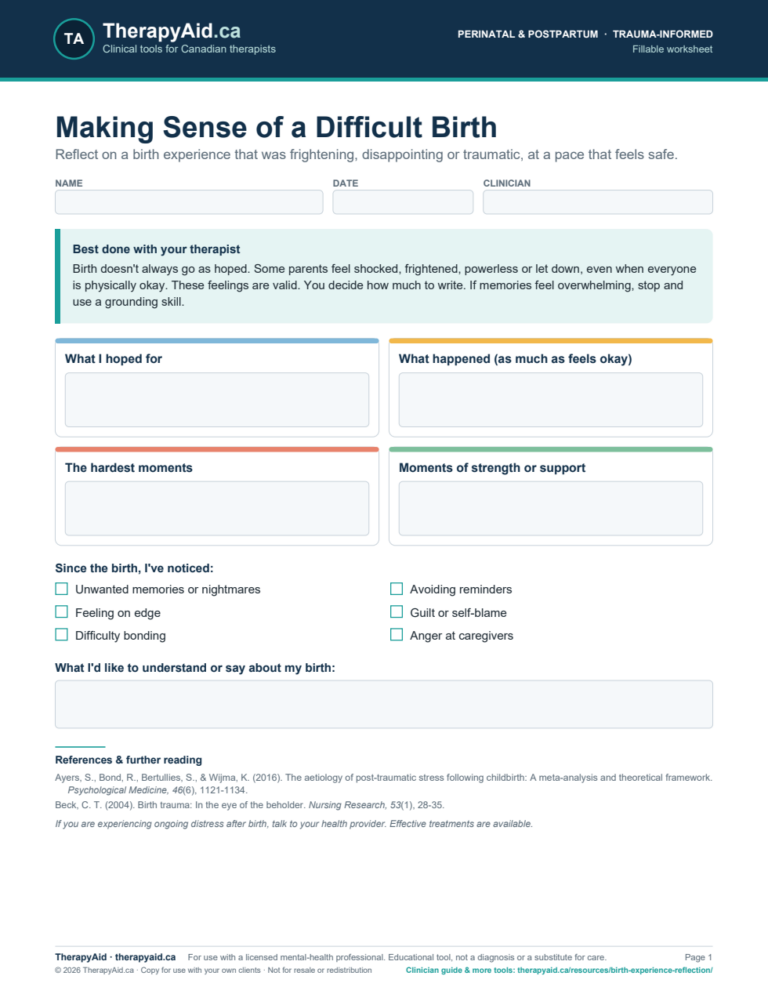
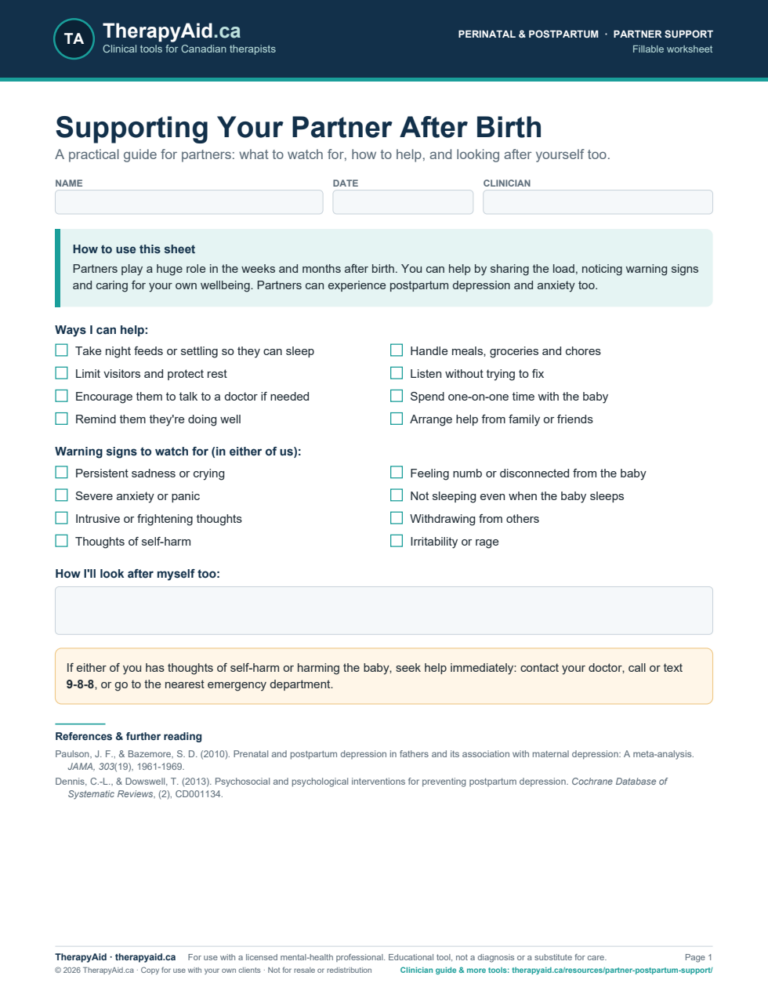
Postpartum depression affects a substantial minority of new mothers and has effects on parents and infants (O’Hara & McCabe, 2013). Psychosocial and psychological interventions reduce the risk of postpartum depression (Dennis & Dowswell, 2013).
When to use it
- Prenatal and postnatal care
- New parents with low mood or worry
- Partners and family education
- Perinatal support groups
How to use it in session
- Review the handout together.
- Normalize and reduce stigma.
- Screen for symptoms (e.g. EPDS).
- Review urgent warning signs.
- Build a support plan.
Clinician tips
- Include non-birthing parents.
- Ask about intrusive thoughts non-judgementally.
- Know local perinatal mental health resources.
Worked example
Sharing with clients
Members can download the PDF to print or email, or copy a private client link from the download box. Your client opens the link and downloads the worksheet on any device. No client account is needed, and nothing your client writes is stored on TherapyAid.
Frequently asked questions
How do I know if it’s baby blues or depression?
Baby blues usually ease within two weeks. Symptoms that last longer or are severe may be depression and need assessment.
Can fathers and partners get postpartum depression?
Yes. Partners can also experience perinatal depression and anxiety.
References
O’Hara, M. W., & McCabe, J. E. (2013). Postpartum depression: Current status and future directions. Annual Review of Clinical Psychology, 9, 379-407.
Dennis, C.-L., & Dowswell, T. (2013). Psychosocial and psychological interventions for preventing postpartum depression. Cochrane Database of Systematic Reviews, (2), CD001134.
This worksheet is an educational tool for use by, or under the guidance of, a licensed or registered mental-health professional. It is not a diagnostic instrument or a substitute for clinical judgement. If a client is in crisis in Canada, call or text 9-8-8 or call 9-1-1.