The Struggle Switch
An ACT worksheet based on the struggle switch metaphor, contrasting fighting feelings with allowing them, and logging suffering.
1-page fillable PDF · US Letter (prints on A4) · Acceptance and commitment therapy
- Approach / concern
- ACT
- Technique
- Acceptance and commitment therapy
- Format
- Fillable PDF, 1 page (US Letter / A4)
- Access
- Pro and Advanced plans (3-day free trial)
- For
- Licensed clinicians to use with clients
- Updated
- October 2026
Key facts
What is the The Struggle Switch?
The struggle switch metaphor illustrates how struggling against emotions adds secondary distress. Acceptance reduces this extra suffering.
Why it works
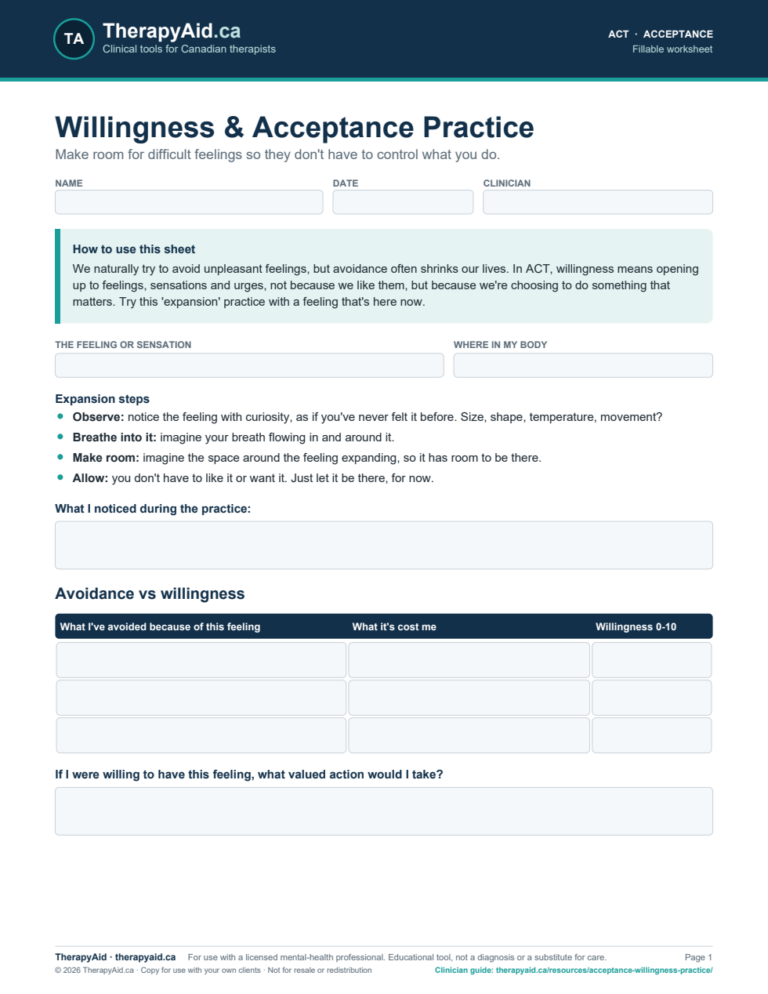
Harris (2019) describes the struggle switch metaphor in ACT. Acceptance is one of the core ACT processes (Hayes et al., 2012).
When to use it
- Anxiety and panic
- Anger about emotions
- Chronic pain
- ACT groups
How to use it in session
- Introduce the metaphor.
- Log struggles.
- Try switching off.
- Notice suffering levels.
- Practise daily.
Clinician tips
- Acceptance isn’t resignation.
- Start with small feelings.
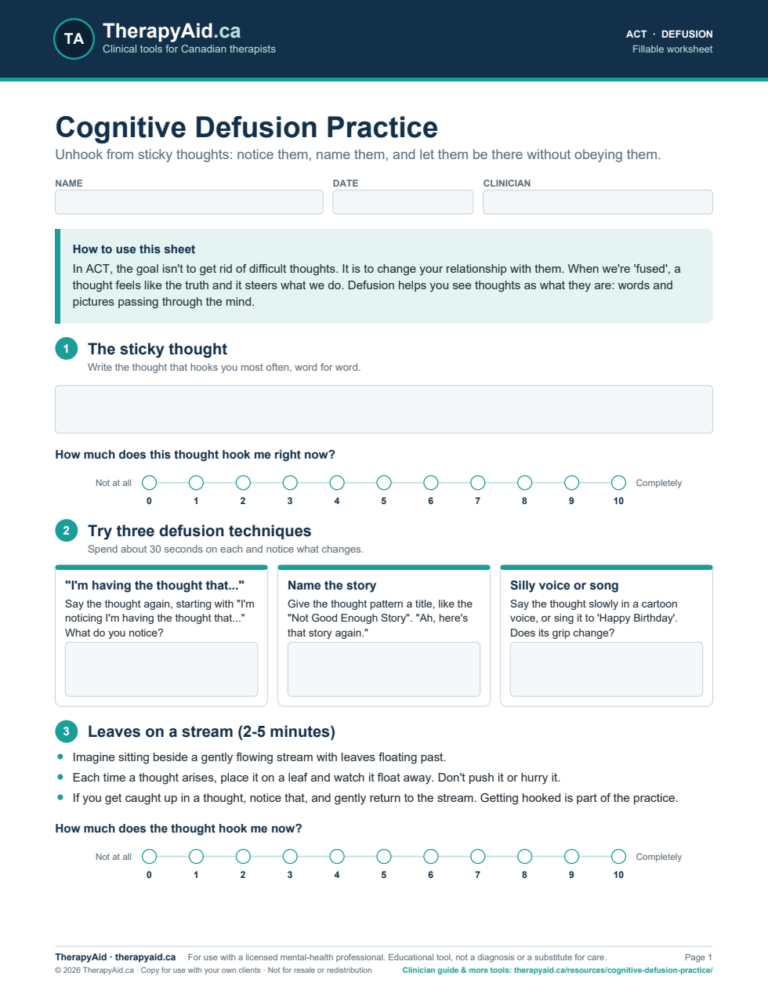
- Pair with defusion.
Worked example
Sharing with clients
Members can download the PDF to print or email, or copy a private client link from the download box. Your client opens the link and downloads the worksheet on any device. No client account is needed, and nothing your client writes is stored on TherapyAid.
Frequently asked questions
If I accept a feeling, won’t it get stronger?
Usually, struggling makes feelings bigger; allowing them often lets them settle.
Is the switch ever fully off?
It’s more like a dimmer; even turning it down helps.
References
Harris, R. (2019). ACT made simple: An easy-to-read primer on acceptance and commitment therapy (2nd ed.). New Harbinger.
Hayes, S. C., Strosahl, K. D., & Wilson, K. G. (2012). Acceptance and commitment therapy: The process and practice of mindful change (2nd ed.). Guilford Press.
This worksheet is an educational tool for use by, or under the guidance of, a licensed or registered mental-health professional. It is not a diagnostic instrument or a substitute for clinical judgement. If a client is in crisis in Canada, call or text 9-8-8 or call 9-1-1.