Perinatal Wellbeing Check-In
A compassionate weekly check-in for pregnant and postpartum clients covering mood, anxiety, support, common warning signs and help-seeking, with Canadian crisis resources.
2-page fillable PDF · US Letter (prints on A4) · Monitoring · Support planning
- Approach / concern
- Perinatal & Postpartum
- Technique
- Monitoring · Support planning
- Format
- Fillable PDF, 2 pages (US Letter / A4)
- Access
- Pro and Advanced plans (3-day free trial)
- For
- Licensed clinicians to use with clients
- Updated
- October 2026
Key facts
What is the Perinatal Wellbeing Check-In?
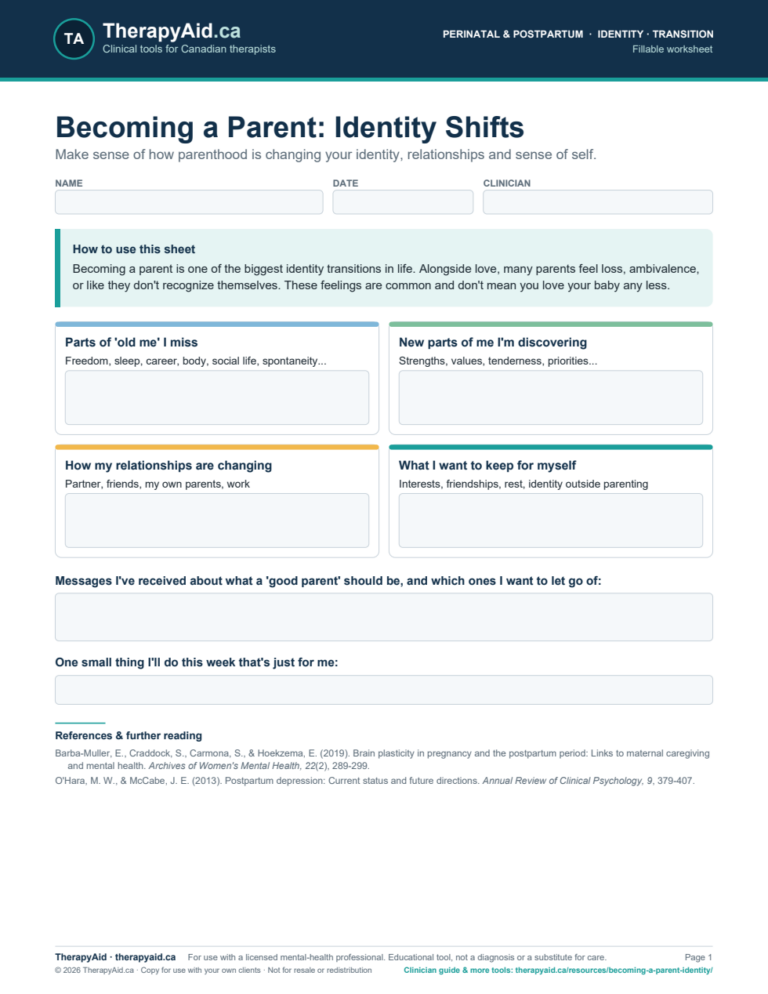
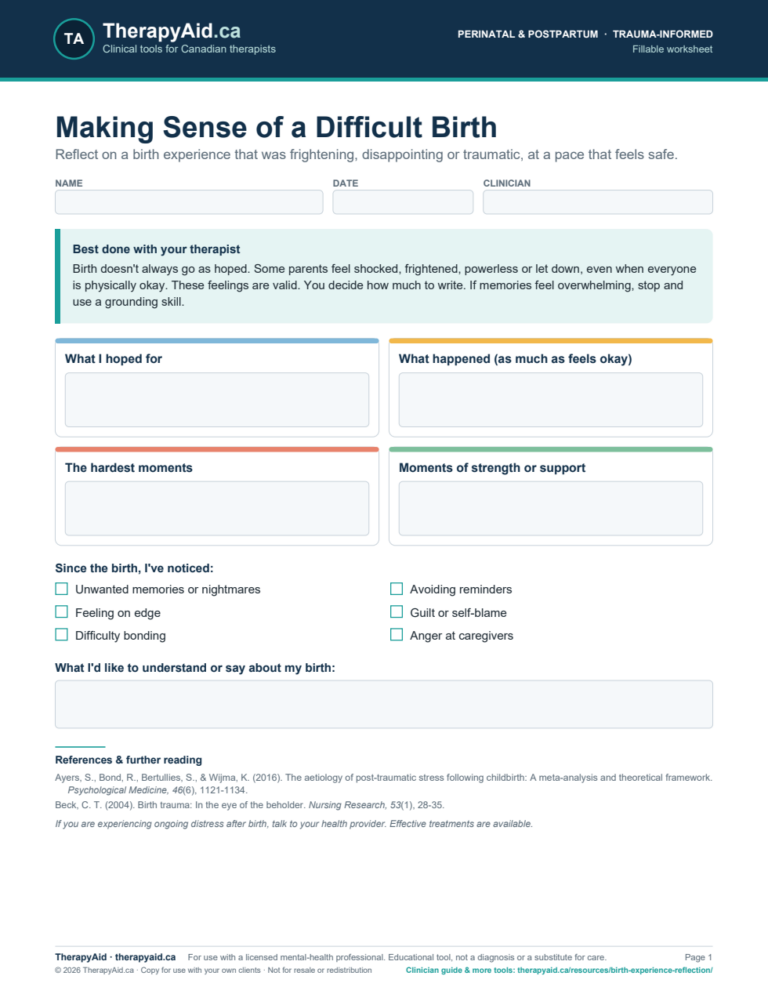
Perinatal mood and anxiety disorders affect a significant proportion of parents during pregnancy and the first year after birth. This non-diagnostic check-in helps clients track mood, anxiety and support over time, normalizes difficult experiences such as intrusive thoughts and rage, and prompts help-seeking.
Why it works
Postpartum depression is common and treatable, and early identification improves outcomes (O’Hara & McCabe, 2013). Psychosocial support and psychological interventions can help prevent and reduce perinatal depression (Dennis & Dowswell, 2013). Regular, non-judgemental check-ins make it easier for clients to disclose symptoms.
When to use it
- Pregnancy and the first postpartum year
- Clients with a history of depression or anxiety
- After birth trauma or NICU stays
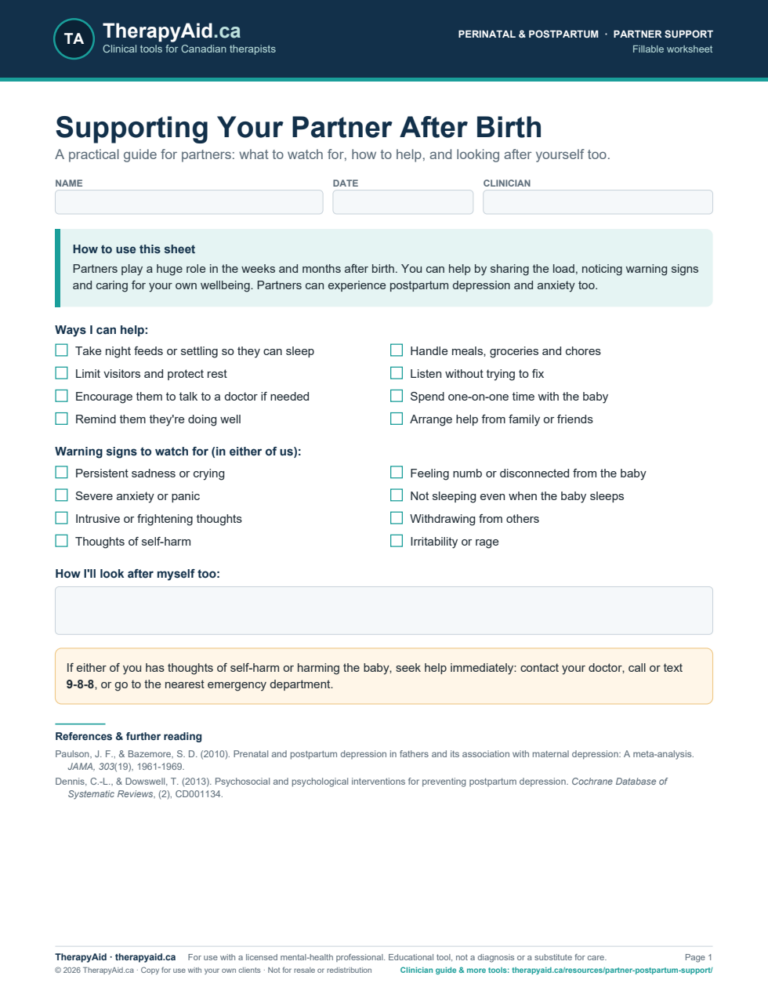
- Partners and non-birthing parents (adapted)
How to use it in session
- Introduce the sheet as routine, not as a test.
- Normalize intrusive thoughts and mixed feelings.
- Review the ratings and checklist together each week.
- Problem-solve one practical support step.
- Use a validated screener (such as the EPDS) when clinically indicated.
Clinician tips
- Ask directly about intrusive thoughts and explain that they are common and not a sign of intent.
- Include partners where appropriate.
- Coordinate with the family doctor or midwife.
Worked example
Sharing with clients
Members can download the PDF to print or email, or copy a private client link from the download box. Your client opens the link and downloads the worksheet on any device. No client account is needed, and nothing your client writes is stored on TherapyAid.
Frequently asked questions
Is this a screening tool for postpartum depression?
No. It is a non-diagnostic check-in. Use a validated measure and clinical assessment for screening.
Are intrusive thoughts about the baby dangerous?
Unwanted intrusive thoughts are very common in new parents and are usually distressing precisely because the parent doesn’t want them. Discuss them with a clinician, who can assess and support.
References
O’Hara, M. W., & McCabe, J. E. (2013). Postpartum depression: Current status and future directions. Annual Review of Clinical Psychology, 9, 379-407.
Dennis, C.-L., & Dowswell, T. (2013). Psychosocial and psychological interventions for preventing postpartum depression. Cochrane Database of Systematic Reviews, (2), CD001134.
This worksheet is an educational tool for use by, or under the guidance of, a licensed or registered mental-health professional. It is not a diagnostic instrument or a substitute for clinical judgement. If a client is in crisis in Canada, call or text 9-8-8 or call 9-1-1.