Passengers on the Bus (ACT Metaphor)
An ACT worksheet based on the Passengers on the Bus metaphor: naming a valued destination, listing difficult 'passengers' and what they shout, and planning to keep driving.
1-page fillable PDF · US Letter (prints on A4) · Defusion · Values
- Approach / concern
- ACT
- Technique
- Defusion · Values
- Format
- Fillable PDF, 1 page (US Letter / A4)
- Access
- Pro and Advanced plans (3-day free trial)
- For
- Licensed clinicians to use with clients
- Updated
- October 2026
Key facts
What is the Passengers on the Bus (ACT Metaphor)?
Passengers on the Bus is a well-known ACT metaphor in which the person is the driver of a bus heading toward their values, and difficult thoughts and feelings are passengers demanding a change of direction. It illustrates defusion, acceptance and committed action.
Why it works
Metaphors are central to ACT because they help clients experience new relationships with thoughts rather than arguing with them (Hayes et al., 2012; Harris, 2019).
When to use it
- Avoidance driven by fear or self-doubt
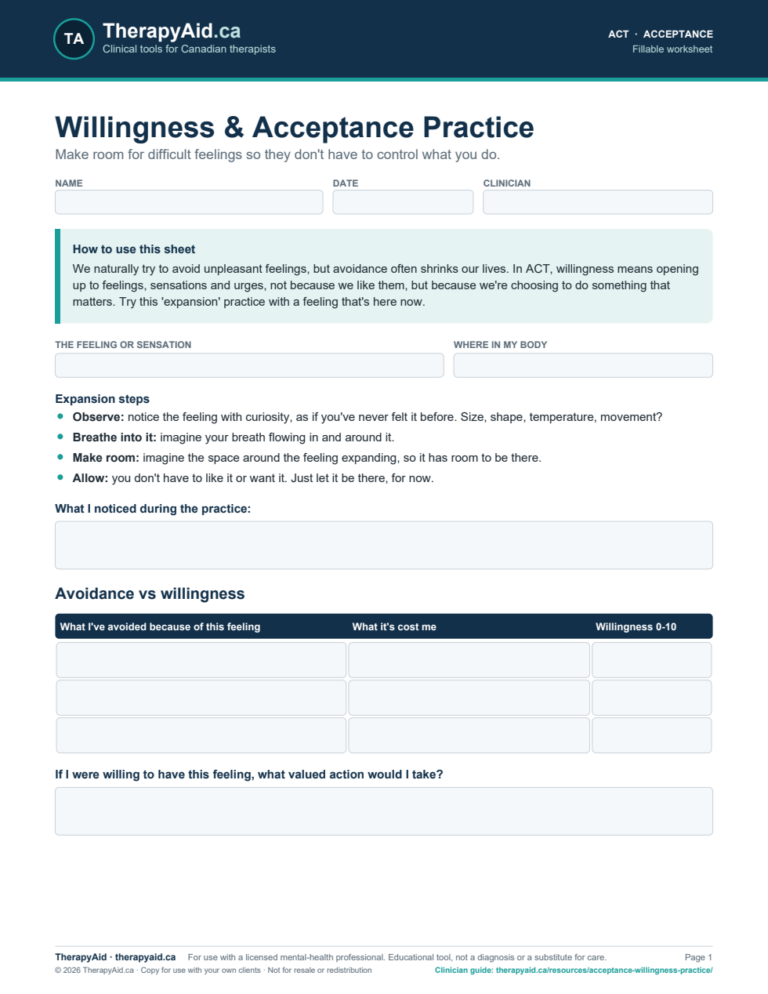
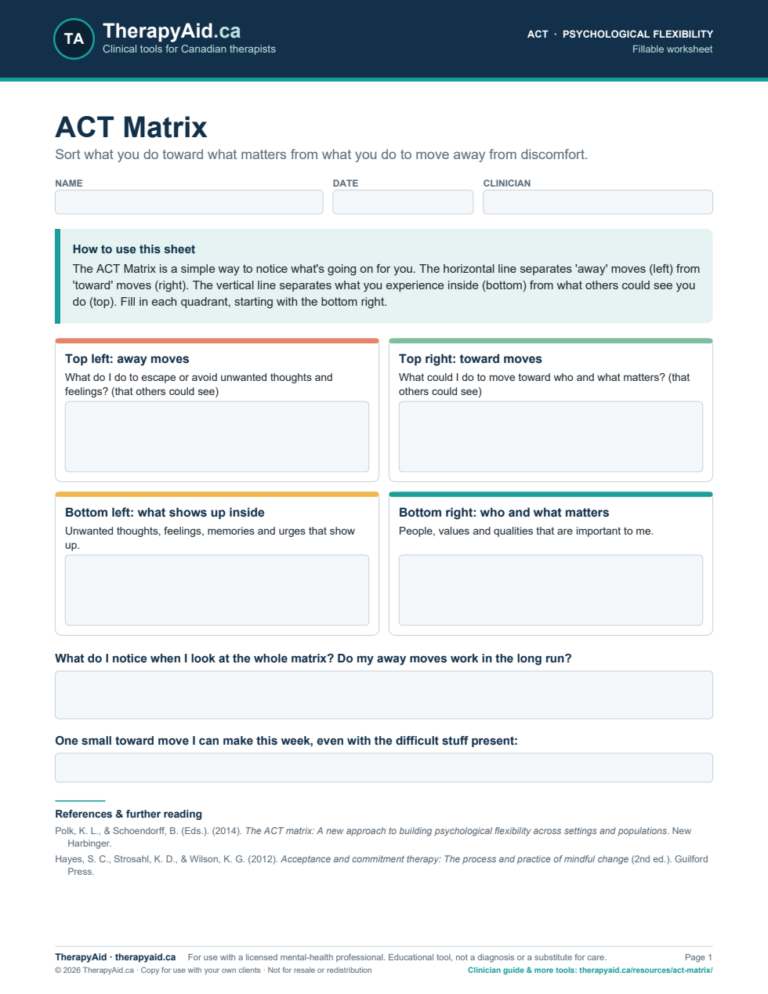
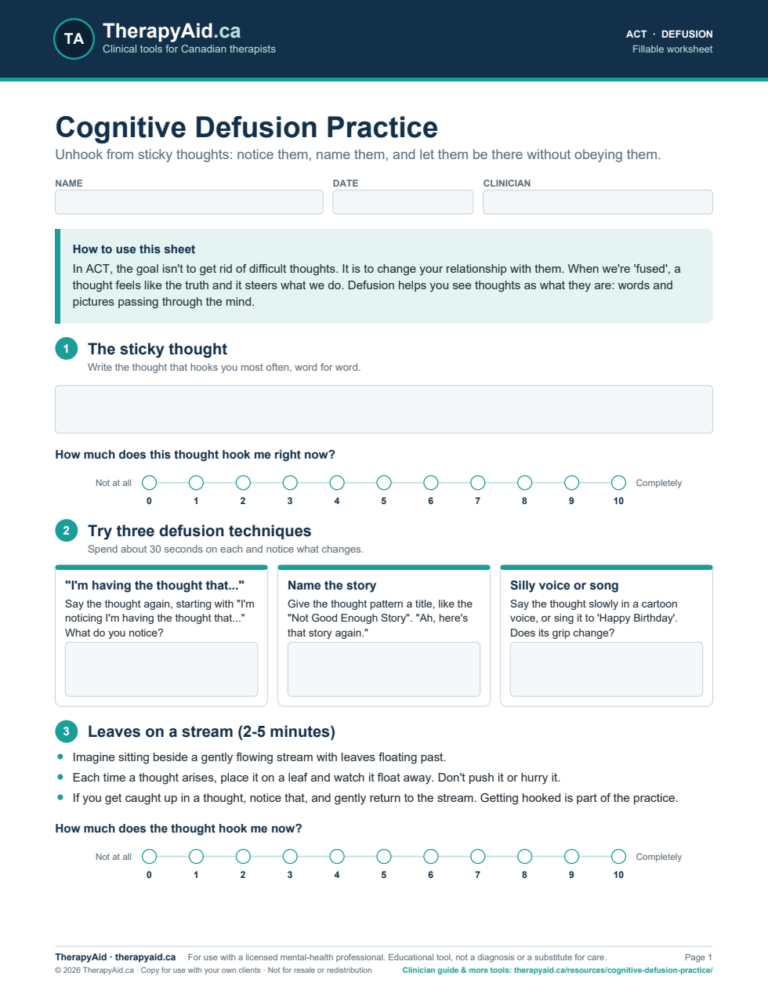
- Introducing defusion and acceptance
- Teens and adults who respond to imagery
- Groups and workshops
How to use it in session
- Tell the metaphor vividly, perhaps acting it out.
- Name a valued destination.
- List the client’s passengers and their demands.
- Explore what happens when passengers steer.
- Plan valued action with passengers on board.
Clinician tips
- Role-play the passengers for impact.
- Clients can give passengers funny names.
- Link to the Values Clarification sheet.
Worked example
Sharing with clients
Members can download the PDF to print or email, or copy a private client link from the download box. Your client opens the link and downloads the worksheet on any device. No client account is needed, and nothing your client writes is stored on TherapyAid.
Frequently asked questions
Do I have to get rid of the passengers?
No. The point is that you can drive toward what matters even while they’re on board.
Can this metaphor be used with kids?
Yes, simplified versions work well with older children and teens.
References
Hayes, S. C., Strosahl, K. D., & Wilson, K. G. (2012). Acceptance and commitment therapy: The process and practice of mindful change (2nd ed.). Guilford Press.
Harris, R. (2019). ACT made simple (2nd ed.). New Harbinger.
This worksheet is an educational tool for use by, or under the guidance of, a licensed or registered mental-health professional. It is not a diagnostic instrument or a substitute for clinical judgement. If a client is in crisis in Canada, call or text 9-8-8 or call 9-1-1.