Pain Safety Reappraisal (Pain Reprocessing Skills)
A chronic pain worksheet logging situations, pain, fearful thoughts and safety messages with before and after ratings, plus signs of neuroplastic pain to discuss with providers.
1-page fillable PDF · US Letter (prints on A4) · Pain reprocessing · CBT
- Approach / concern
- Chronic Pain
- Technique
- Pain reprocessing · CBT
- Format
- Fillable PDF, 1 page (US Letter / A4)
- Access
- Pro and Advanced plans (3-day free trial)
- For
- Licensed clinicians to use with clients
- Updated
- October 2026
Key facts
What is the Pain Safety Reappraisal (Pain Reprocessing Skills)?
Pain reprocessing therapy treats chronic pain as potentially brain-generated (neuroplastic or nociplastic) and uses education, somatic tracking with safety reappraisal and exposure to reduce pain fear and pain.
Why it works
A randomized trial found pain reprocessing therapy substantially reduced chronic back pain compared with placebo and usual care (Ashar et al., 2022). Pain neuroscience education supports reconceptualizing pain (Moseley & Butler, 2015).
When to use it
- Chronic back pain and other primary pain
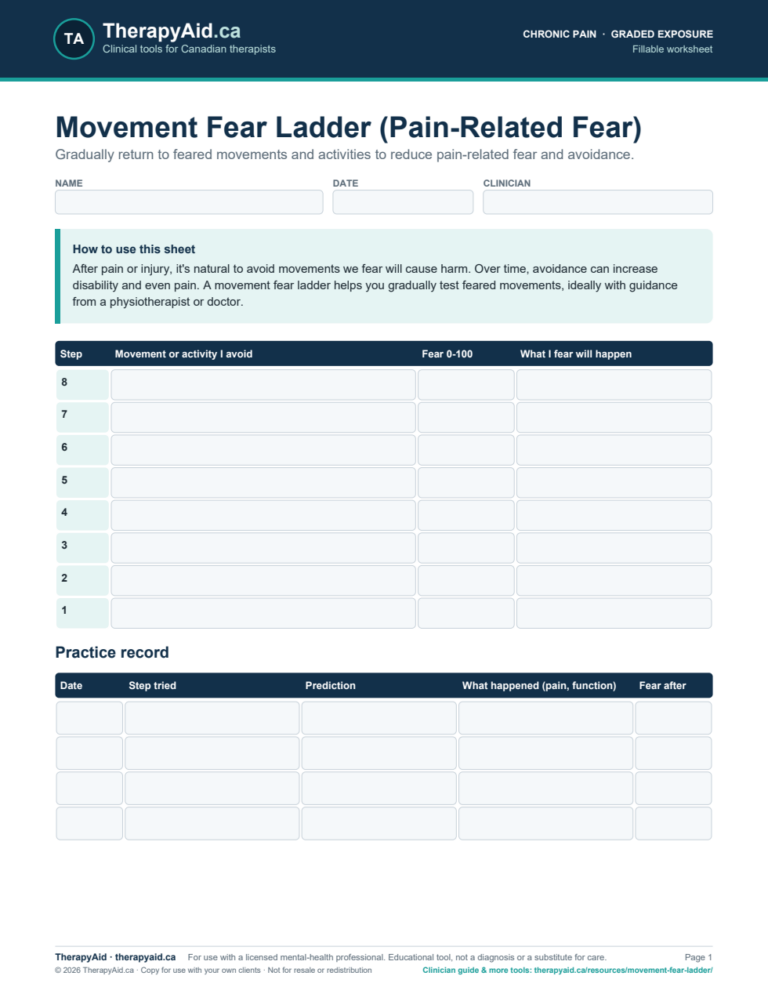
- Pain fear and avoidance
- After medical clearance
- Pain management programs
How to use it in session
- Confirm medical assessment.
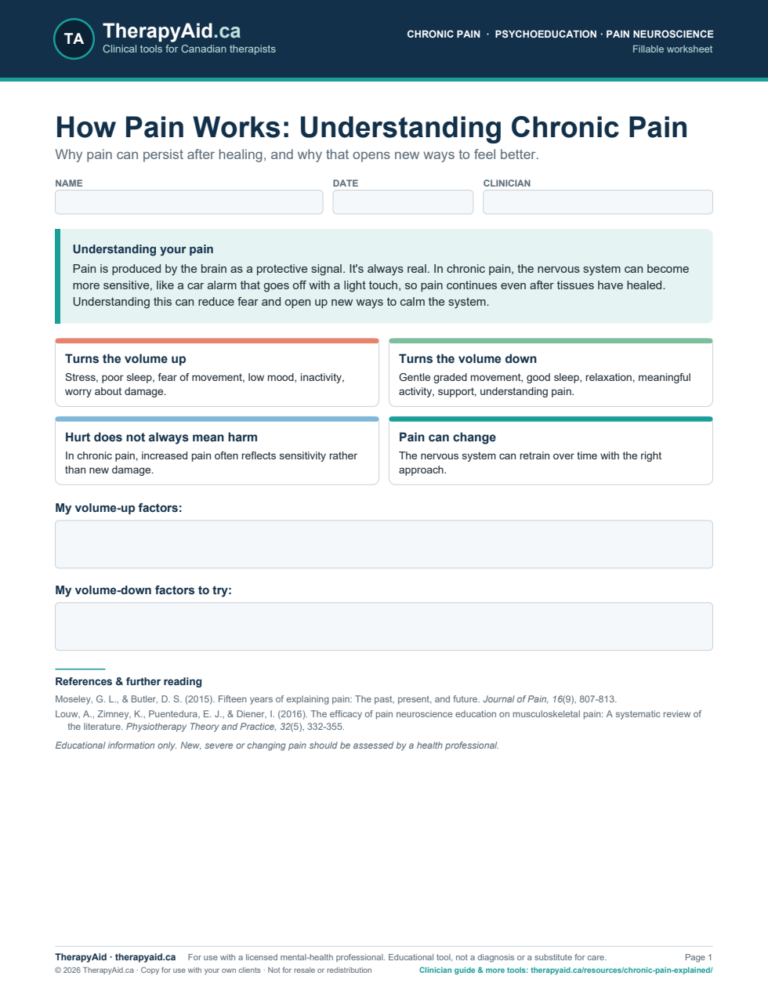
- Explain brain-generated pain.
- Practise somatic tracking with safety messages.
- Log pain and thoughts.
- Return gradually to activities.
Clinician tips
- Avoid implying pain isn’t real.
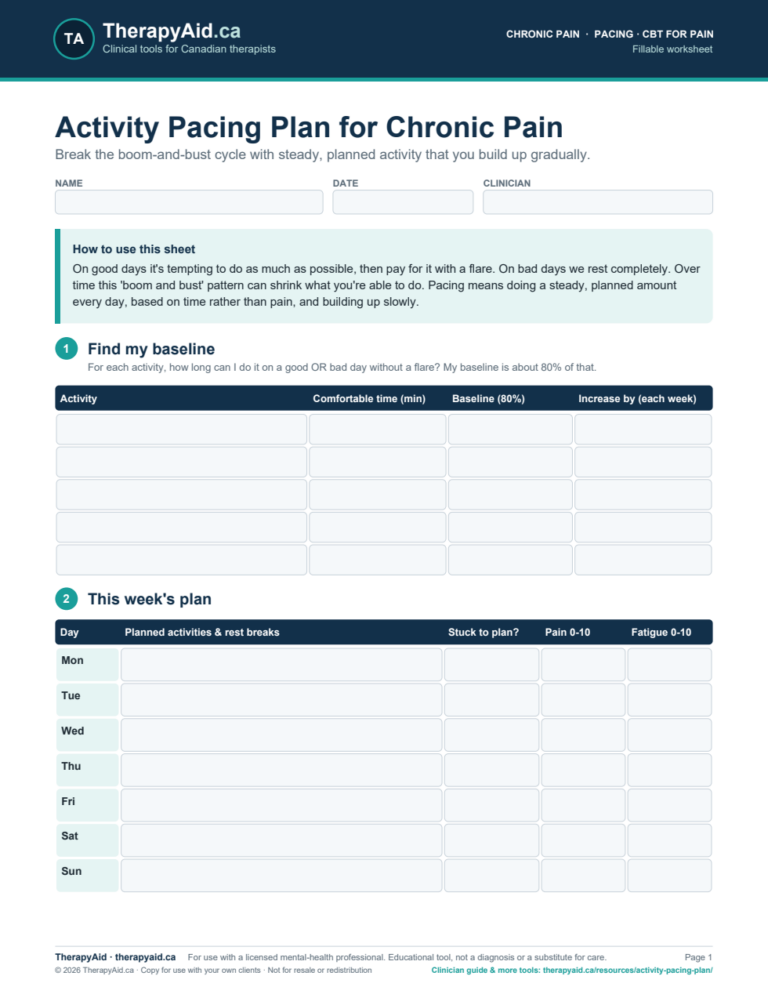
- Pace exposure to activities.
- Combine with pacing and ACT.
Worked example
Sharing with clients
Members can download the PDF to print or email, or copy a private client link from the download box. Your client opens the link and downloads the worksheet on any device. No client account is needed, and nothing your client writes is stored on TherapyAid.
Frequently asked questions
Is neuroplastic pain real?
Yes. All pain is real; neuroplastic pain is generated by the brain’s danger signalling rather than ongoing tissue damage.
Is pain reprocessing right for everyone?
No. It’s for primary chronic pain after medical assessment.
References
Ashar, Y. K., Gordon, A., Schubiner, H., Uipi, C., Knight, K., Anderson, Z., et al. (2022). Effect of pain reprocessing therapy vs placebo and usual care for patients with chronic back pain: A randomized clinical trial. JAMA Psychiatry, 79(1), 13-23.
Moseley, G. L., & Butler, D. S. (2015). Fifteen years of explaining pain: The past, present, and future. Journal of Pain, 16(9), 807-813.
This worksheet is an educational tool for use by, or under the guidance of, a licensed or registered mental-health professional. It is not a diagnostic instrument or a substitute for clinical judgement. If a client is in crisis in Canada, call or text 9-8-8 or call 9-1-1.