Pain Body Map & Tracker
A chronic pain worksheet with an illustrated body outline for marking pain, fields for pain quality and modifying factors, and a 7-day tracker of pain, sleep, stress and activity.
2-page fillable PDF · US Letter (prints on A4) · Pain self-monitoring
- Approach / concern
- Chronic Pain
- Technique
- Pain self-monitoring
- Format
- Fillable PDF, 2 pages (US Letter / A4)
- Access
- Pro and Advanced plans (3-day free trial)
- For
- Licensed clinicians to use with clients
- Updated
- October 2026
Key facts
What is the Pain Body Map & Tracker?
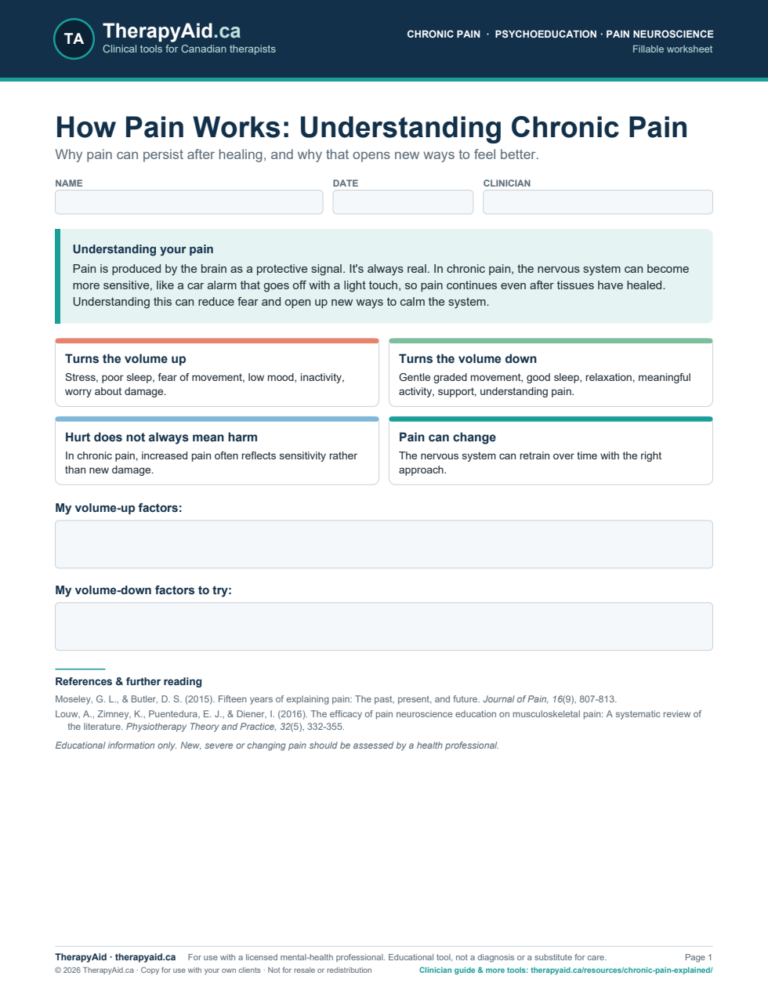
Pain body maps (pain drawings) are widely used to document the location and spread of pain. Combined with daily tracking of related factors, they support assessment, communication with care providers and self-management.
Why it works
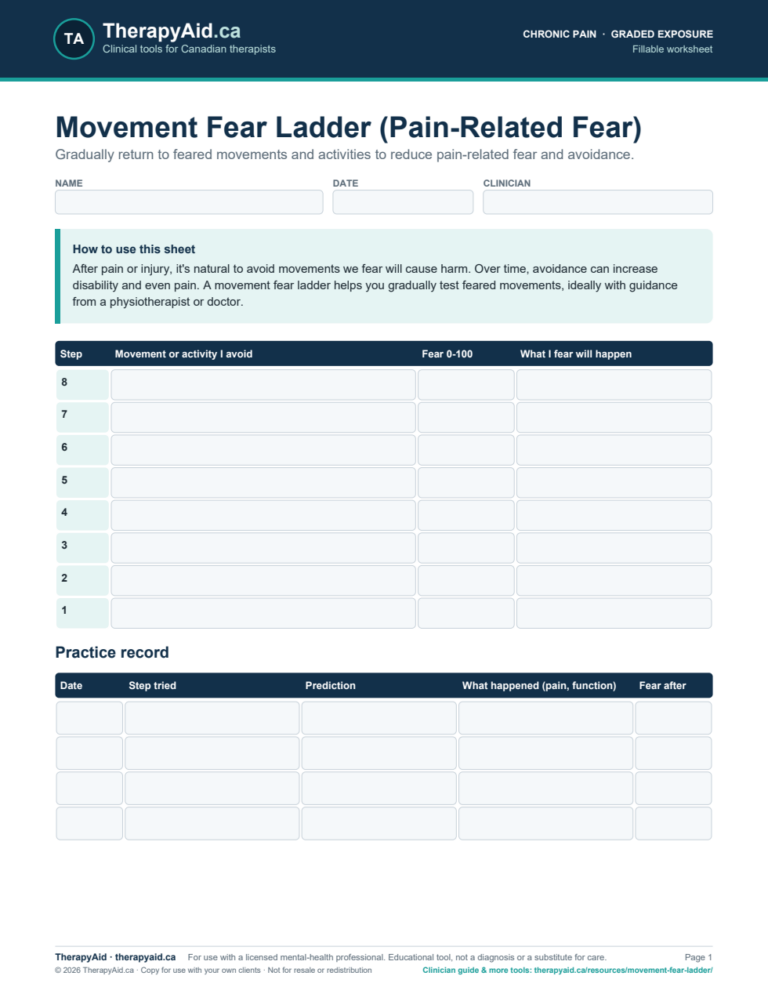
Self-monitoring is a common component of cognitive-behavioural pain management, helping people identify patterns and the influence of sleep, stress and activity on pain (Ehde et al., 2014).
When to use it
- Chronic pain assessment
- Preparing for medical appointments
- Identifying pain triggers
- Pain management programs
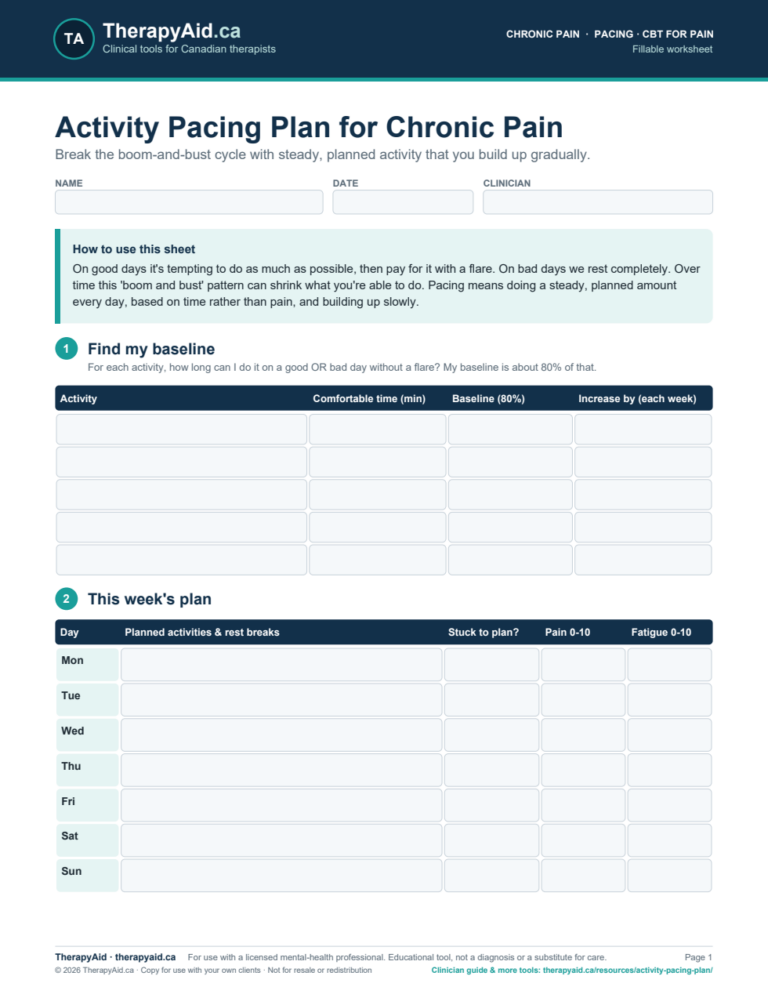
How to use it in session
- Mark pain locations and describe quality.
- Note what makes pain better or worse.
- Track daily pain and related factors for a week or more.
- Review patterns together.
- Use findings to guide pacing and coping plans.
Clinician tips
- Track good days as well as bad ones.
- Share with physicians and physiotherapists.
- Avoid excessive focus on pain; keep tracking brief.
Worked example
Sharing with clients
Members can download the PDF to print or email, or copy a private client link from the download box. Your client opens the link and downloads the worksheet on any device. No client account is needed, and nothing your client writes is stored on TherapyAid.
Frequently asked questions
How long should I track pain?
One to two weeks gives a useful picture; longer tracking can help during treatment changes.
Will tracking make me focus on pain more?
Keep entries brief. For most people, structured tracking increases a sense of control rather than preoccupation.
References
Ehde, D. M., Dillworth, T. M., & Turner, J. A. (2014). Cognitive-behavioral therapy for individuals with chronic pain: Efficacy, innovations, and directions for research. American Psychologist, 69(2), 153-166.
This worksheet is an educational tool for use by, or under the guidance of, a licensed or registered mental-health professional. It is not a diagnostic instrument or a substitute for clinical judgement. If a client is in crisis in Canada, call or text 9-8-8 or call 9-1-1.