The Observing Self
An ACT self-as-context worksheet with a short observing-self practice, the sky and weather metaphor and reflection prompts.
1-page fillable PDF · US Letter (prints on A4) · Self-as-context
- Approach / concern
- ACT
- Technique
- Self-as-context
- Format
- Fillable PDF, 1 page (US Letter / A4)
- Access
- Pro and Advanced plans (3-day free trial)
- For
- Licensed clinicians to use with clients
- Updated
- October 2026
Key facts
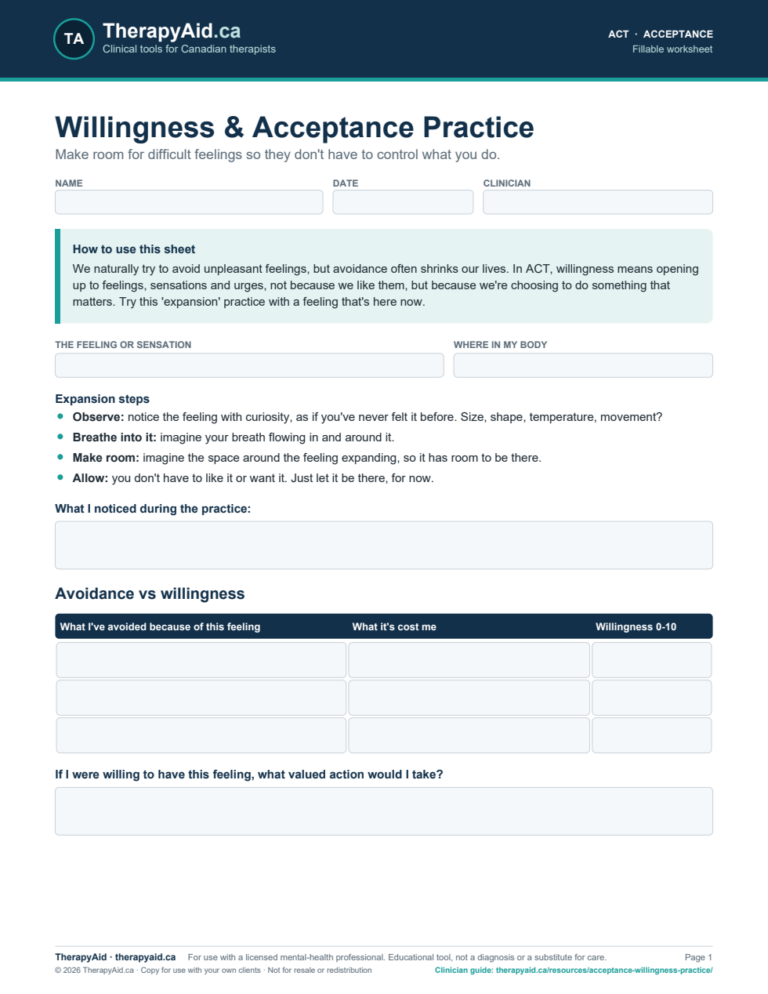
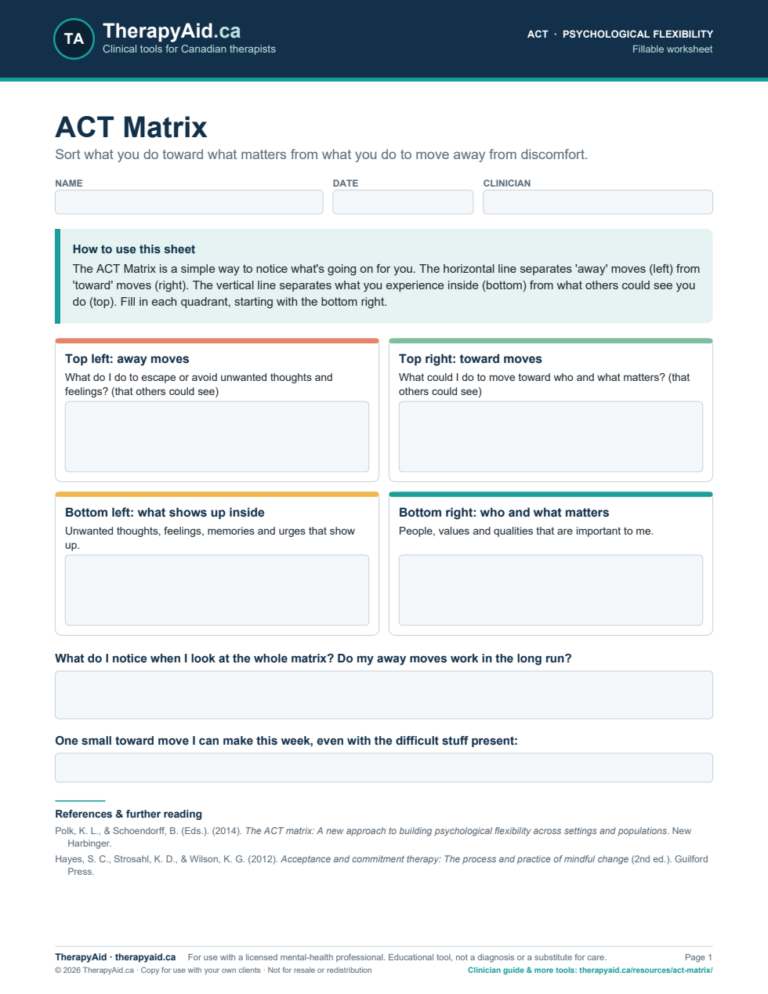
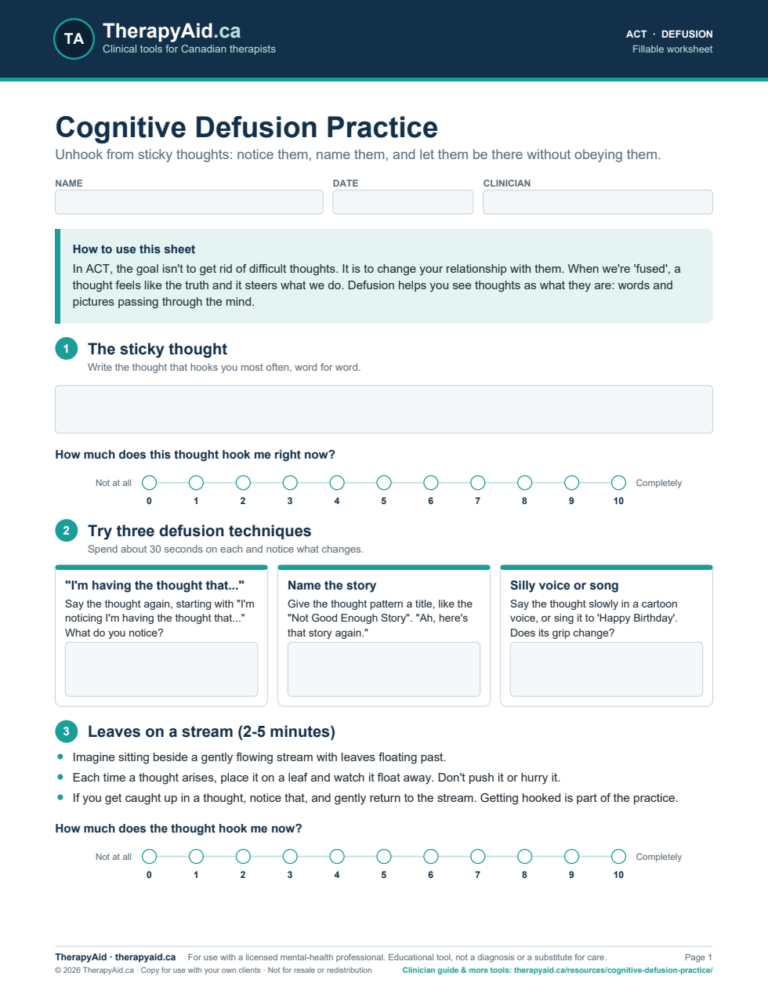
What is the The Observing Self?
Self-as-context is the ACT process of contacting a stable perspective from which experiences are observed, sometimes called the observing or noticing self. It helps people see that they are more than their thoughts, feelings or self-stories.
Why it works
Self-as-context is one of the six core processes of psychological flexibility in ACT (Hayes et al., 2012). Accessing it supports defusion and acceptance (Harris, 2019).
When to use it
- Strong identification with self-stories (“I’m broken”)
- Overwhelming emotions
- Trauma (with care)
- ACT therapy
How to use it in session
- Introduce the sky and weather metaphor.
- Guide the short noticing practice.
- Debrief what the client noticed.
- Apply to a difficult experience.
- Practise regularly.
Clinician tips
- Keep it experiential rather than intellectual.
- Some clients find it abstract; use concrete metaphors.
- Go gently with dissociative clients.
Worked example
Sharing with clients
Members can download the PDF to print or email, or copy a private client link from the download box. Your client opens the link and downloads the worksheet on any device. No client account is needed, and nothing your client writes is stored on TherapyAid.
Frequently asked questions
Is the observing self a spiritual concept?
In ACT it’s a psychological perspective, though some people relate it to spiritual ideas.
What’s the point of noticing that I notice?
It creates space between you and difficult experiences, making them easier to hold.
References
Hayes, S. C., Strosahl, K. D., & Wilson, K. G. (2012). Acceptance and commitment therapy: The process and practice of mindful change (2nd ed.). Guilford Press.
Harris, R. (2019). ACT made simple (2nd ed.). New Harbinger.
This worksheet is an educational tool for use by, or under the guidance of, a licensed or registered mental-health professional. It is not a diagnostic instrument or a substitute for clinical judgement. If a client is in crisis in Canada, call or text 9-8-8 or call 9-1-1.