Expressing Attachment Needs Script
An attachment-informed worksheet helping clients notice their protest or withdrawal patterns, name the softer emotions underneath and script a direct request for connection.
1-page fillable PDF · US Letter (prints on A4) · Attachment-informed · EFT-informed
- Approach / concern
- Attachment
- Technique
- Attachment-informed · EFT-informed
- Format
- Fillable PDF, 1 page (US Letter / A4)
- Access
- Pro and Advanced plans (3-day free trial)
- For
- Licensed clinicians to use with clients
- Updated
- October 2026
Key facts
What is the Expressing Attachment Needs Script?
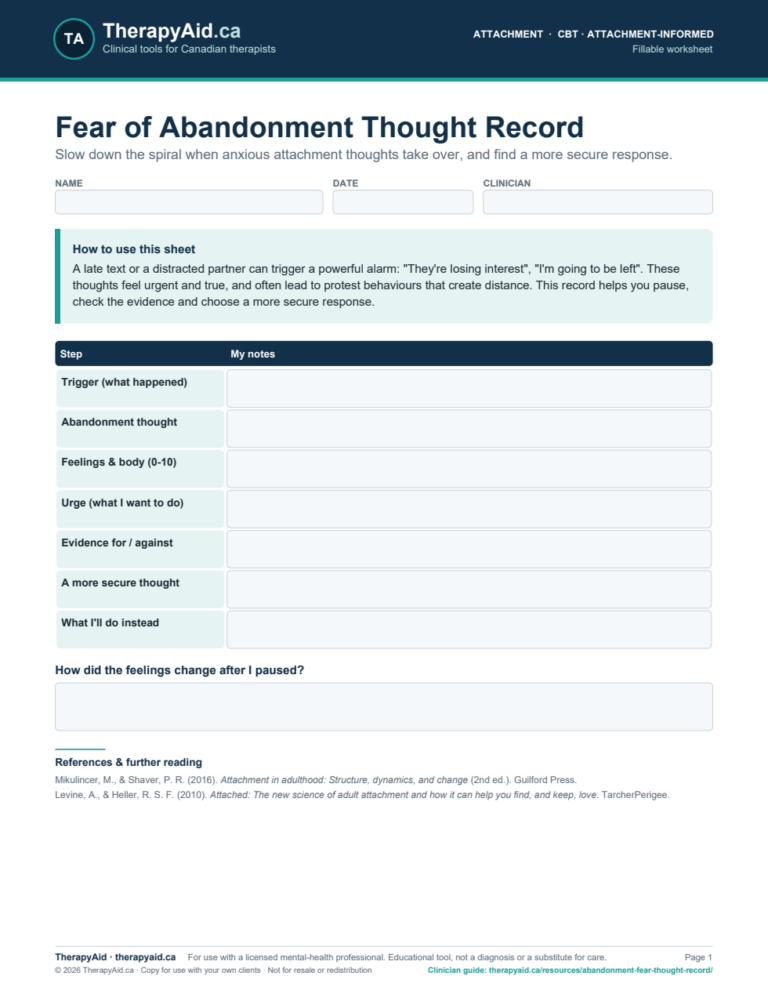
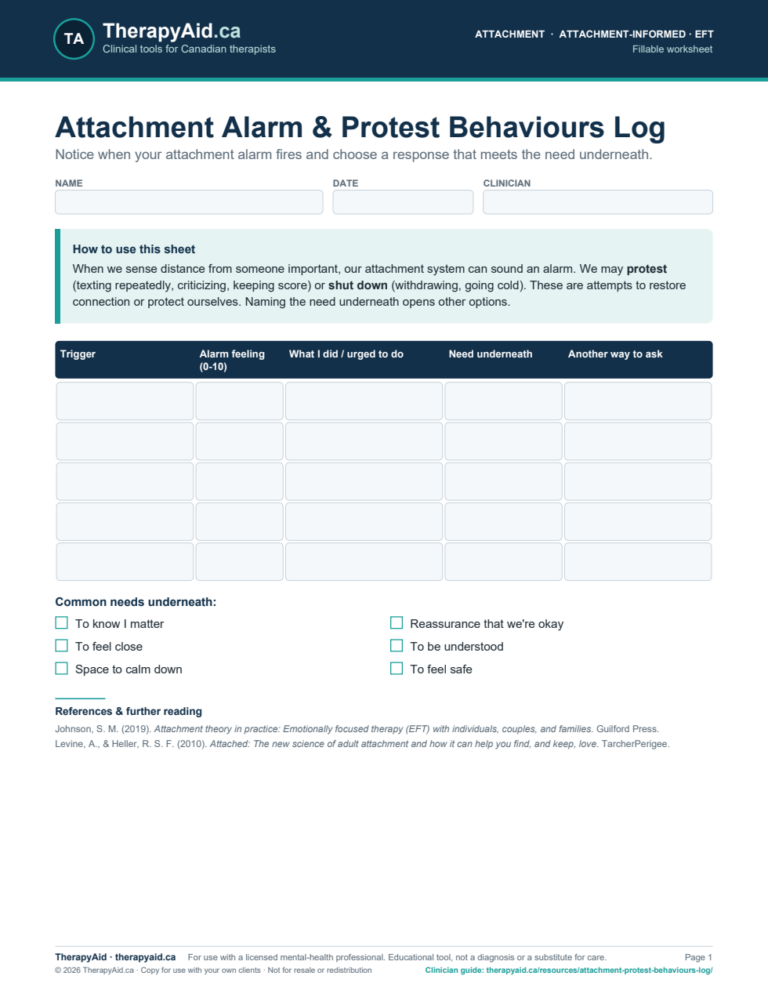
Attachment-informed approaches such as Emotionally Focused Therapy describe how partners respond to disconnection with protest (pursuing, criticizing) or protection (withdrawing). Beneath these are primary attachment emotions and needs for safety, comfort and closeness.
Why it works
Expressing softer, primary emotions and attachment needs tends to elicit responsiveness rather than defensiveness (Johnson, 2008). Attachment security is supported by repeated experiences of responsive connection (Mikulincer & Shaver, 2016).
When to use it
- Pursue-withdraw cycles in couples
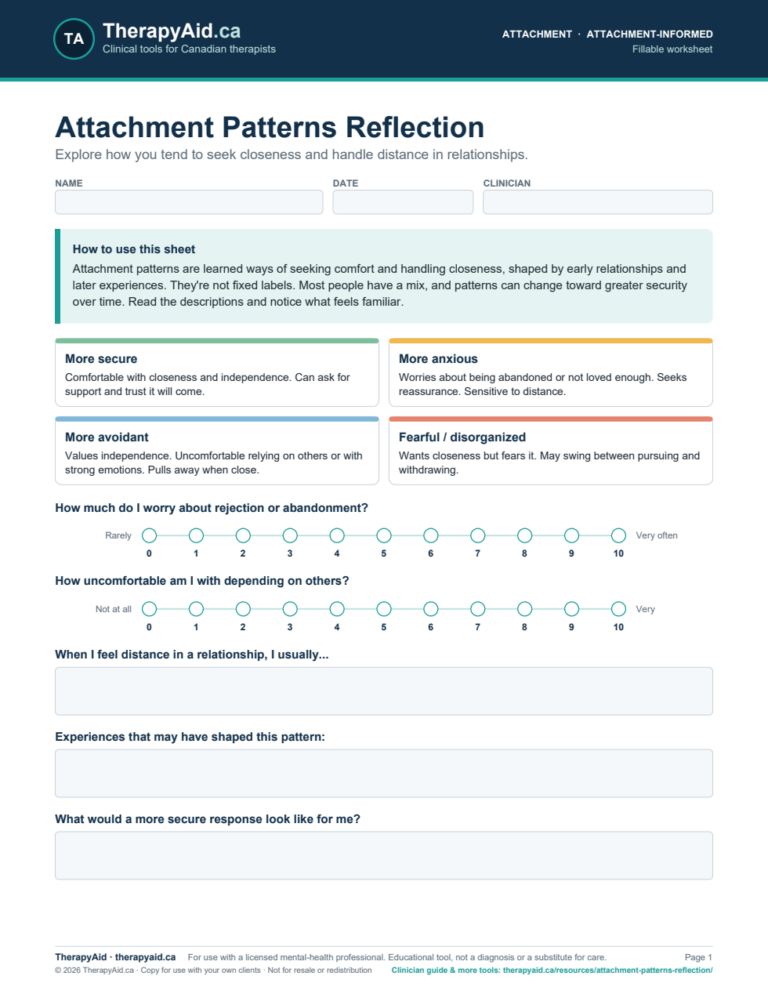
- Anxious or avoidant attachment patterns
- Couples therapy homework
- Individual clients preparing difficult conversations
How to use it in session
- Identify the client’s usual protest or protection moves.
- Explore the softer emotions underneath.
- Write a when / feel / need script.
- Rehearse in session.
- Debrief the partner’s response.
Clinician tips
- Needs should be about connection, not controlling the partner’s behaviour.
- Validate both partners’ fears.
- Not suitable where there is abuse or coercive control.
Worked example
Sharing with clients
Members can download the PDF to print or email, or copy a private client link from the download box. Your client opens the link and downloads the worksheet on any device. No client account is needed, and nothing your client writes is stored on TherapyAid.
Frequently asked questions
What’s the difference between a need and a demand?
A need expresses vulnerability and invites closeness; a demand insists on a specific behaviour, often with blame.
What if my partner doesn’t respond well?
Notice what happened without blame, and consider exploring the pattern together with a couples therapist.
References
Johnson, S. M. (2008). Hold me tight: Seven conversations for a lifetime of love. Little, Brown.
Mikulincer, M., & Shaver, P. R. (2016). Attachment in adulthood: Structure, dynamics, and change (2nd ed.). Guilford Press.
This worksheet is an educational tool for use by, or under the guidance of, a licensed or registered mental-health professional. It is not a diagnostic instrument or a substitute for clinical judgement. If a client is in crisis in Canada, call or text 9-8-8 or call 9-1-1.