Anger: What’s Beneath the Surface
An illustrated, fillable worksheet that helps clients look beneath anger to identify the more vulnerable emotions and unmet needs it may be protecting, then plan a calmer response.
2-page fillable PDF · US Letter (prints on A4) · CBT · Emotion awareness
- Approach / concern
- Anger
- Technique
- CBT · Emotion awareness
- Format
- Fillable PDF, 2 pages (US Letter / A4)
- Access
- Pro and Advanced plans (3-day free trial)
- For
- Licensed clinicians to use with clients
- Updated
- October 2026
Key facts
What is the Anger: What’s Beneath the Surface?
Many anger-management approaches describe anger as a ‘secondary’ or protective emotion: the visible tip of an iceberg with more vulnerable feelings such as hurt, fear, shame or powerlessness underneath. This worksheet uses that metaphor to slow down an angry episode, name the underlying emotions and needs, and translate them into a clearer, less escalating message.
Why it works
Cognitive-behavioural treatments for anger show medium to large effects on anger and aggression (Beck & Fernandez, 1998). Increasing emotional awareness and identifying the appraisals and needs behind anger are core components of these programs (Deffenbacher, 2011). Naming softer emotions also tends to reduce defensiveness in the people on the receiving end.
When to use it
- Anger management (individual or group)
- Couples work where one partner leads with anger
- Teens and adults with irritability linked to depression or trauma
- Workplace conflict and road rage
How to use it in session
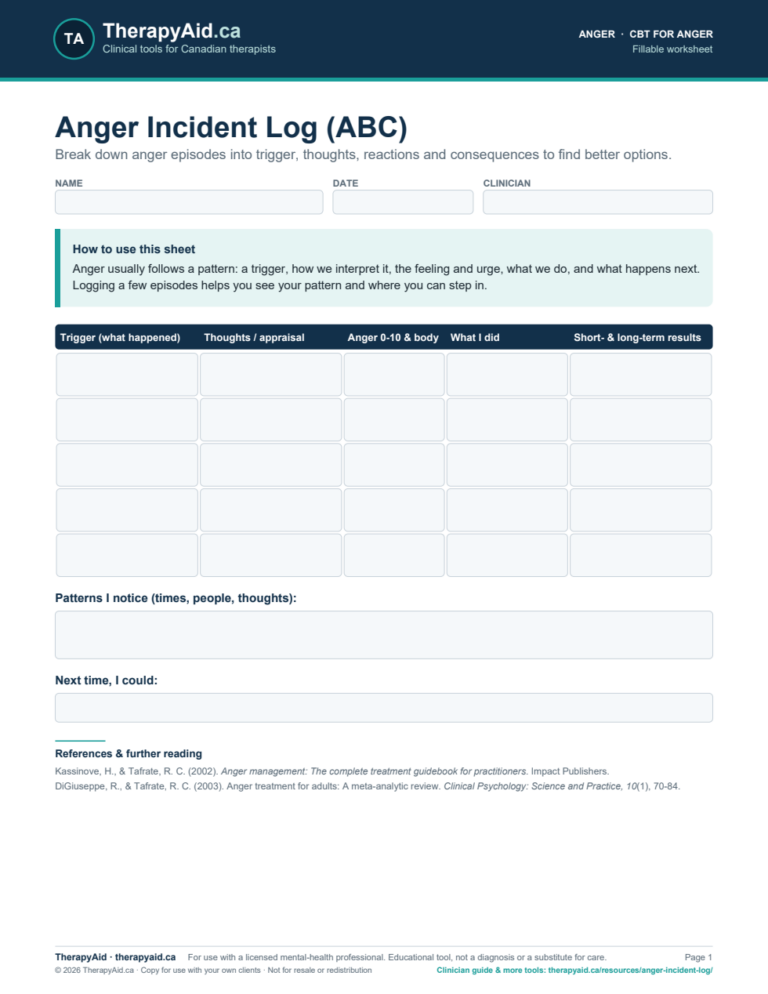
- Introduce the iceberg using a recent, moderate example (not the most intense episode).
- Have the client describe the facts and rate the anger.
- Explore the checklist slowly. Most clients find two or three feelings underneath.
- Identify the unmet need and rehearse an ‘I feel… because… I need…’ statement.
- Agree on an early-warning plan for next time.
Clinician tips
- Validate anger first. The goal is understanding, not shaming the client for being angry.
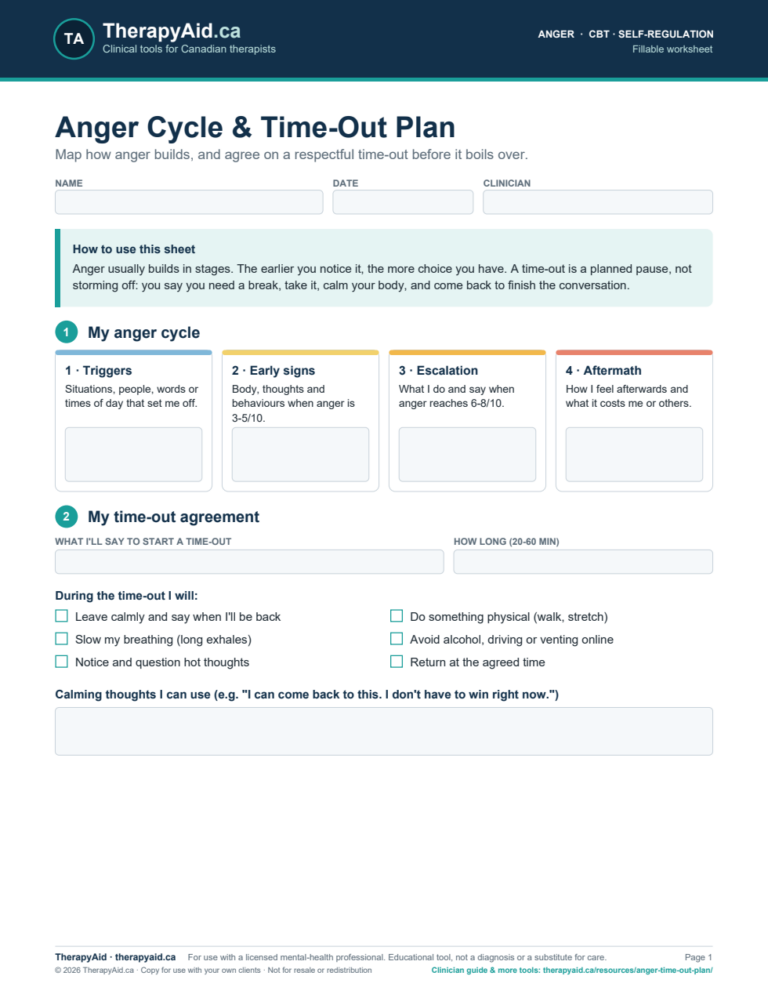
- Pair with a time-out plan for high-intensity situations.
- In trauma work, anger may protect against helplessness. Go gently.
Worked example
Sharing with clients
Members can download the PDF to print or email, or copy a private client link from the download box. Your client opens the link and downloads the worksheet on any device. No client account is needed, and nothing your client writes is stored on TherapyAid.
Frequently asked questions
Is anger always a secondary emotion?
Not always. Anger can be a direct, healthy response to injustice. The iceberg is a useful lens for exploring reactive anger, not a rule.
Can this be used with children?
Yes, with simpler words. Many children respond well to drawing their own iceberg.
References
Deffenbacher, J. L. (2011). Cognitive-behavioral conceptualization and treatment of anger. Cognitive and Behavioral Practice, 18(2), 212-221.
Beck, R., & Fernandez, E. (1998). Cognitive-behavioral therapy in the treatment of anger: A meta-analysis. Cognitive Therapy and Research, 22(1), 63-74.
Reilly, P. M., & Shopshire, M. S. (2019). Anger management for substance use disorder and mental health clients: A cognitive-behavioral therapy manual. Substance Abuse and Mental Health Services Administration.
This worksheet is an educational tool for use by, or under the guidance of, a licensed or registered mental-health professional. It is not a diagnostic instrument or a substitute for clinical judgement. If a client is in crisis in Canada, call or text 9-8-8 or call 9-1-1.