The Binge-Restrict Cycle Map
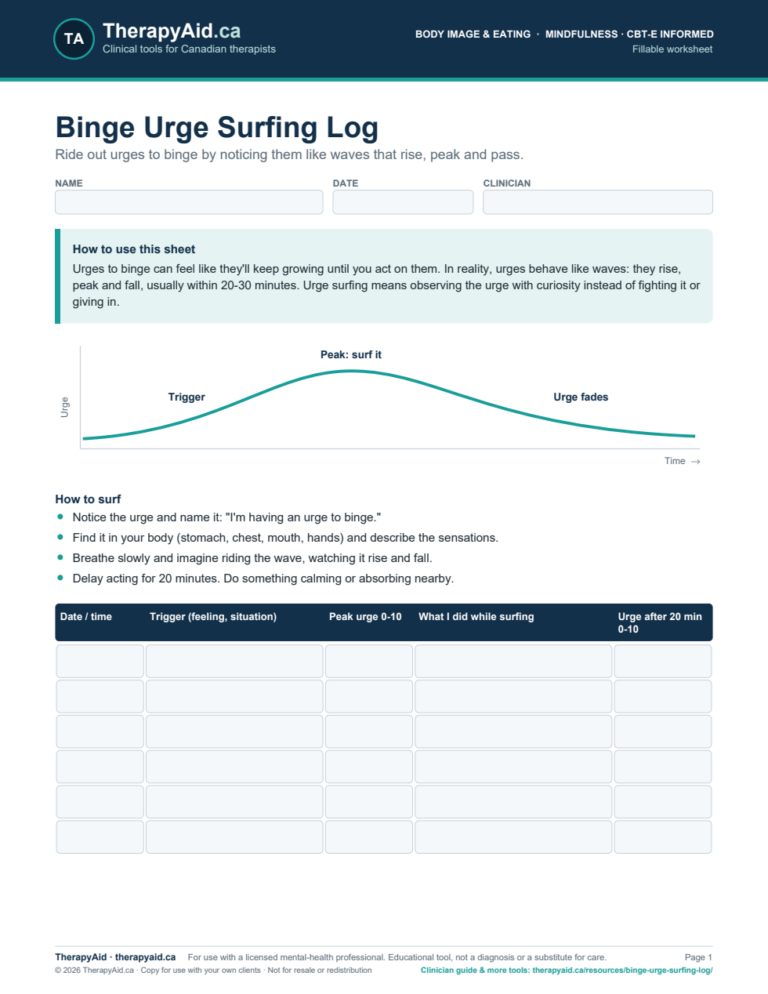
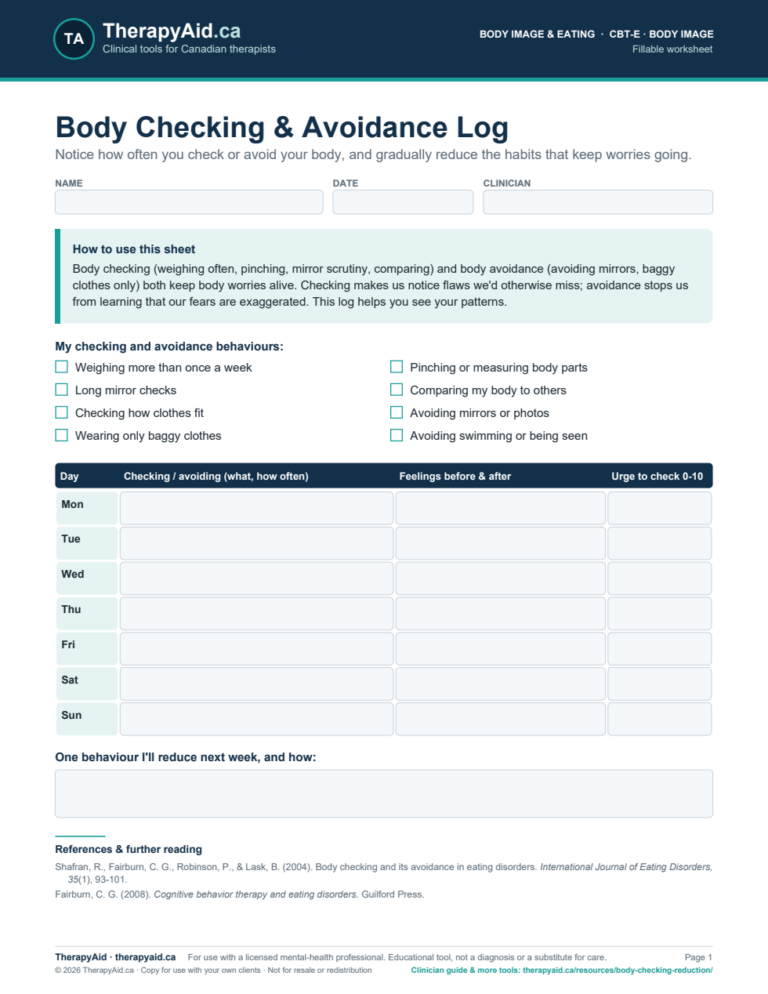
A CBT-E informed worksheet mapping the binge-restrict cycle across rules and restriction, triggers, binge episodes and aftermath, with points to intervene.
1-page fillable PDF · US Letter (prints on A4) · CBT-E informed
- Approach / concern
- Body Image & Eating
- Technique
- CBT-E informed
- Format
- Fillable PDF, 1 page (US Letter / A4)
- Access
- Pro and Advanced plans (3-day free trial)
- For
- Licensed clinicians to use with clients
- Updated
- October 2026
Key facts
What is the The Binge-Restrict Cycle Map?
In the transdiagnostic CBT model, dietary restraint, triggers and over-evaluation of shape and weight maintain binge eating. Mapping the personal cycle helps clients understand why bingeing persists and where to intervene.
Why it works
Fairburn’s (2008) CBT-E describes how dietary restraint and restriction maintain binge eating. Prevention research shows reducing thin-ideal internalization and dieting reduces eating pathology (Stice et al., 2008).
When to use it
- Binge eating disorder
- Bulimia nervosa
- Early CBT sessions
- Emotional eating
How to use it in session
- Explain the cycle.
- Fill in each stage.
- Identify intervention points.
- Start regular eating.
- Track progress.
Clinician tips
- Avoid shaming language.
- Regular eating is usually the first step.
- For eating disorders, use alongside specialist care and medical monitoring.
Worked example
Sharing with clients
Members can download the PDF to print or email, or copy a private client link from the download box. Your client opens the link and downloads the worksheet on any device. No client account is needed, and nothing your client writes is stored on TherapyAid.
Frequently asked questions
Why does dieting lead to bingeing?
Restriction increases hunger and preoccupation with food, making binges more likely.
Do I need to know my triggers?
It helps, but regular eating alone often reduces binges significantly.
References
Fairburn, C. G. (2008). Cognitive behavior therapy and eating disorders. Guilford Press.
Stice, E., Marti, C. N., Spoor, S., Presnell, K., & Shaw, H. (2008). Dissonance and healthy weight eating disorder prevention programs: Long-term effects from a randomized efficacy trial. Journal of Consulting and Clinical Psychology, 76(2), 329-340.
This worksheet is an educational tool for use by, or under the guidance of, a licensed or registered mental-health professional. It is not a diagnostic instrument or a substitute for clinical judgement. If a client is in crisis in Canada, call or text 9-8-8 or call 9-1-1.