Daily Mood Diary
A weekly mood diary for rating mood morning, afternoon and evening with brief context notes, plus a reflection on patterns.
1-page fillable PDF · US Letter (prints on A4) · Mood monitoring
- Approach / concern
- Depression
- Technique
- Mood monitoring
- Format
- Fillable PDF, 1 page (US Letter / A4)
- Access
- Pro and Advanced plans (3-day free trial)
- For
- Licensed clinicians to use with clients
- Updated
- October 2026
Key facts
What is the Daily Mood Diary?
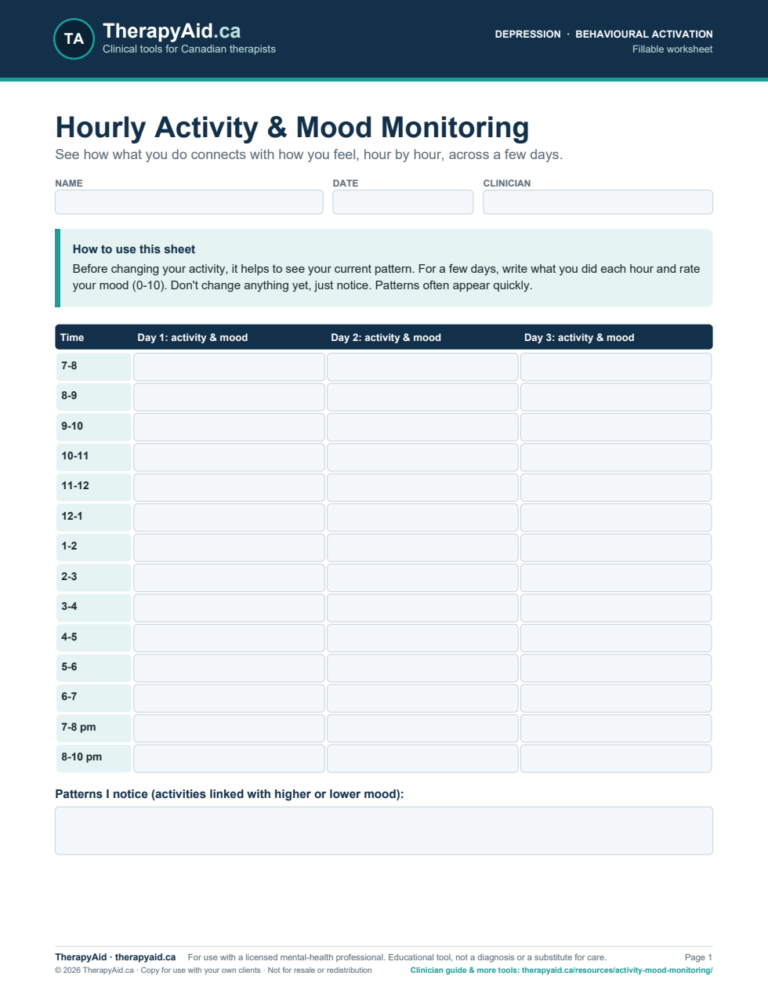
Mood monitoring involves regularly rating mood and noting circumstances. Repeated ratings across the day capture fluctuations that a single daily rating may miss.
Why it works
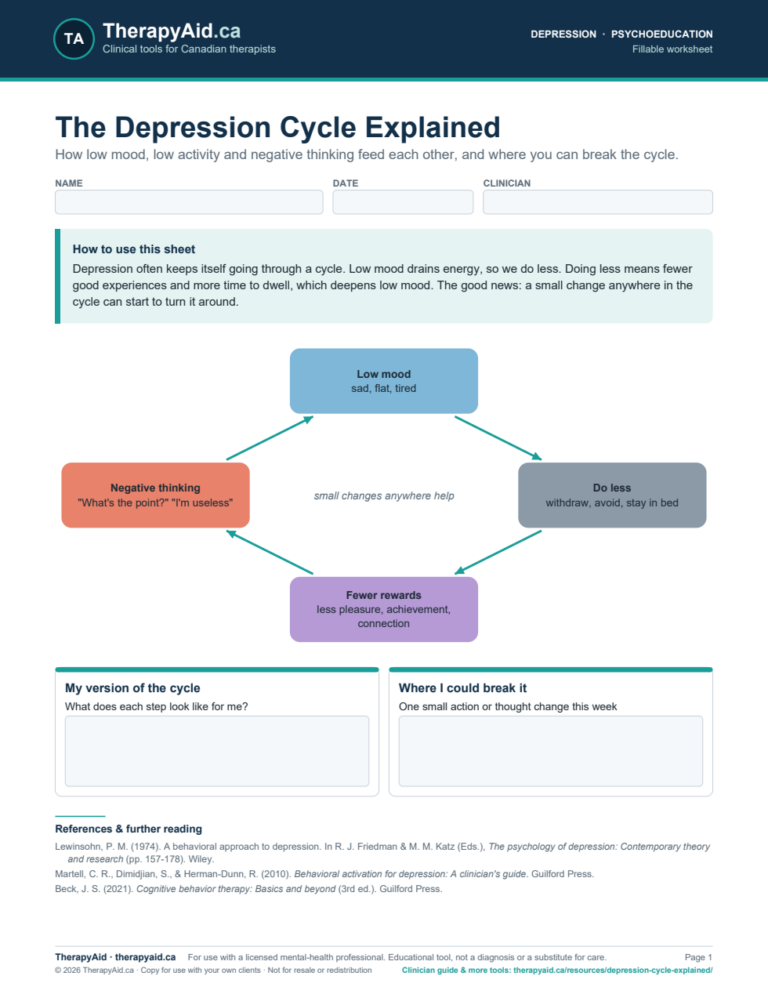
Self-monitoring of mood is a standard component of CBT for depression (Beck, 2021). Ecological momentary assessment research shows mood varies meaningfully within days (Ebner-Priemer & Trull, 2009).
When to use it
- Depression and low mood
- Anxiety and stress
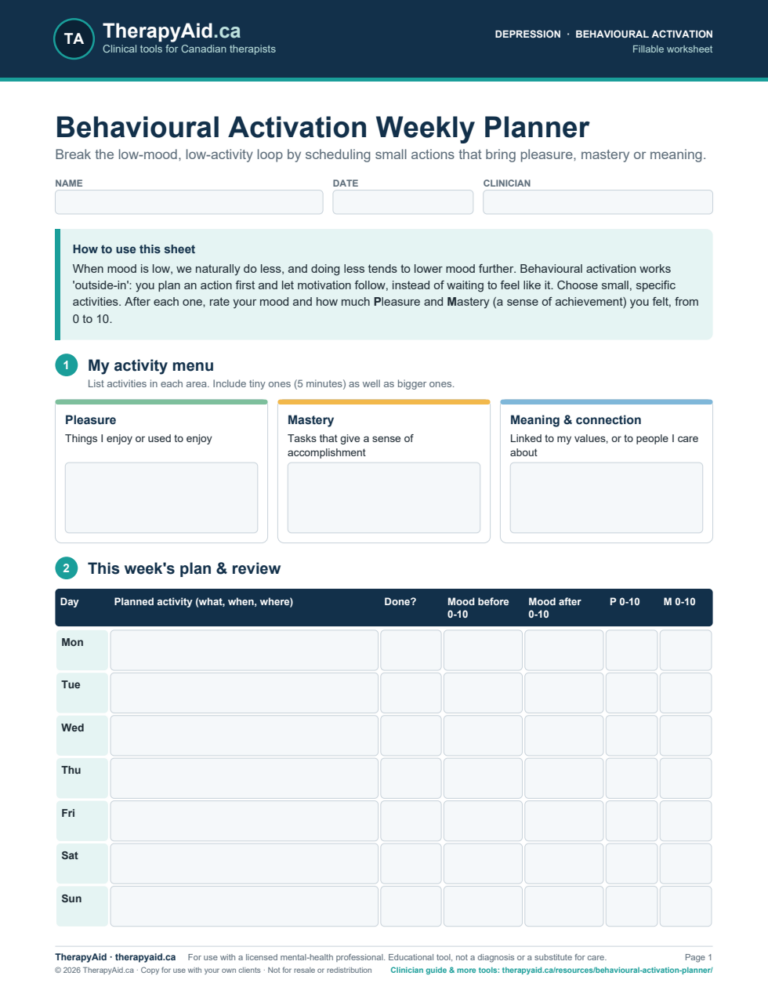
- Before behavioural activation
- Tracking medication or treatment changes
How to use it in session
- Explain the 0-10 scale.
- Rate mood three times daily.
- Add a quick note on context.
- Review patterns weekly.
- Use insights to plan activities.
Clinician tips
- Phone reminders help consistency.
- Brief notes are enough.
- Look for both low points and helpful moments.
Worked example
Sharing with clients
Members can download the PDF to print or email, or copy a private client link from the download box. Your client opens the link and downloads the worksheet on any device. No client account is needed, and nothing your client writes is stored on TherapyAid.
Frequently asked questions
How long should I keep a mood diary?
One to two weeks usually shows clear patterns; longer tracking helps during treatment.
Is this the same as a mood chart for bipolar disorder?
It’s simpler. For bipolar disorder, a chart including elevated mood and sleep is more useful.
References
Beck, J. S. (2021). Cognitive behavior therapy: Basics and beyond (3rd ed.). Guilford Press.
Ebner-Priemer, U. W., & Trull, T. J. (2009). Ecological momentary assessment of mood disorders and mood dysregulation. Psychological Assessment, 21(4), 463-475.
This worksheet is an educational tool for use by, or under the guidance of, a licensed or registered mental-health professional. It is not a diagnostic instrument or a substitute for clinical judgement. If a client is in crisis in Canada, call or text 9-8-8 or call 9-1-1.