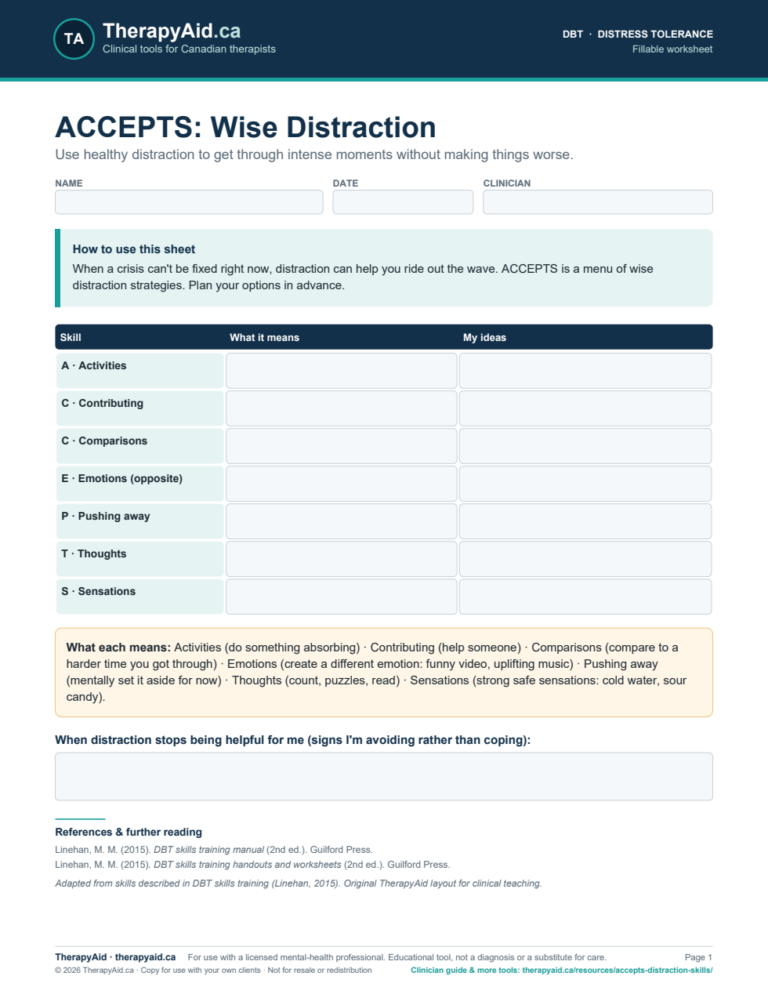
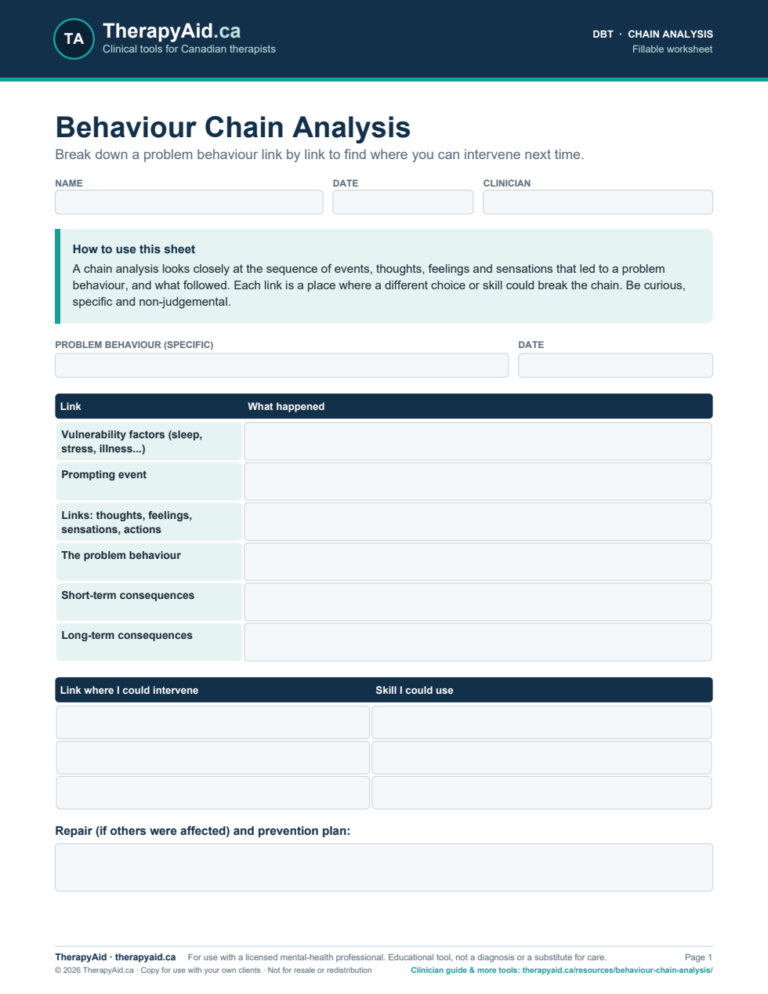
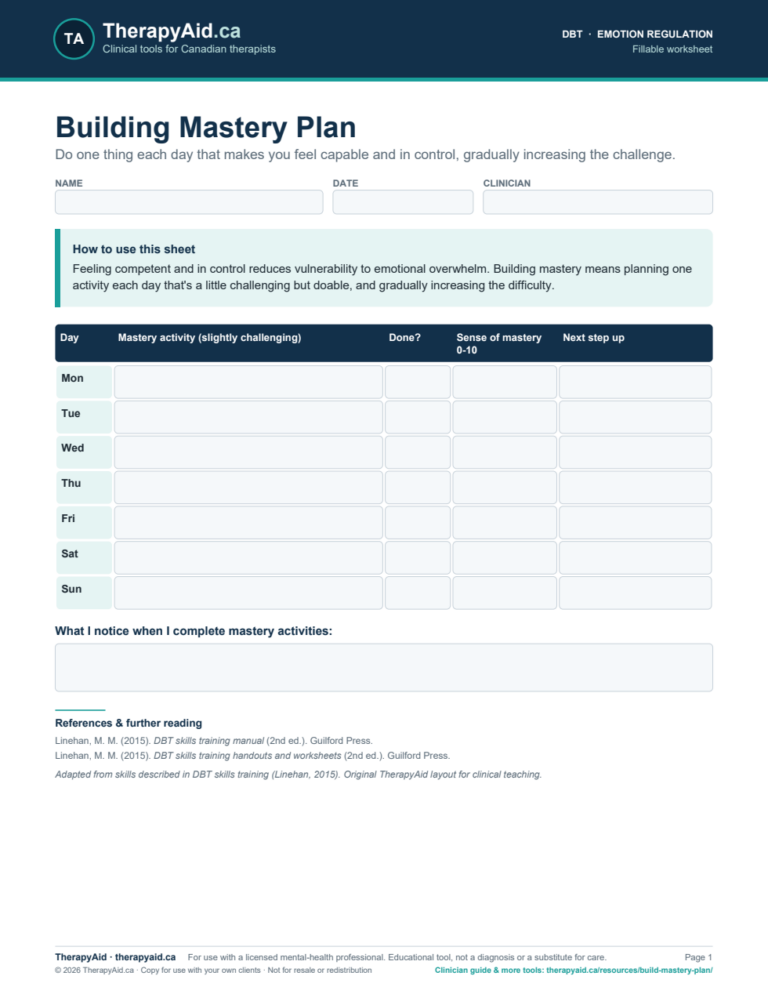
Both-And Thinking (Dialectics)
A DBT worksheet for converting either-or thoughts into both-and statements, with dialectical reminders for everyday use.
1-page fillable PDF · US Letter (prints on A4) · Dialectics
- Approach / concern
- DBT
- Technique
- Dialectics
- Format
- Fillable PDF, 1 page (US Letter / A4)
- Access
- Pro and Advanced plans (3-day free trial)
- For
- Licensed clinicians to use with clients
- Updated
- October 2026
Key facts
What is the Both-And Thinking (Dialectics)?
Dialectics, the integration of opposites, is the philosophical foundation of DBT. Dialectical thinking helps people hold multiple truths, such as acceptance and change, and move away from rigid, polarized thinking.
Why it works
DBT is built on a dialectical balance of acceptance and change, and walking the middle path is taught as a skill (Linehan, 2015).
When to use it
- All-or-nothing thinking
- Interpersonal conflict
- Self-acceptance and change
- Teens and families (DBT-A middle path)
How to use it in session
- Introduce the idea of two truths.
- Practise turning ‘but’ into ‘and’.
- Convert personal either-or thoughts.
- Use reminders in conflicts.
- Notice changes in emotional intensity.
Clinician tips
- Both-and statements should be genuinely true.
- Useful for parents and teens in conflict.
- Pair with check the facts.
Worked example
Sharing with clients
Members can download the PDF to print or email, or copy a private client link from the download box. Your client opens the link and downloads the worksheet on any device. No client account is needed, and nothing your client writes is stored on TherapyAid.
Frequently asked questions
What does dialectical mean in DBT?
Holding and integrating opposites, such as accepting yourself as you are while working to change.
Why replace ‘but’ with ‘and’?
‘But’ cancels what came before; ‘and’ allows both parts to be true.
References
Linehan, M. M. (2015). DBT skills training manual (2nd ed.). Guilford Press.
This worksheet is an educational tool for use by, or under the guidance of, a licensed or registered mental-health professional. It is not a diagnostic instrument or a substitute for clinical judgement. If a client is in crisis in Canada, call or text 9-8-8 or call 9-1-1.