30 Grounding Techniques
A checklist of 30 grounding techniques across physical, mental and soothing categories, with space to choose personal favourites.
1-page fillable PDF · US Letter (prints on A4) · Grounding · Stabilization
- Approach / concern
- Trauma & PTSD
- Technique
- Grounding · Stabilization
- Format
- Fillable PDF, 1 page (US Letter / A4)
- Access
- Pro and Advanced plans (3-day free trial)
- For
- Licensed clinicians to use with clients
- Updated
- October 2026
Key facts
What is the 30 Grounding Techniques?
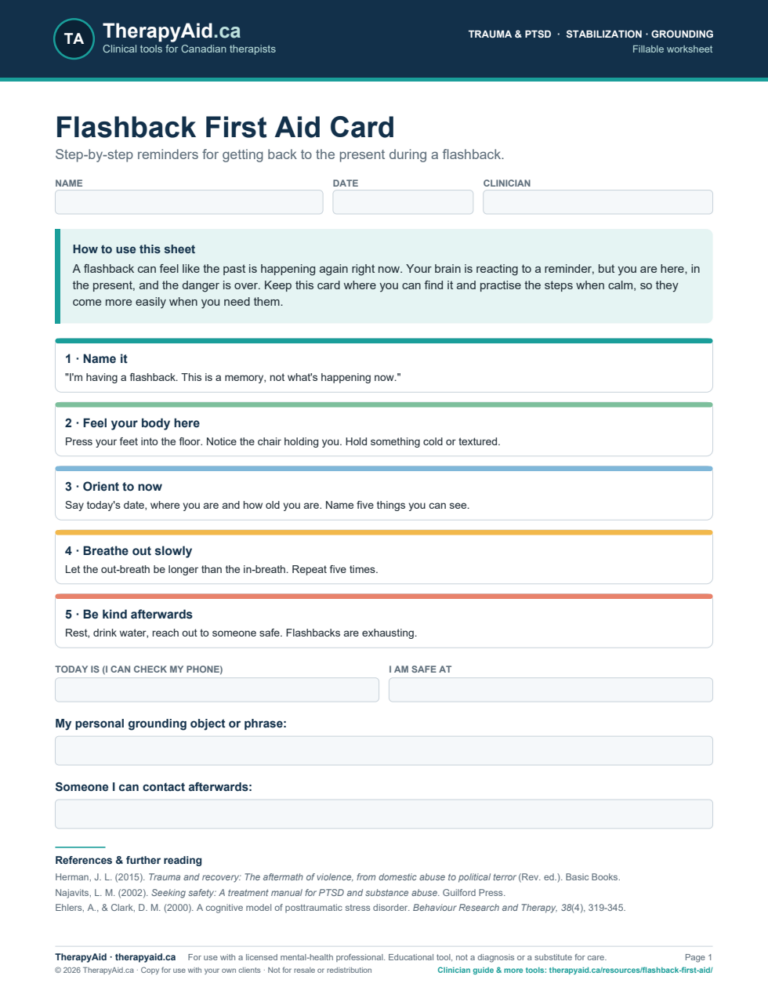
Grounding techniques help people disconnect from overwhelming emotions, intrusive memories or dissociation by redirecting attention to the present moment. They are commonly grouped into physical, mental and soothing strategies.
Why it works
Grounding is a core skill in integrated trauma and addiction treatment such as Seeking Safety (Najavits, 2002) and in body-based stabilization approaches (Ogden et al., 2006).
When to use it
- Flashbacks and dissociation
- Panic and acute anxiety
- Cravings and urges
- Stabilization phase of trauma therapy
How to use it in session
- Introduce the three types of grounding.
- Try several in session and notice effects.
- Choose top three for different situations.
- Practise daily when calm.
- Add favourites to a coping or safety plan.
Clinician tips
- Eyes open and movement help with dissociation.
- Mental grounding works well in public places.
- Soothing grounding pairs well with self-compassion.
Worked example
Sharing with clients
Members can download the PDF to print or email, or copy a private client link from the download box. Your client opens the link and downloads the worksheet on any device. No client account is needed, and nothing your client writes is stored on TherapyAid.
Frequently asked questions
What’s the best grounding technique?
It depends on the person and situation. Most people benefit from having a few from each category.
Can grounding replace trauma therapy?
Grounding is a stabilization skill. It helps manage symptoms, while trauma-focused therapy addresses underlying memories.
References
Najavits, L. M. (2002). Seeking safety: A treatment manual for PTSD and substance abuse. Guilford Press.
Ogden, P., Minton, K., & Pain, C. (2006). Trauma and the body: A sensorimotor approach to psychotherapy. W. W. Norton.
This worksheet is an educational tool for use by, or under the guidance of, a licensed or registered mental-health professional. It is not a diagnostic instrument or a substitute for clinical judgement. If a client is in crisis in Canada, call or text 9-8-8 or call 9-1-1.