The Physiological Sigh
A one-page visual guide to the physiological sigh (double inhale, long exhale) for in-the-moment stress relief and daily cyclic sighing, with a practice log.
2-page fillable PDF · US Letter (prints on A4) · Breathwork · Acute stress
- Approach / concern
- Somatic
- Technique
- Breathwork · Acute stress
- Format
- Fillable PDF, 2 pages (US Letter / A4)
- Access
- Pro and Advanced plans (3-day free trial)
- For
- Licensed clinicians to use with clients
- Updated
- October 2026
Key facts
What is the The Physiological Sigh?
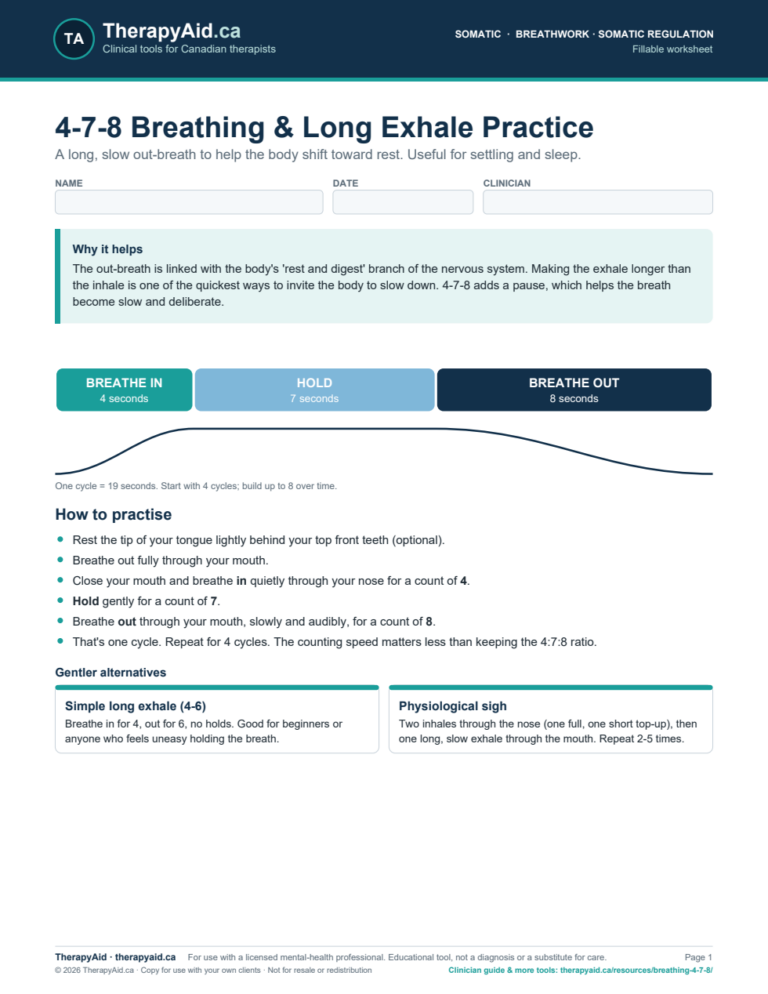
The physiological sigh is a breathing pattern of two consecutive inhales through the nose followed by an extended exhale through the mouth. It occurs naturally during sleep and after crying. Practised deliberately, it is a quick way to reduce physiological arousal.
Why it works
A 2023 randomized study found that five minutes of daily exhale-focused cyclic sighing improved mood and reduced respiratory rate more than mindfulness meditation (Balban et al., 2023). Extended exhalation is associated with increased vagal activity (Russo et al., 2017).
When to use it
- Acute stress and anger spikes
- Before difficult conversations or performances
- Clients who want a very quick tool
- Daily mood practice (cyclic sighing)
How to use it in session
- Demonstrate one sigh, emphasizing the long exhale.
- Practise two or three together.
- Suggest using it at specific trigger moments.
- Offer 5-minute cyclic sighing as a daily option.
- Track stress before and after.
Clinician tips
- Keep it gentle; avoid forceful overbreathing.
- Pair with a cue (e.g. before opening email).
- Combine with grounding for higher distress.
Worked example
Sharing with clients
Members can download the PDF to print or email, or copy a private client link from the download box. Your client opens the link and downloads the worksheet on any device. No client account is needed, and nothing your client writes is stored on TherapyAid.
Frequently asked questions
How many sighs should I do?
One to three is usually enough in the moment. For a daily practice, cyclic sighing for about five minutes was used in research.
Is this the same as hyperventilating?
No. The breath is slow and the exhale long; hyperventilation is fast, shallow breathing.
References
Balban, M. Y., Neri, E., Kogon, M. M., Weed, L., Nouriani, B., Jo, B., Holl, G., Zeitzer, J. M., Spiegel, D., & Huberman, A. D. (2023). Brief structured respiration practices enhance mood and reduce physiological arousal. Cell Reports Medicine, 4(1), 100895.
Russo, M. A., Santarelli, D. M., & O’Rourke, D. (2017). The physiological effects of slow breathing in the healthy human. Breathe, 13(4), 298-309.
This worksheet is an educational tool for use by, or under the guidance of, a licensed or registered mental-health professional. It is not a diagnostic instrument or a substitute for clinical judgement. If a client is in crisis in Canada, call or text 9-8-8 or call 9-1-1.