4-7-8 Breathing & Long Exhale Practice
A visual guide to 4-7-8 breathing with a proportional breath timeline, two gentler long-exhale alternatives including the physiological sigh, and a 7-day practice log.
2-page fillable PDF · US Letter (prints on A4) · Breathwork · Somatic regulation
- Approach / concern
- Somatic
- Technique
- Breathwork · Somatic regulation
- Format
- Fillable PDF, 2 pages (US Letter / A4)
- Access
- Pro and Advanced plans (3-day free trial)
- For
- Licensed clinicians to use with clients
- Updated
- October 2026
Key facts
What is the 4-7-8 Breathing & Long Exhale Practice?
4-7-8 breathing is a paced-breathing pattern: inhale for four counts, hold for seven, and exhale for eight. The exhale is twice as long as the inhale, which emphasizes the calming phase of the breath. It is commonly taught as a settling practice and as part of a wind-down routine for sleep.
Why it works
Slow breathing with extended exhalation is associated with greater vagal activity and reduced physiological arousal (Zaccaro et al., 2018; Russo et al., 2017). A 2023 randomized study found that brief daily exhale-focused breathing (cyclic sighing) improved mood and reduced respiratory rate more than mindfulness meditation (Balban et al., 2023). Evidence for the specific 4-7-8 ratio is still emerging, so the sheet includes alternatives clients can choose from.
When to use it
- Difficulty falling asleep, or waking at night
- Anxiety and stress
- After an argument or upsetting event
- Clients who find box breathing too ‘structured’
How to use it in session
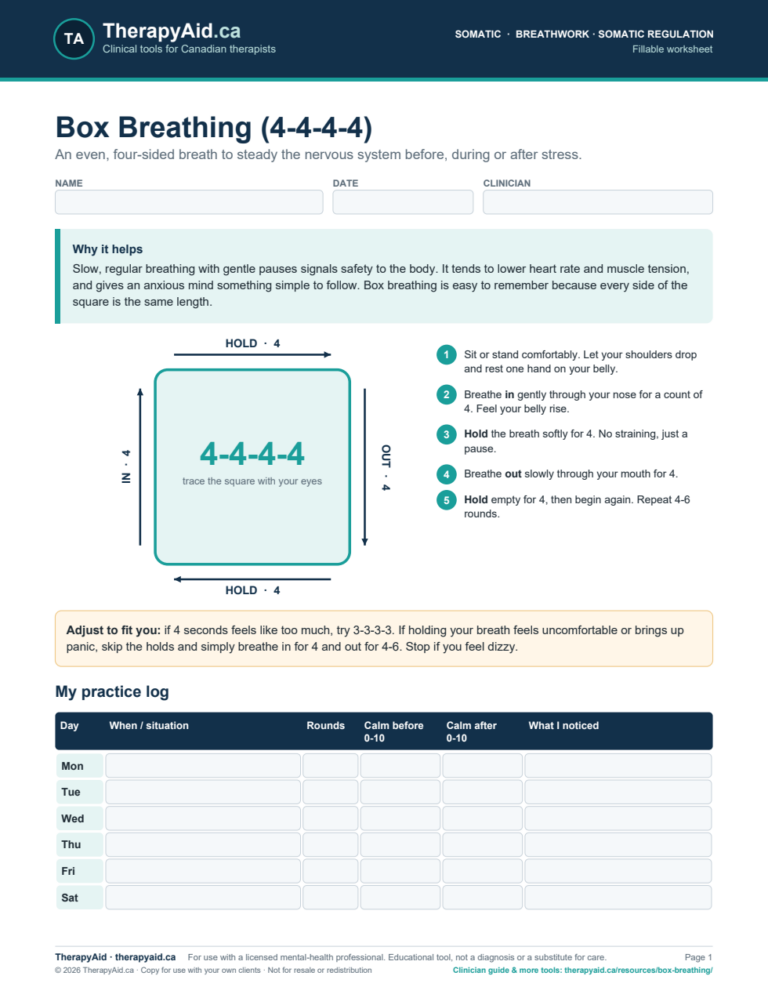
- Demonstrate one cycle while the client follows the timeline.
- Practise four cycles, then check in about comfort and dizziness.
- Offer the simple long-exhale or physiological sigh if holds are uncomfortable.
- Assign twice-daily practice, including at bedtime if sleep is a goal.
- Review the log and discuss which version works best.
Clinician tips
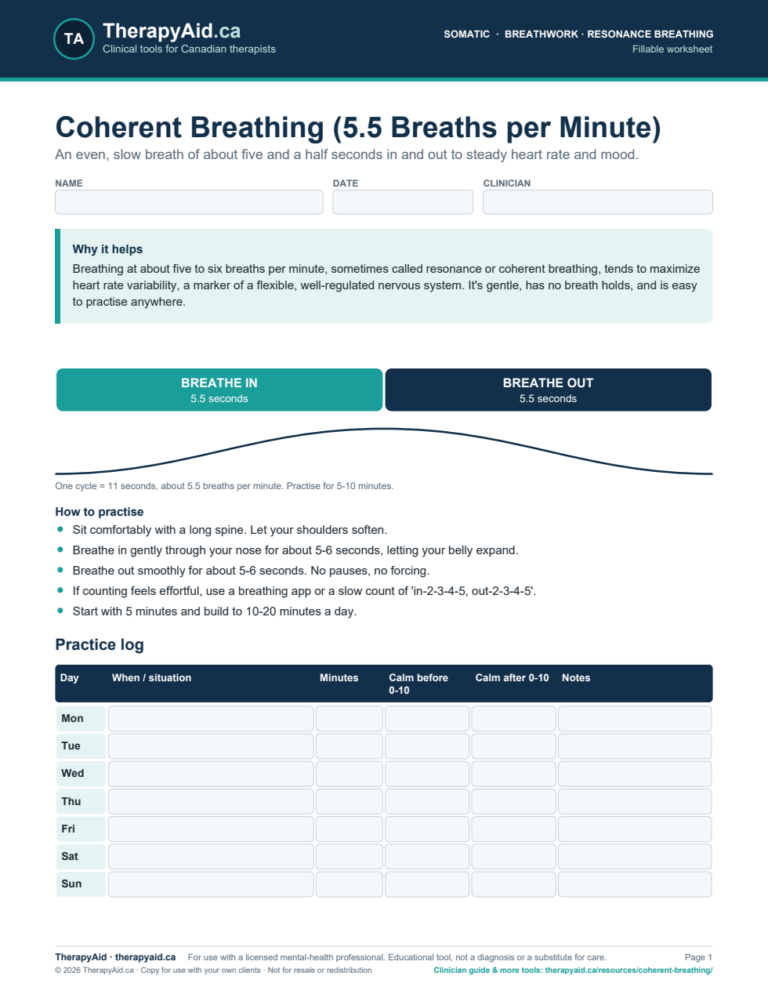
- Faster counting is fine. The ratio matters more than the absolute duration.
- Light-headedness is common at first. Reduce cycles and return to normal breathing.
- Avoid long holds for clients with panic disorder until they are comfortable with breath awareness.
Worked example
Sharing with clients
Members can download the PDF to print or email, or copy a private client link from the download box. Your client opens the link and downloads the worksheet on any device. No client account is needed, and nothing your client writes is stored on TherapyAid.
Frequently asked questions
How many cycles should I start with?
Four cycles, once or twice a day. Build up to eight over a few weeks if it feels comfortable.
Can it help with panic attacks?
Some people find it helpful, but breath holds can increase panic for others. A simple long exhale is usually a safer first choice during panic.
References
Zaccaro, A., Piarulli, A., Laurino, M., Garbella, E., Menicucci, D., Neri, B., & Gemignani, A. (2018). How breath-control can change your life: A systematic review on psycho-physiological correlates of slow breathing. Frontiers in Human Neuroscience, 12, 353.
Russo, M. A., Santarelli, D. M., & O’Rourke, D. (2017). The physiological effects of slow breathing in the healthy human. Breathe, 13(4), 298-309.
Balban, M. Y., Neri, E., Kogon, M. M., Weed, L., Nouriani, B., Jo, B., Holl, G., Zeitzer, J. M., Spiegel, D., & Huberman, A. D. (2023). Brief structured respiration practices enhance mood and reduce physiological arousal. Cell Reports Medicine, 4(1), 100895.
This worksheet is an educational tool for use by, or under the guidance of, a licensed or registered mental-health professional. It is not a diagnostic instrument or a substitute for clinical judgement. If a client is in crisis in Canada, call or text 9-8-8 or call 9-1-1.