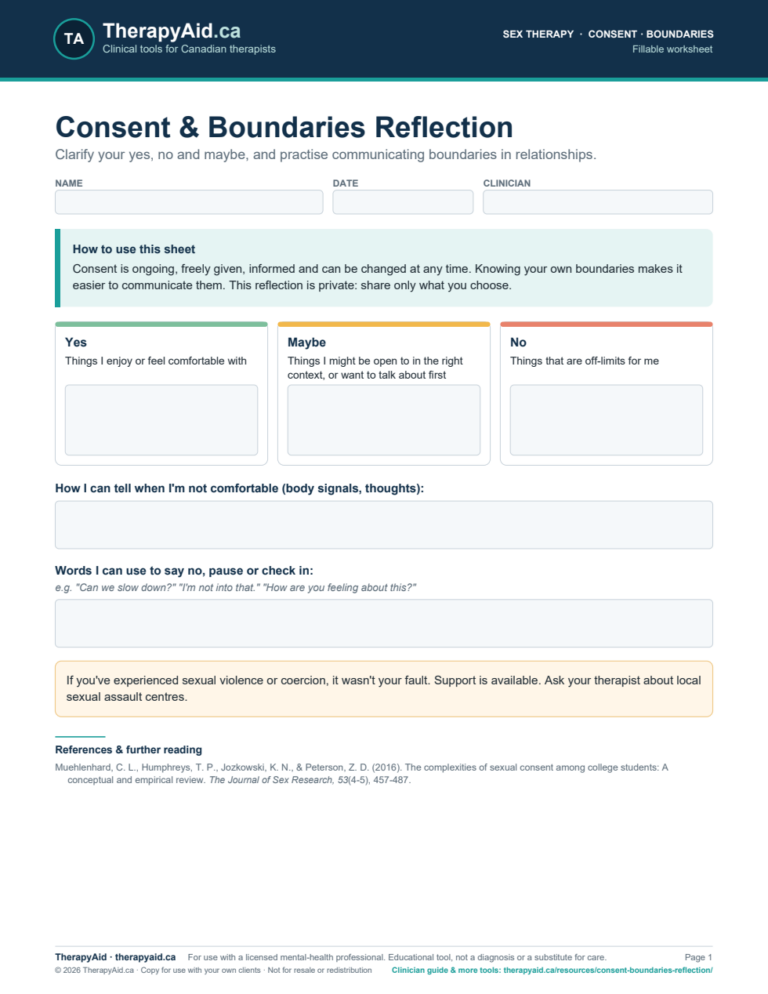
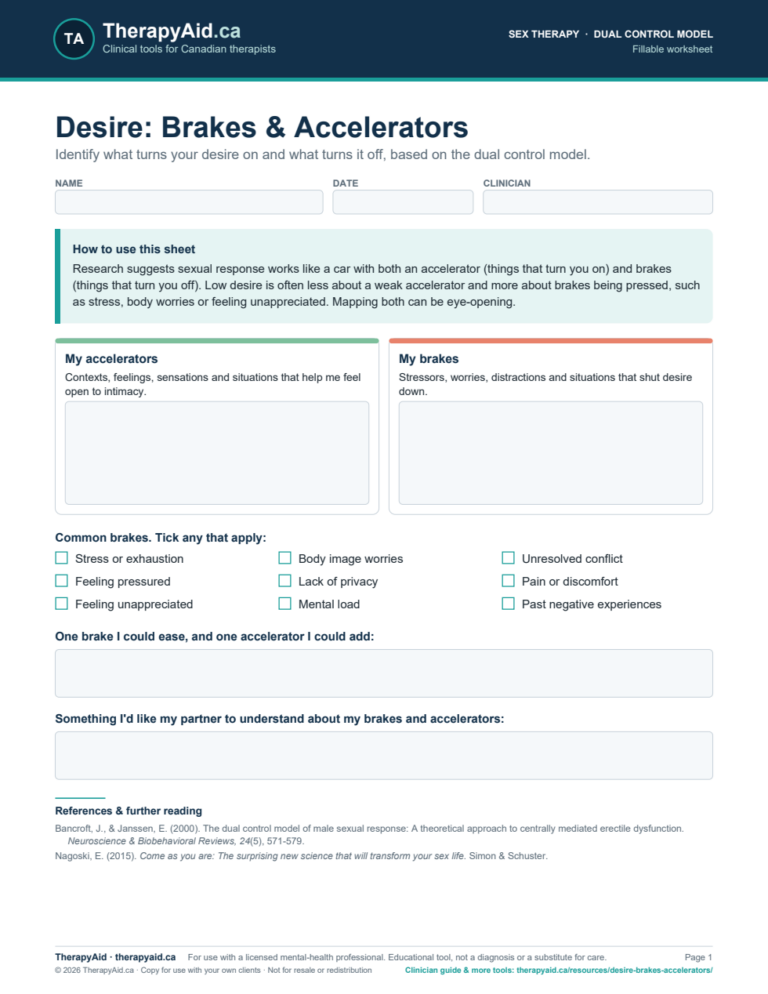
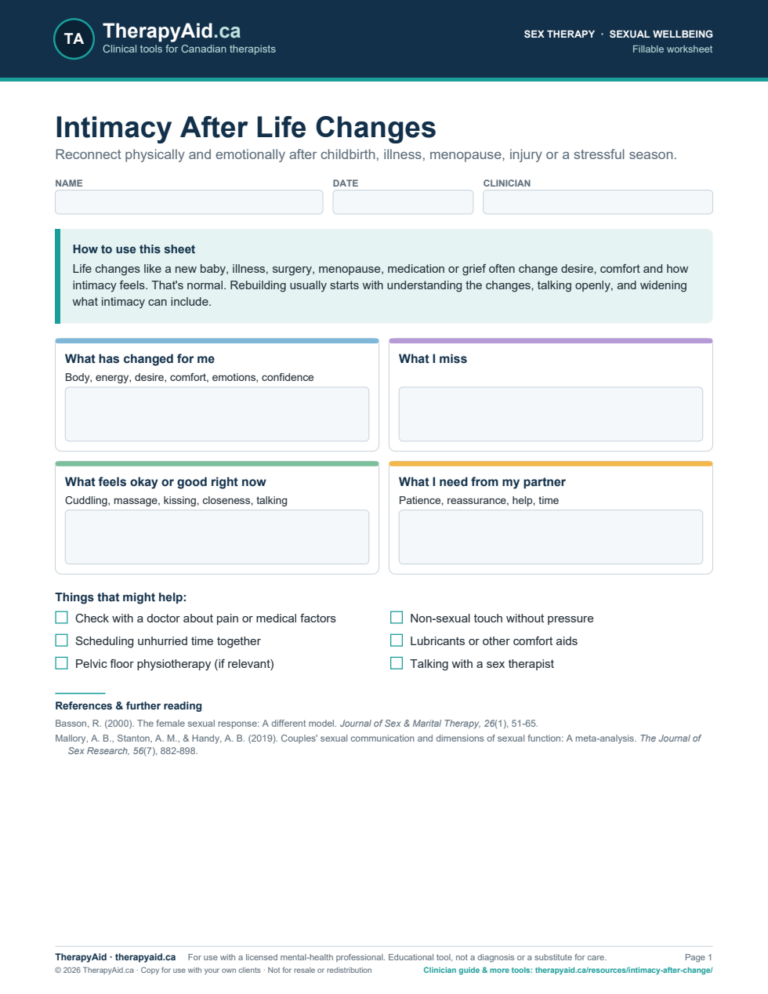
Yes / No / Maybe: Intimacy Preferences
A sex therapy communication worksheet where partners privately rate intimacy activities as yes, maybe or no, then share preferences and topics to explore.
1-page fillable PDF · US Letter (prints on A4) · Sexual communication
- Approach / concern
- Sex Therapy
- Technique
- Sexual communication
- Format
- Fillable PDF, 1 page (US Letter / A4)
- Access
- Advanced plan
- For
- Licensed clinicians to use with clients
- Updated
- October 2026
Key facts
What is the Yes / No / Maybe: Intimacy Preferences?
Yes/No/Maybe lists are communication tools used in sex therapy and relationship education. They help partners articulate preferences, curiosities and boundaries in a low-pressure, structured way.
Why it works
A meta-analysis found better sexual communication is associated with higher sexual satisfaction and function (Mallory et al., 2019). Shared understanding of context and preferences supports desire and pleasure (Nagoski, 2021).
When to use it
- Couples with communication difficulties about sex
- Desire discrepancy
- Rebuilding intimacy after change
- Sex-positive relationship education
How to use it in session
- Complete separately.
- Share only what feels comfortable.
- Start with overlapping yeses.
- Discuss maybes with curiosity.
- Respect all no answers.
Clinician tips
- Emphasize consent and freedom to change answers.
- Screen for coercion or abuse first.
- Adapt items to the couple’s context.
Worked example
Sharing with clients
Members can download the PDF to print or email, or copy a private client link from the download box. Your client opens the link and downloads the worksheet on any device. No client account is needed, and nothing your client writes is stored on TherapyAid.
Frequently asked questions
What if our lists don’t match?
That’s normal. Focus on shared yeses and talk about maybes with curiosity, without pressure.
Do I have to explain a no?
No. A no deserves respect without justification.
References
Mallory, A. B., Stanton, A. M., & Handy, A. B. (2019). Couples’ sexual communication and dimensions of sexual function: A meta-analysis. Journal of Sex Research, 56(7), 882-898.
Nagoski, E. (2021). Come as you are: The surprising new science that will transform your sex life (Rev. ed.). Simon & Schuster.
This worksheet is an educational tool for use by, or under the guidance of, a licensed or registered mental-health professional. It is not a diagnostic instrument or a substitute for clinical judgement. If a client is in crisis in Canada, call or text 9-8-8 or call 9-1-1.