The Panic Cycle Explained
An illustrated psychoeducation handout of the panic cycle (trigger, perceived threat, anxiety, sensations, catastrophic thought), with prompts to identify personal patterns and accurate explanations.
1-page fillable PDF · US Letter (prints on A4) · Psychoeducation
- Approach / concern
- Anxiety & Panic
- Technique
- Psychoeducation
- Format
- Fillable PDF, 1 page (US Letter / A4)
- Access
- Pro and Advanced plans (3-day free trial)
- For
- Licensed clinicians to use with clients
- Updated
- October 2026
Key facts
What is the The Panic Cycle Explained?
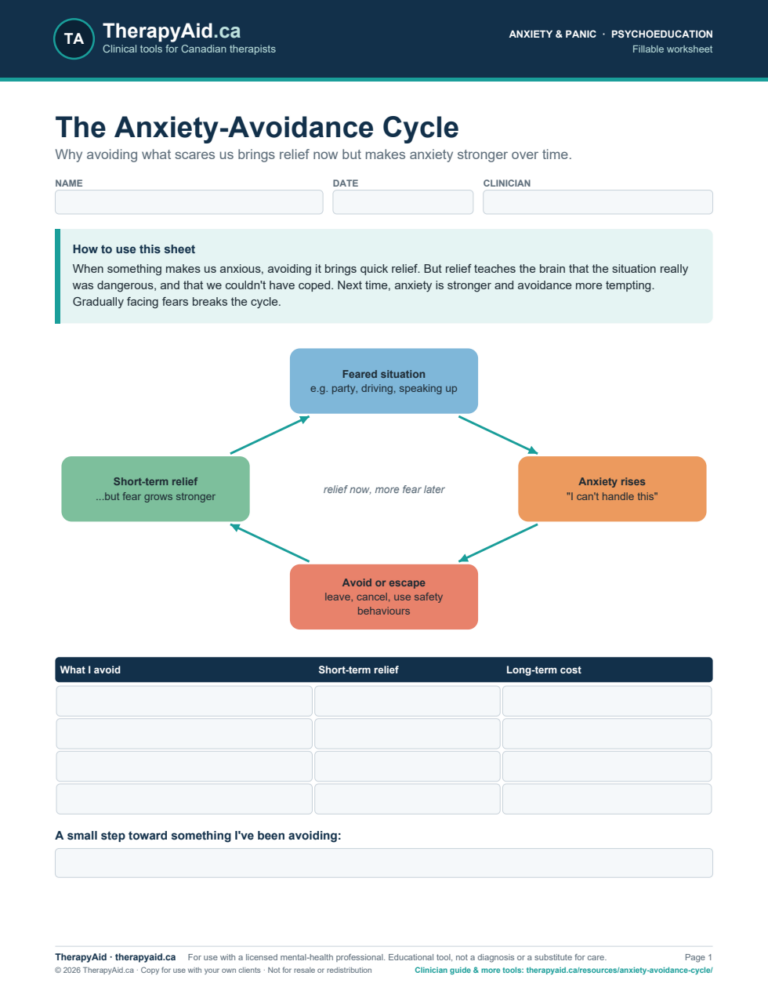
David Clark’s cognitive model of panic describes a vicious cycle in which bodily sensations are catastrophically misinterpreted, increasing anxiety and producing more sensations. Understanding the cycle is a core part of CBT for panic disorder.
Why it works
The cognitive model of panic (Clark, 1986) underpins highly effective CBT treatments for panic disorder (Craske & Barlow, 2006). Psychoeducation reduces fear of sensations and prepares clients for exposure.
When to use it
- Panic disorder and panic attacks
- Health anxiety about physical symptoms
- Agoraphobia
- First sessions of panic treatment
How to use it in session
- Walk through the cycle using the client’s last attack.
- Identify the first sensation and catastrophic thought.
- Generate more accurate explanations.
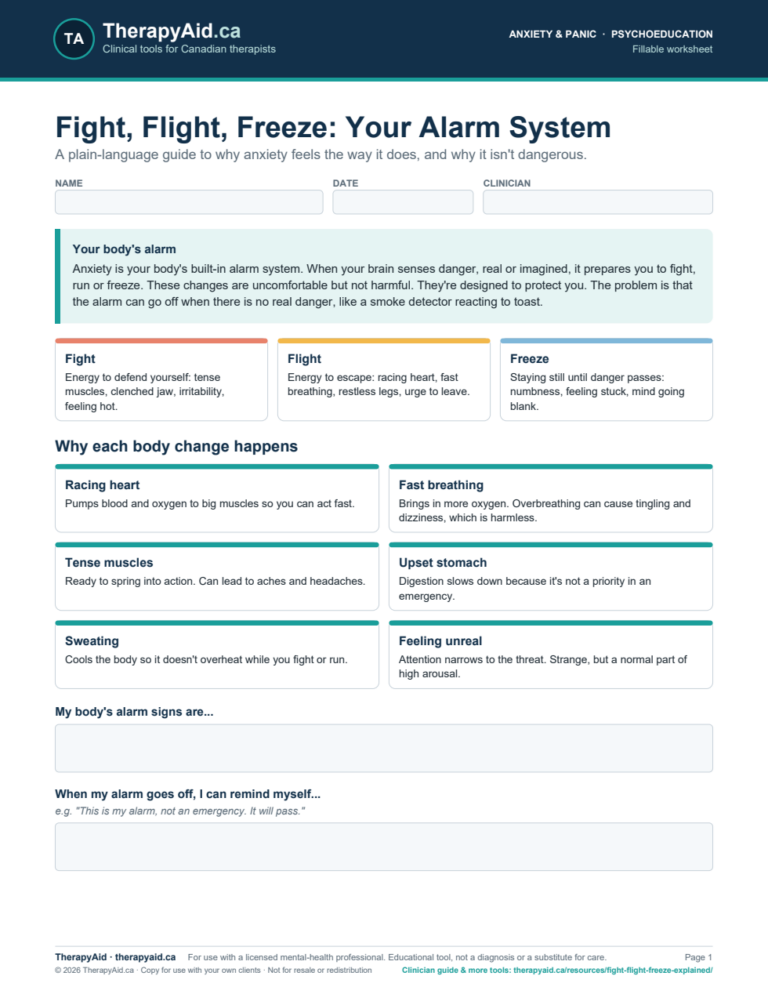
- Link to the Fight-Flight-Freeze handout.
- Plan interoceptive and situational exposure.
Clinician tips
- Validate how real and frightening panic feels.
- Ensure medical causes have been checked once.
- Avoid reassurance loops; build understanding instead.
Worked example
Sharing with clients
Members can download the PDF to print or email, or copy a private client link from the download box. Your client opens the link and downloads the worksheet on any device. No client account is needed, and nothing your client writes is stored on TherapyAid.
Frequently asked questions
Can I stop a panic attack once it starts?
Understanding it as anxiety rather than danger often makes it shorter and less intense. Over time, CBT can reduce attacks significantly.
Why do panic attacks happen ‘out of the blue’?
Often a subtle sensation or thought triggers them without our noticing, starting the cycle.
References
Clark, D. M. (1986). A cognitive approach to panic. Behaviour Research and Therapy, 24(4), 461-470.
Craske, M. G., & Barlow, D. H. (2006). Mastery of your anxiety and panic: Therapist guide (4th ed.). Oxford University Press.
This worksheet is an educational tool for use by, or under the guidance of, a licensed or registered mental-health professional. It is not a diagnostic instrument or a substitute for clinical judgement. If a client is in crisis in Canada, call or text 9-8-8 or call 9-1-1.