ADHD Study Plan
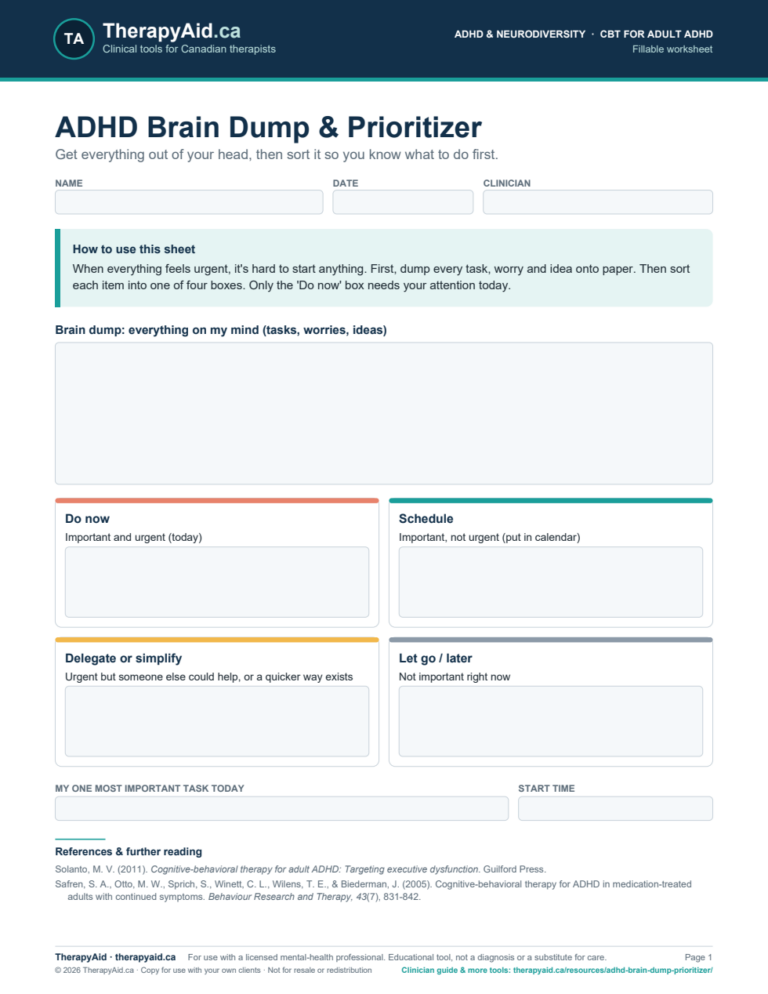
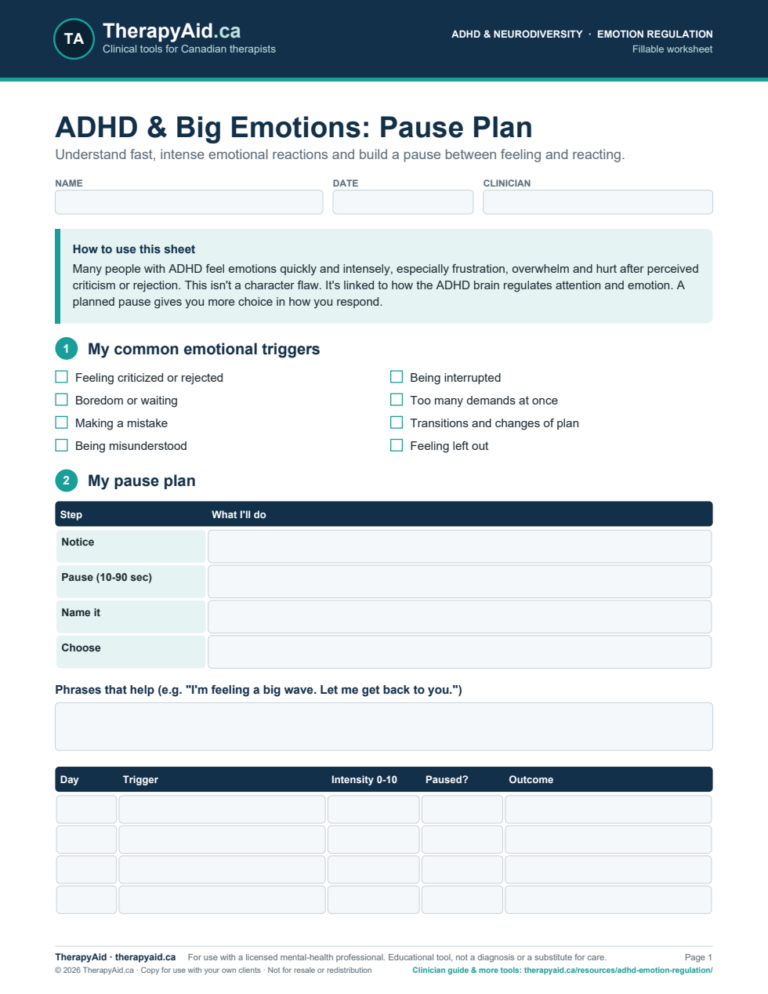
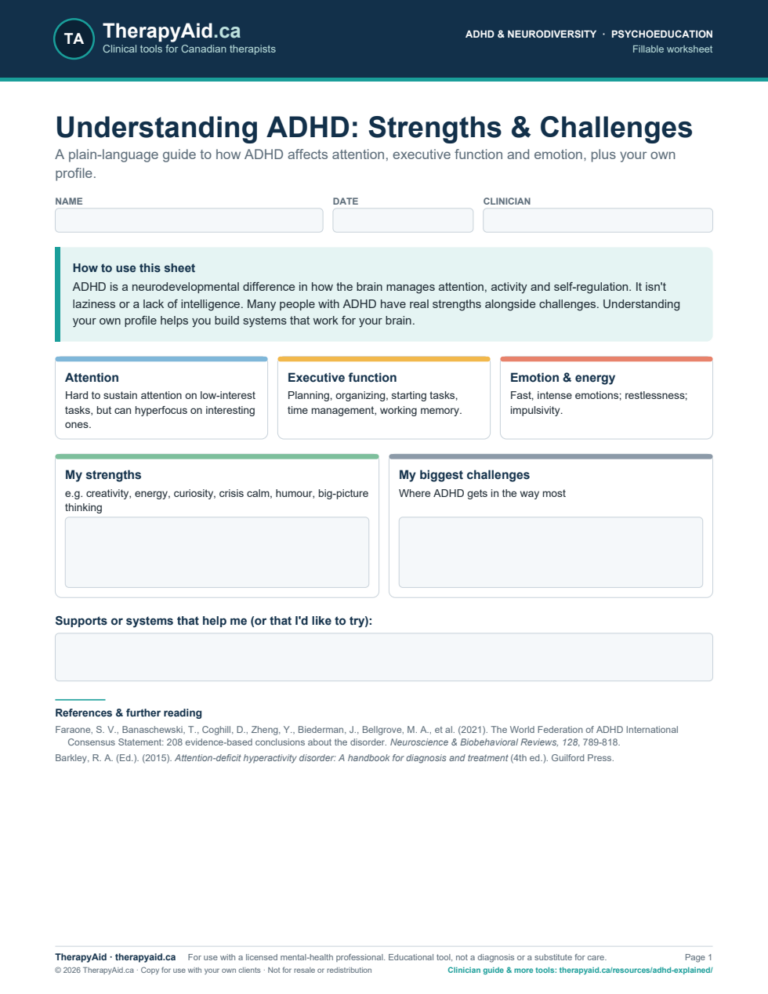
An ADHD study plan with focus, active learning and accountability strategies and a weekly study schedule with rewards.
1-page fillable PDF · US Letter (prints on A4) · CBT for ADHD · Academic
- Approach / concern
- ADHD & Neurodiversity
- Technique
- CBT for ADHD · Academic
- Format
- Fillable PDF, 1 page (US Letter / A4)
- Access
- Pro and Advanced plans (3-day free trial)
- For
- Licensed clinicians to use with clients
- Updated
- October 2026
Key facts
What is the ADHD Study Plan?
Students with ADHD benefit from structured, active study strategies, external accountability and accommodations.
Why it works
Executive-function-focused CBT emphasizes breaking tasks into steps and external structure (Solanto, 2011). Canadian guidelines support academic accommodations for ADHD (CADDRA, 2020).
When to use it
- High school and post-secondary students with ADHD
- Exam periods
- Academic coaching
- Accommodation planning
How to use it in session
- Choose strategies.
- Plan the week.
- Use short sessions.
- Reward completion.
- Review grades and effort.
Clinician tips
- Encourage use of campus accessibility services.
- Mix subjects.
- Plan for exam accommodations.
Worked example
Sharing with clients
Members can download the PDF to print or email, or copy a private client link from the download box. Your client opens the link and downloads the worksheet on any device. No client account is needed, and nothing your client writes is stored on TherapyAid.
Frequently asked questions
Why don’t long study sessions work with ADHD?
Sustained attention is harder with ADHD; short, active sessions work better.
Can I get accommodations?
Yes. Most Canadian schools and colleges offer ADHD accommodations through accessibility services.
References
Solanto, M. V. (2011). Cognitive-behavioral therapy for adult ADHD: Targeting executive dysfunction. Guilford Press.
Canadian ADHD Resource Alliance. (2020). Canadian ADHD practice guidelines (4.1 ed.). CADDRA.
This worksheet is an educational tool for use by, or under the guidance of, a licensed or registered mental-health professional. It is not a diagnostic instrument or a substitute for clinical judgement. If a client is in crisis in Canada, call or text 9-8-8 or call 9-1-1.