My Harm Reduction Plan
A harm reduction worksheet recording substances and goals, selecting risk-reduction steps, planning for higher-risk situations and listing supports and services.
1-page fillable PDF · US Letter (prints on A4) · Harm reduction
- Approach / concern
- Recovery & Addiction
- Technique
- Harm reduction
- Format
- Fillable PDF, 1 page (US Letter / A4)
- Access
- Pro and Advanced plans (3-day free trial)
- For
- Licensed clinicians to use with clients
- Updated
- October 2026
Key facts
What is the My Harm Reduction Plan?
Harm reduction is a pragmatic, non-judgemental approach that aims to reduce negative consequences of substance use without requiring abstinence. It meets people where they are and supports any positive change.
Why it works
Harm reduction interventions reduce substance-related harms and can increase engagement in treatment (Marlatt & Witkiewitz, 2010). Harm reduction therapy is supported as a practice-friendly, client-centred approach (Logan & Marlatt, 2010).
When to use it
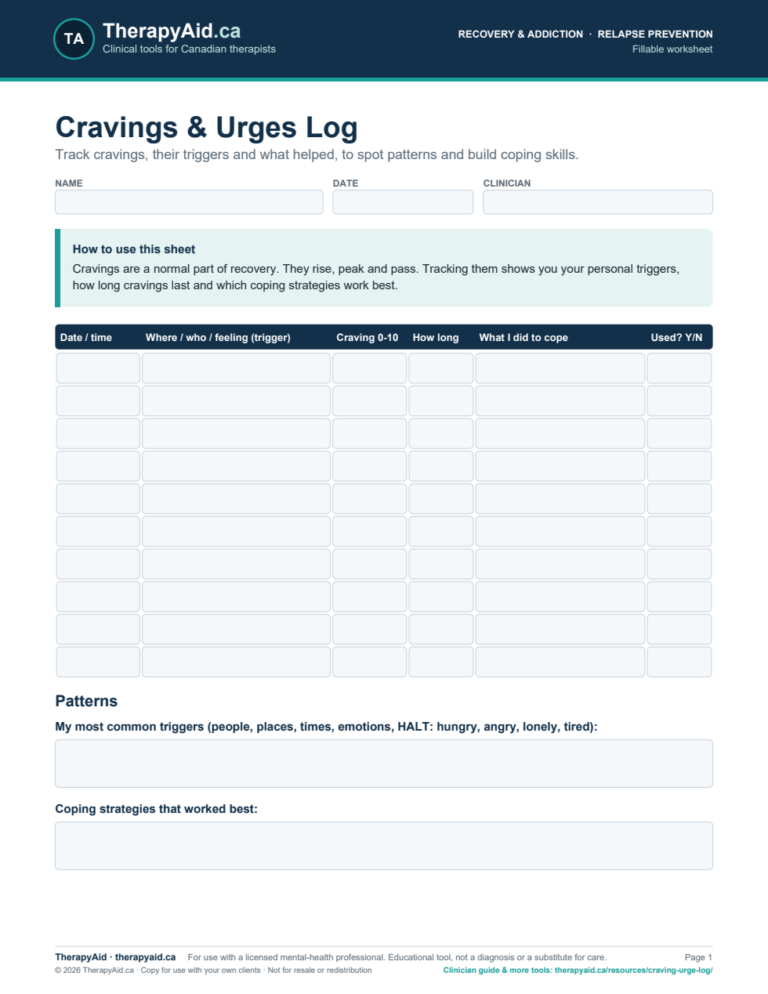
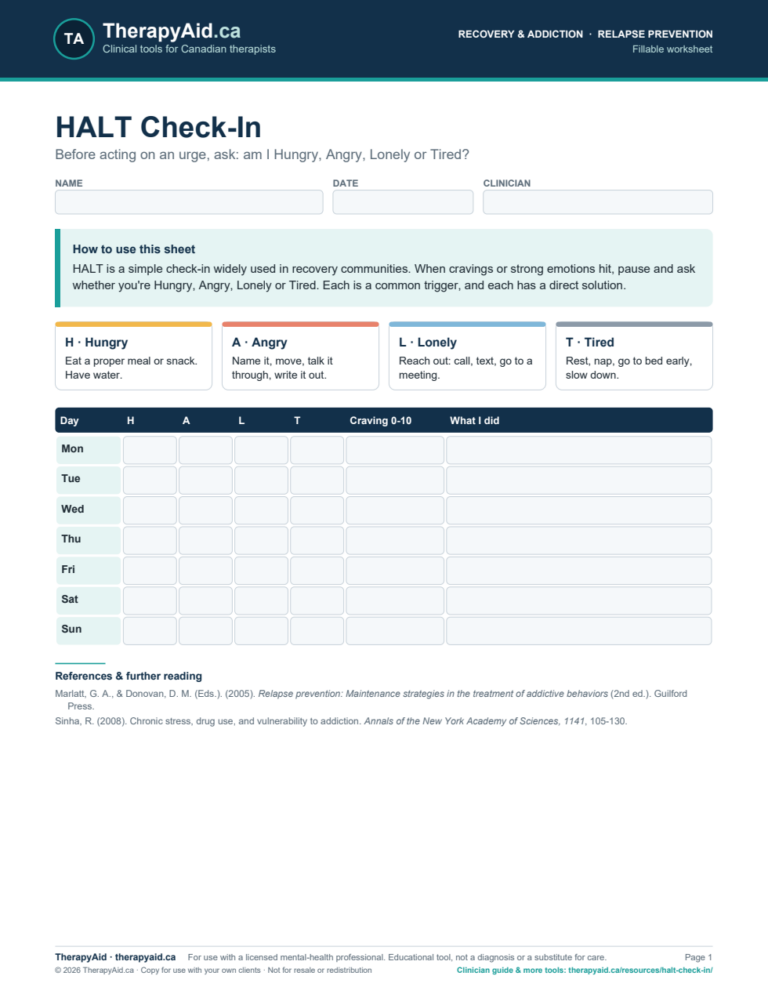
- Clients not ready for abstinence
- Opioid and stimulant use
- Alcohol moderation goals
- Low-barrier and outreach settings
How to use it in session
- Clarify the client’s goal.
- Choose relevant steps.
- Plan for high-risk situations.
- Connect to services.
- Review and update regularly.
Clinician tips
- Use non-stigmatizing language.
- Know local drug-checking and naloxone resources.
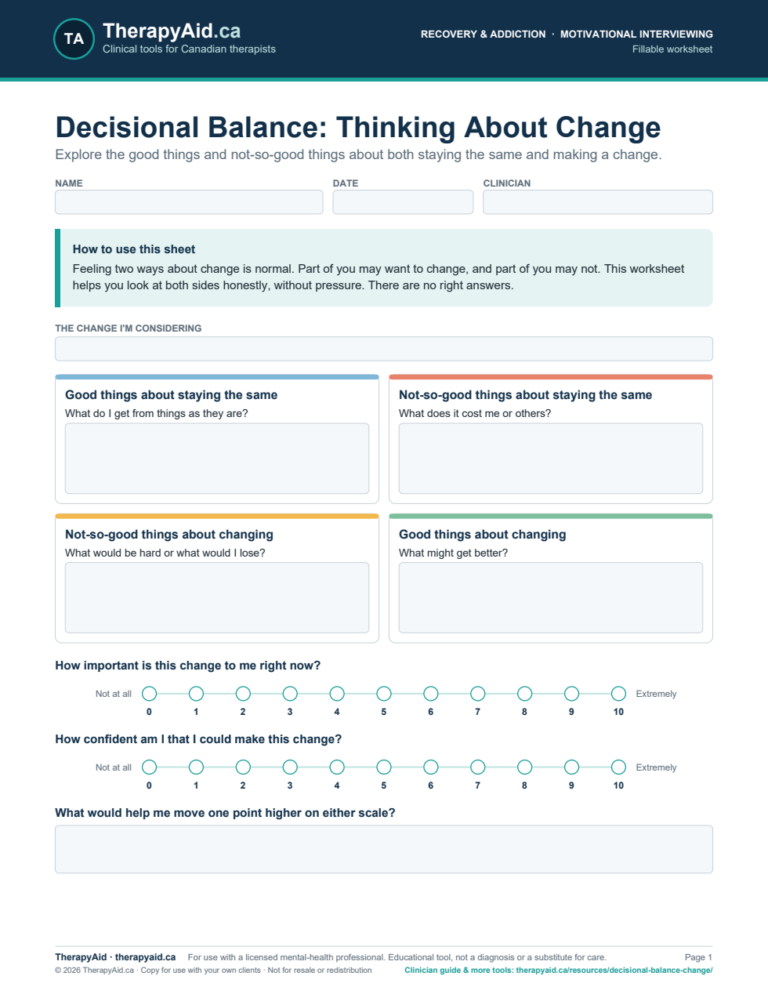
- Combine with motivational interviewing.
Worked example
Sharing with clients
Members can download the PDF to print or email, or copy a private client link from the download box. Your client opens the link and downloads the worksheet on any device. No client account is needed, and nothing your client writes is stored on TherapyAid.
Frequently asked questions
Doesn’t harm reduction encourage use?
Research shows harm reduction lowers harms without increasing use, and can be a step toward further change.
Can I combine harm reduction with abstinence goals?
Yes. Many people move between goals over time.
References
Marlatt, G. A., & Witkiewitz, K. (2010). Update on harm-reduction policy and intervention research. Annual Review of Clinical Psychology, 6, 591-606.
Logan, D. E., & Marlatt, G. A. (2010). Harm reduction therapy: A practice-friendly review of research. Journal of Clinical Psychology, 66(2), 201-214.
This worksheet is an educational tool for use by, or under the guidance of, a licensed or registered mental-health professional. It is not a diagnostic instrument or a substitute for clinical judgement. If a client is in crisis in Canada, call or text 9-8-8 or call 9-1-1.