My Body Clues (Kids)
A child-friendly worksheet to explore where six common feelings show up in the body and what they feel like, plus a personal 'need help' clue and calming strategy.
1-page fillable PDF · US Letter (prints on A4) · Emotion awareness
- Approach / concern
- For Kids
- Technique
- Emotion awareness
- Format
- Fillable PDF, 1 page (US Letter / A4)
- Access
- Pro and Advanced plans (3-day free trial)
- For
- Licensed clinicians to use with clients
- Updated
- October 2026
Key facts
What is the My Body Clues (Kids)?
Recognizing physical signs of emotions, sometimes called ‘body clues’, is an early step in child CBT for anxiety and anger. It helps children notice feelings early, before they become overwhelming.
Why it works
Identifying somatic signs of anxiety is a standard component of CBT programs for anxious children (Kendall & Hedtke, 2006). Body awareness supports early use of coping strategies.
When to use it
- Children aged about 5-11
- Anxiety, anger and worry
- Emotion coaching in families
- School counselling and classrooms
How to use it in session
- Model body clues with your own example.
- Explore each feeling together.
- Let children draw or point if writing is hard.
- Identify a ‘need help’ clue.
- Link to calming strategies.
Clinician tips
- Use the child’s own words for sensations.
- Practise when calm, not mid-meltdown.
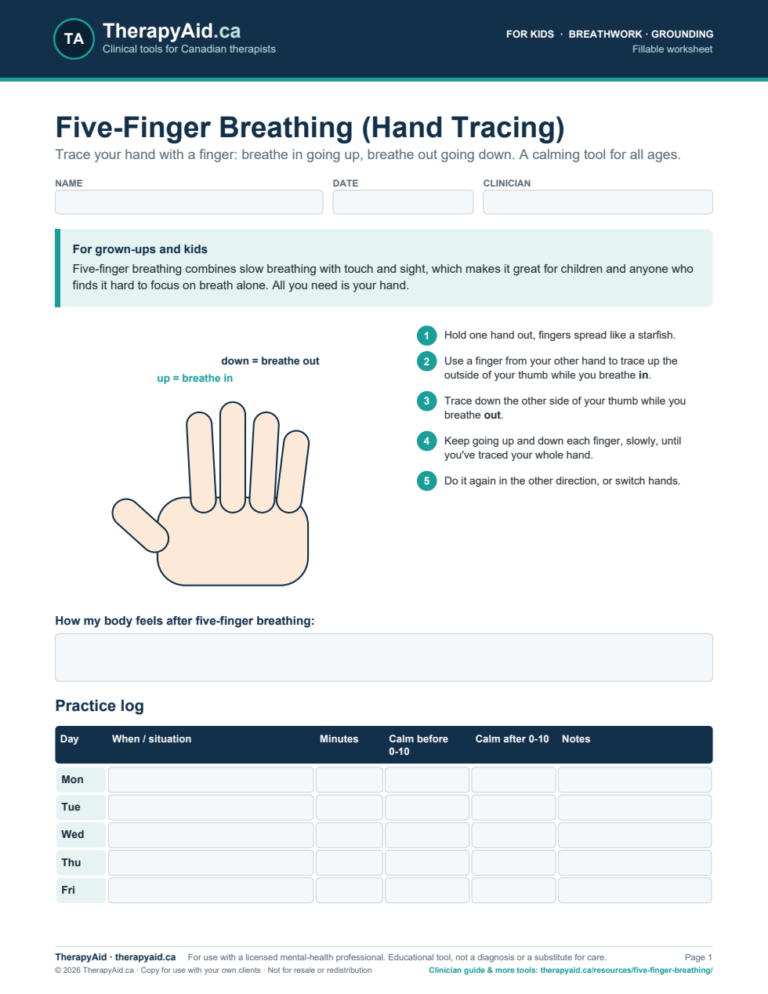
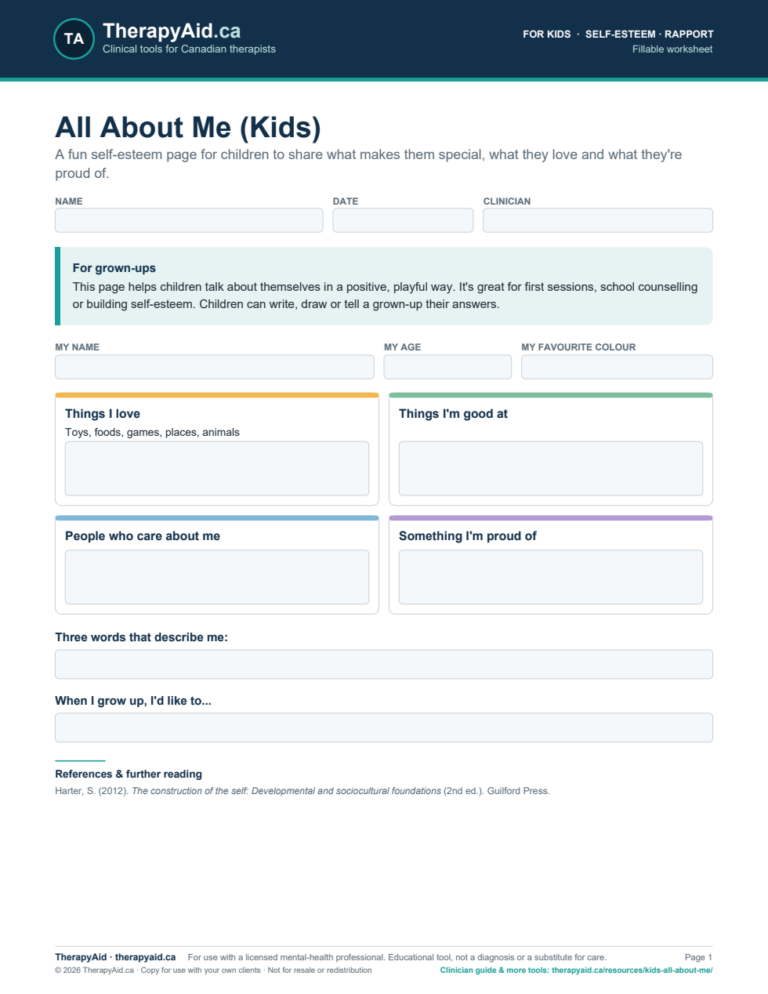
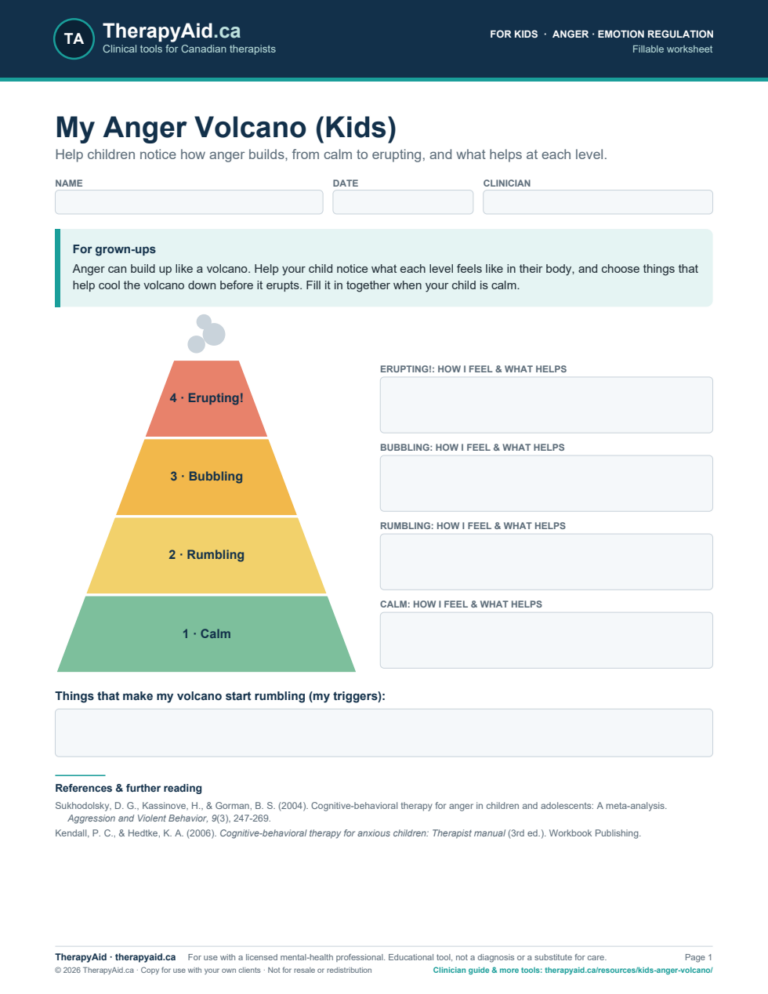
- Pair with the Feelings Thermometer and Calm-Down Plan.
Worked example
Sharing with clients
Members can download the PDF to print or email, or copy a private client link from the download box. Your client opens the link and downloads the worksheet on any device. No client account is needed, and nothing your client writes is stored on TherapyAid.
Frequently asked questions
What age is this for?
Most children aged 5-11. Younger children may need more drawing and adult support.
What if my child says they don’t feel anything?
That’s okay. Notice together during real moments and gently name what you observe.
References
Kendall, P. C., & Hedtke, K. A. (2006). Cognitive-behavioral therapy for anxious children: Therapist manual (3rd ed.). Workbook Publishing.
This worksheet is an educational tool for use by, or under the guidance of, a licensed or registered mental-health professional. It is not a diagnostic instrument or a substitute for clinical judgement. If a client is in crisis in Canada, call or text 9-8-8 or call 9-1-1.