ADHD Brain Dump & Prioritizer
An ADHD organization worksheet with a free-form brain dump area, a four-box prioritization matrix and a single most-important-task focus for the day.
1-page fillable PDF · US Letter (prints on A4) · CBT for adult ADHD
- Approach / concern
- ADHD & Neurodiversity
- Technique
- CBT for adult ADHD
- Format
- Fillable PDF, 1 page (US Letter / A4)
- Access
- Pro and Advanced plans (3-day free trial)
- For
- Licensed clinicians to use with clients
- Updated
- October 2026
Key facts
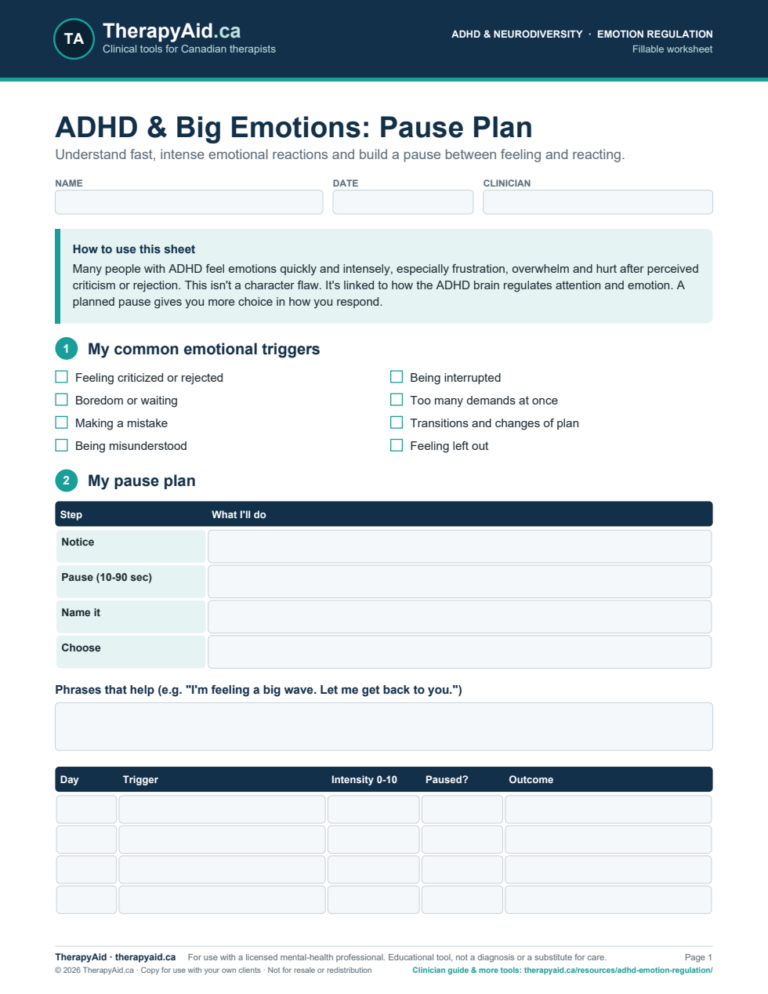
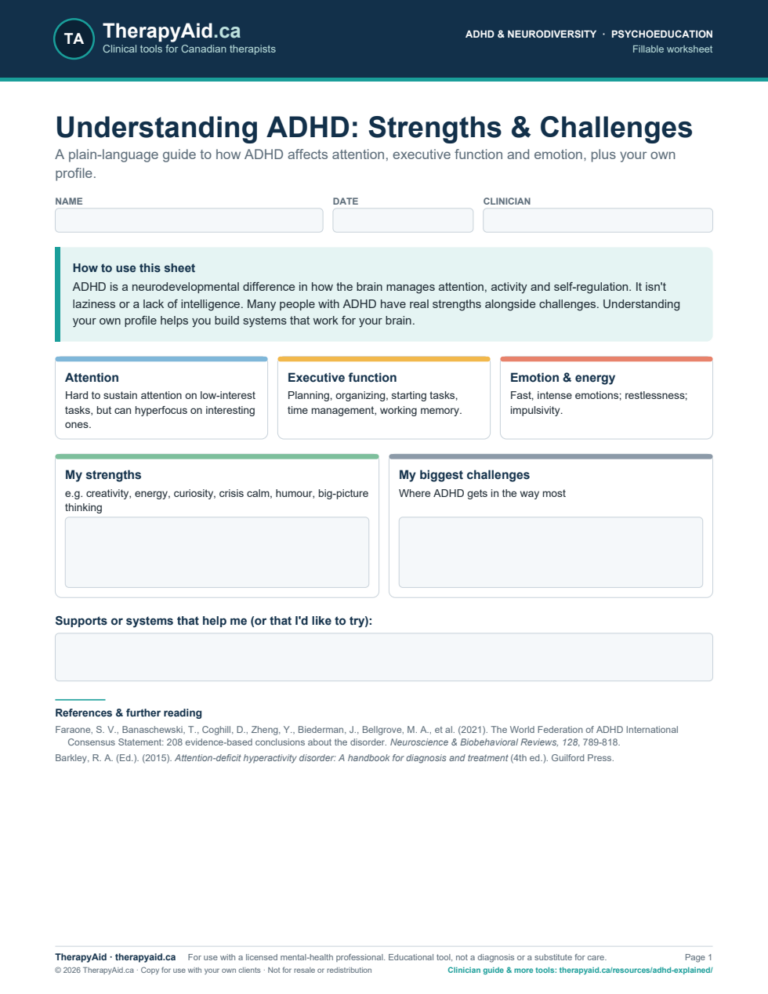
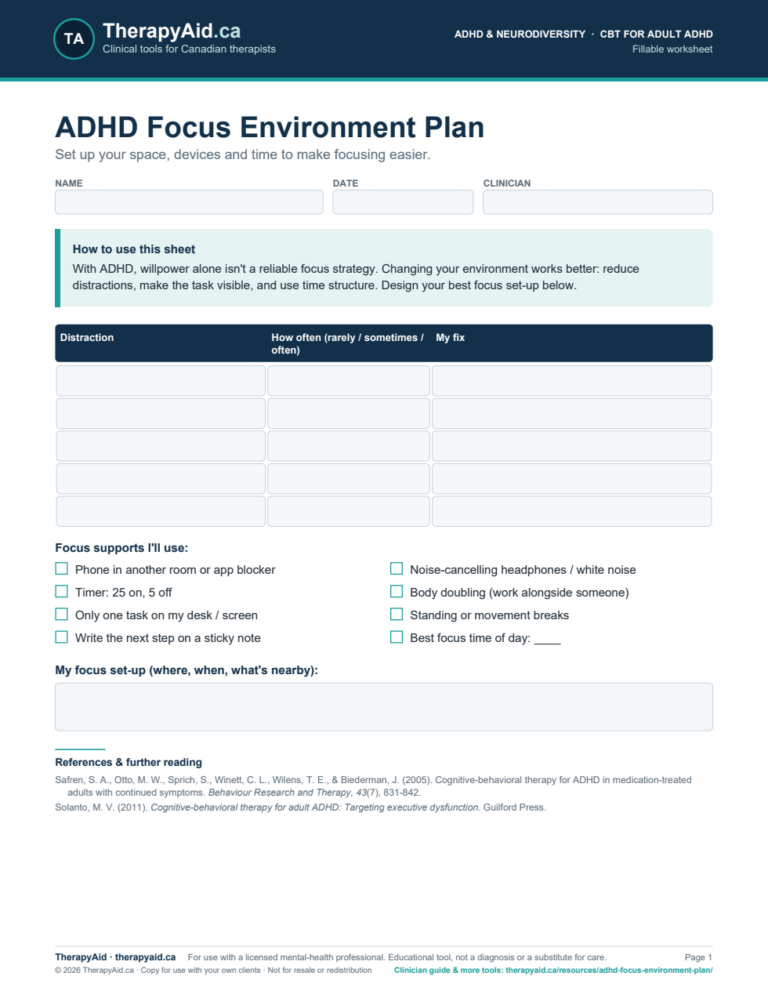
What is the ADHD Brain Dump & Prioritizer?
A brain dump externalizes tasks, worries and ideas to reduce cognitive load. Sorting them by importance and urgency (similar to an Eisenhower matrix) helps people with ADHD prioritize and start the most important task.
Why it works
CBT for adult ADHD targets organization, planning and prioritization deficits through external tools and structured routines (Solanto, 2011; Safren et al., 2005).
When to use it
- Adult ADHD and overwhelm
- Students juggling many deadlines
- Burnout and high workload
- Start of weekly planning
How to use it in session
- Spend 5-10 minutes writing everything down.
- Sort each item into one box.
- Schedule the ‘Schedule’ items in a calendar.
- Choose one most important task.
- Repeat daily or weekly.
Clinician tips
- Don’t sort while dumping; separate the two steps.
- Letting go of tasks is a valid choice.
- Pair with a timer to start the top task.
Worked example
Sharing with clients
Members can download the PDF to print or email, or copy a private client link from the download box. Your client opens the link and downloads the worksheet on any device. No client account is needed, and nothing your client writes is stored on TherapyAid.
Frequently asked questions
How often should I do a brain dump?
Daily or weekly, or whenever you feel overwhelmed.
What if everything feels important?
Ask: what happens if this waits a week? That usually reveals what’s truly urgent.
References
Solanto, M. V. (2011). Cognitive-behavioral therapy for adult ADHD: Targeting executive dysfunction. Guilford Press.
Safren, S. A., Otto, M. W., Sprich, S., Winett, C. L., Wilens, T. E., & Biederman, J. (2005). Cognitive-behavioral therapy for ADHD in medication-treated adults with continued symptoms. Behaviour Research and Therapy, 43(7), 831-842.
This worksheet is an educational tool for use by, or under the guidance of, a licensed or registered mental-health professional. It is not a diagnostic instrument or a substitute for clinical judgement. If a client is in crisis in Canada, call or text 9-8-8 or call 9-1-1.