Family Meeting Guide
A family meeting template with rotating roles covering appreciations, calendar planning, one collaborative problem-solving item and a planned fun activity.
2-page fillable PDF · US Letter (prints on A4) · Family communication
- Approach / concern
- Family Therapy
- Technique
- Family communication
- Format
- Fillable PDF, 2 pages (US Letter / A4)
- Access
- Pro and Advanced plans (3-day free trial)
- For
- Licensed clinicians to use with clients
- Updated
- October 2026
Key facts
What is the Family Meeting Guide?
Family meetings are regular, structured gatherings where all members can share appreciation, coordinate plans and solve problems collaboratively. They are a common recommendation in positive parenting and family therapy.
Why it works
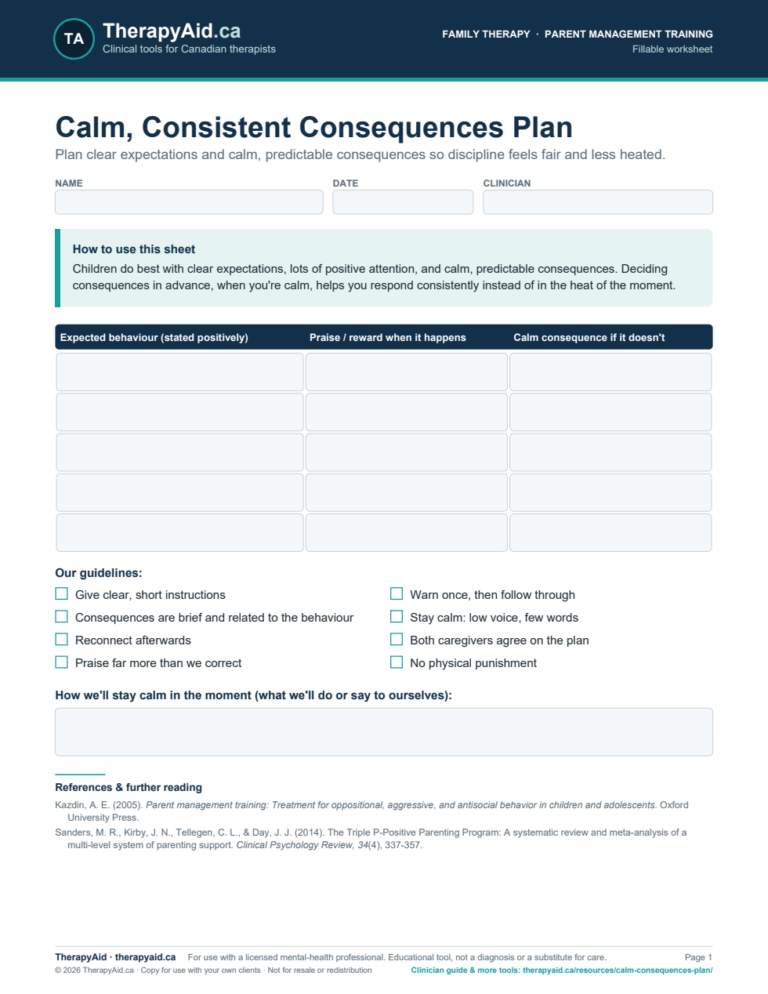
Positive parenting approaches emphasize warm communication, involving children in problem-solving and consistent routines (Nelsen, 2006). Structured parenting support programs show benefits for child behaviour and family functioning (Sanders et al., 2014).
When to use it
- Families with frequent conflict
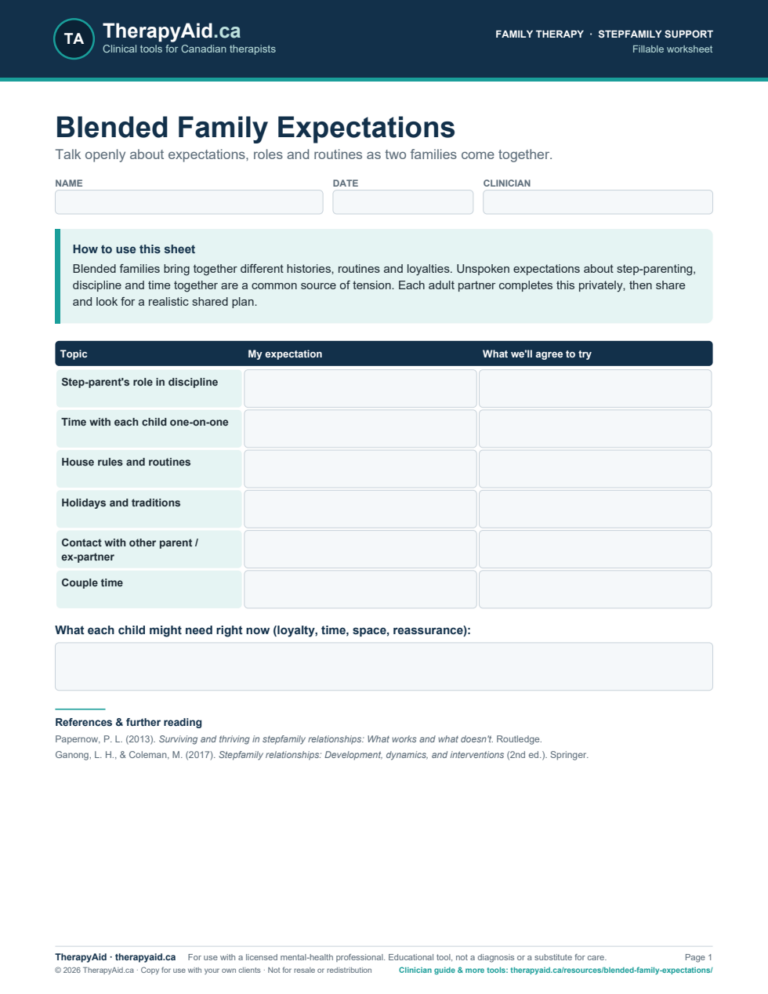
- Blended families
- Families with teens seeking more voice
- Family therapy homework
How to use it in session
- Agree on a regular time and short duration.
- Start with appreciations.
- Coordinate plans.
- Problem-solve one issue with everyone’s ideas.
- End with a fun plan and rotate roles.
Clinician tips
- Keep it positive; avoid using meetings to scold.
- Let children lead sometimes.
- Write down agreements and check back next week.
Worked example
Sharing with clients
Members can download the PDF to print or email, or copy a private client link from the download box. Your client opens the link and downloads the worksheet on any device. No client account is needed, and nothing your client writes is stored on TherapyAid.
Frequently asked questions
What age can children join family meetings?
From about age 4, with simple roles. Older children and teens can lead.
What if meetings turn into arguments?
Pause, return to appreciations, and save the issue for a calmer time or a therapy session.
References
Nelsen, J. (2006). Positive discipline (Rev. ed.). Ballantine Books.
Sanders, M. R., Kirby, J. N., Tellegen, C. L., & Day, J. J. (2014). The Triple P-Positive Parenting Program: A systematic review and meta-analysis of a multi-level system of parenting support. Clinical Psychology Review, 34(4), 337-357.
This worksheet is an educational tool for use by, or under the guidance of, a licensed or registered mental-health professional. It is not a diagnostic instrument or a substitute for clinical judgement. If a client is in crisis in Canada, call or text 9-8-8 or call 9-1-1.