ADHD & Big Emotions: Pause Plan
A worksheet for clients with ADHD to identify common emotional triggers (including perceived rejection), build a four-step pause plan with helpful phrases and track outcomes.
2-page fillable PDF · US Letter (prints on A4) · Emotion regulation
- Approach / concern
- ADHD & Neurodiversity
- Technique
- Emotion regulation
- Format
- Fillable PDF, 2 pages (US Letter / A4)
- Access
- Pro and Advanced plans (3-day free trial)
- For
- Licensed clinicians to use with clients
- Updated
- October 2026
Key facts
What is the ADHD & Big Emotions: Pause Plan?
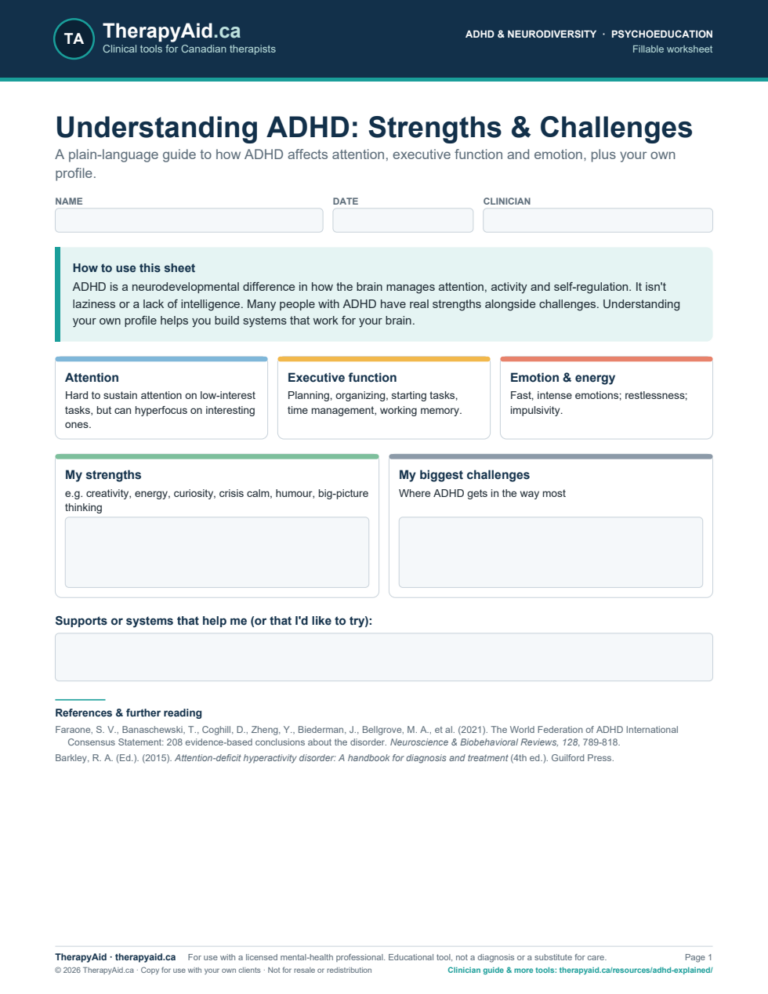
Emotion dysregulation, such as quick, intense emotional reactions and difficulty calming down, is common in ADHD and is increasingly recognized as a core feature for many people. Strong reactions to perceived criticism or rejection are often described informally as rejection sensitivity.
Why it works
Research reviews describe emotion dysregulation as prevalent in ADHD and linked to impairment (Shaw et al., 2014). Building awareness of triggers and a planned pause supports self-regulation alongside other ADHD treatments (Barkley, 2015).
When to use it
- Adults and teens with ADHD
- Anger and frustration outbursts
- Sensitivity to criticism at work or in relationships
- Couples where one partner has ADHD
How to use it in session
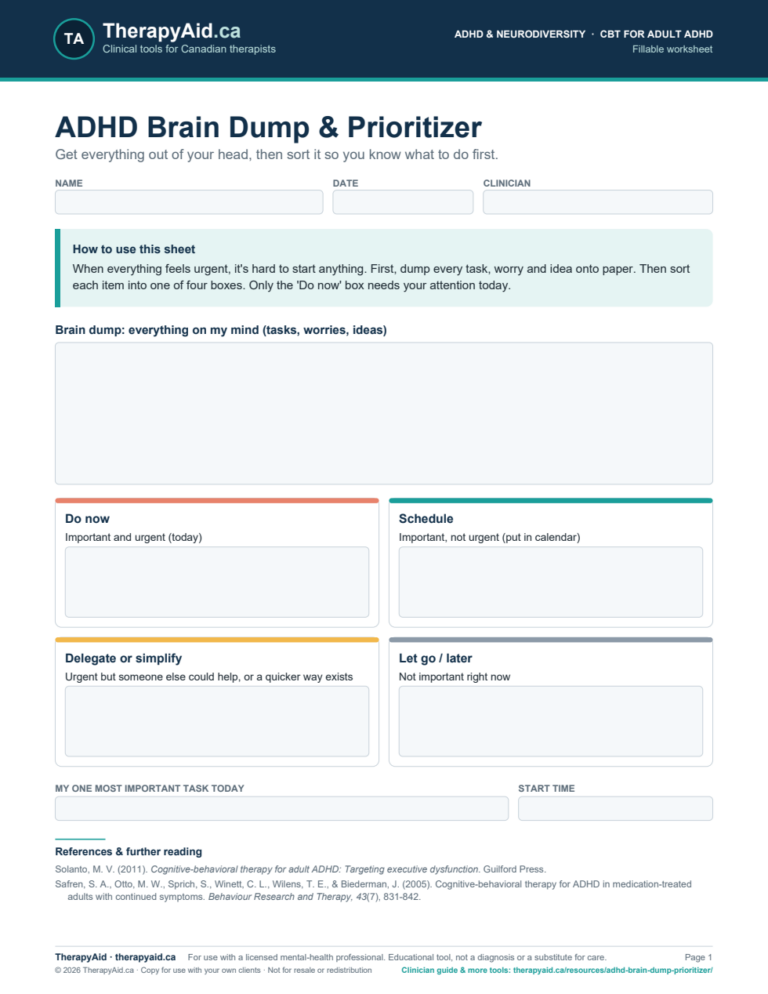
- Normalize emotional intensity as part of ADHD.
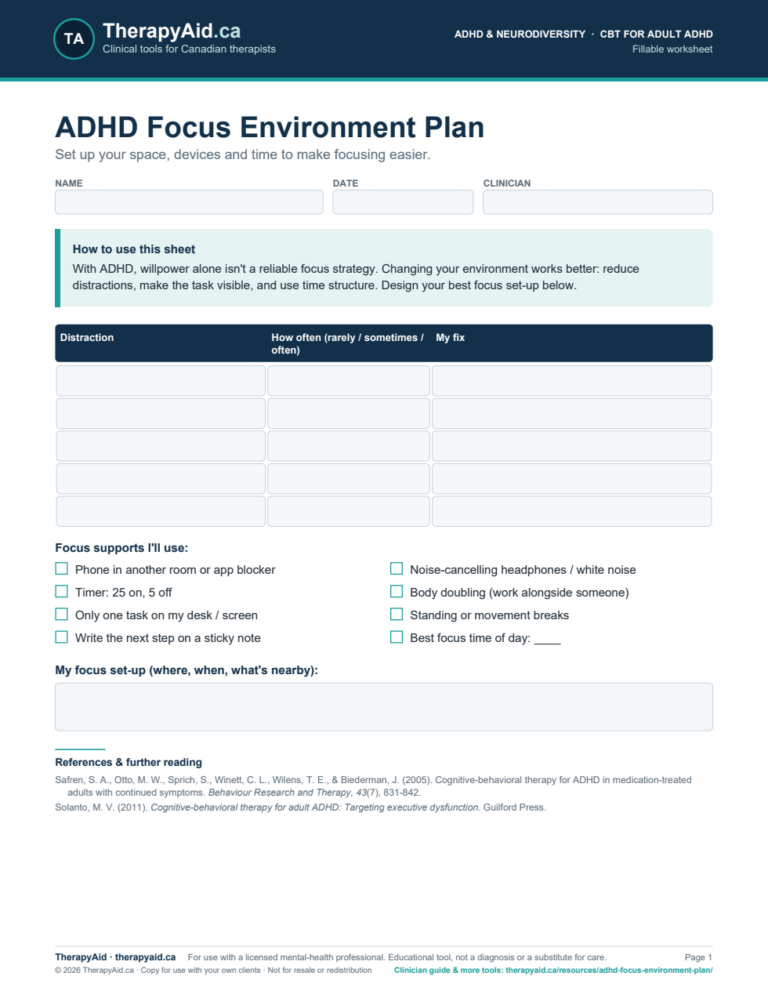
- Identify common triggers.
- Build a personal four-step pause plan.
- Choose phrases for buying time.
- Track and review outcomes.
Clinician tips
- Pauses can be very short; even 10 seconds counts.
- Body strategies (movement, cold water) help with intensity.
- Rejection sensitivity is not a formal diagnosis; use the client’s language.
Worked example
Sharing with clients
Members can download the PDF to print or email, or copy a private client link from the download box. Your client opens the link and downloads the worksheet on any device. No client account is needed, and nothing your client writes is stored on TherapyAid.
Frequently asked questions
Is rejection sensitive dysphoria a diagnosis?
No. It’s an informal term for intense emotional pain in response to perceived rejection, often reported by people with ADHD.
Can medication help with ADHD emotions?
For some people, yes. Discuss with a prescriber; skills work alongside medication.
References
Shaw, P., Stringaris, A., Nigg, J., & Leibenluft, E. (2014). Emotion dysregulation in attention deficit hyperactivity disorder. American Journal of Psychiatry, 171(3), 276-293.
Barkley, R. A. (Ed.). (2015). Attention-deficit hyperactivity disorder: A handbook for diagnosis and treatment (4th ed.). Guilford Press.
This worksheet is an educational tool for use by, or under the guidance of, a licensed or registered mental-health professional. It is not a diagnostic instrument or a substitute for clinical judgement. If a client is in crisis in Canada, call or text 9-8-8 or call 9-1-1.